
Learning how to become a Registered Behavior Technician starts with a 40-hour training program. You’ll then pass the BACB’s RBT competency assessment and exam. The entire process can take as little as four to eight weeks if you follow a structured plan and stay consistent.
Key Takeaways
- The RBT credential is governed by the Behavior Analyst Certification Board (BACB) and requires you to be at least 18 years old with a high school diploma.
- A 40-hour training covering the RBT Task List (2nd edition) is mandatory before you can apply.
- You must pass both a competency assessment with a supervisor and a 75-question multiple-choice exam.
- The exam fee is $45, making this one of the most affordable credentialing paths in the behavioral health field.
- RBTs work under the supervision of a BCBA or BCaBA and commonly serve clients with autism spectrum disorder and related developmental conditions.
- Ongoing supervision (at least 5% of your weekly hours) and annual renewal are required to keep your credential active.
What the RBT Credential Actually Is
The Registered Behavior Technician (RBT) credential is issued by the Behavior Analyst Certification Board (BACB). This same organization certifies Board Certified Behavior Analysts. RBTs are paraprofessionals trained to implement Applied Behavior Analysis (ABA) therapy plans under direct supervision.
They work in homes, schools, clinics, and community settings. They primarily serve individuals with autism spectrum disorder, intellectual disabilities, or other behavioral health needs.
This is not a degree program. Rather, it is a professional certification that verifies you can competently deliver behavior-analytic services. That distinction matters significantly because it makes the credential accessible to people early in their careers. Recent high school graduates, college students in psychology or education, and career changers can all pursue this path.
Because RBTs frequently work with individuals on the autism spectrum, a solid understanding of the condition itself is useful. For example, knowing that is autism brain damage is a common question families ask helps you communicate effectively. You can explain that autism is a neurodevelopmental difference rather than brain damage. This strengthens your ability to support the families you serve.
Eligibility Requirements for Learning How to Become an RBT
Before you spend a dollar or an hour on training, confirm you meet the BACB’s baseline requirements:
- You must be at least 18 years old.
- You must hold a high school diploma or equivalent (a GED qualifies).
- You must pass a criminal background check.
- You must not be under a BACB ethics investigation.
That’s it. No college degree is required. This is intentional design: the RBT role exists for frontline workers who receive structured, on-the-job guidance from credentialed supervisors.
If you are a parent of a child with autism, understanding these requirements helps you evaluate whether the technicians working with your child are properly qualified.
The 40-Hour Training: What It Covers and How to Complete It
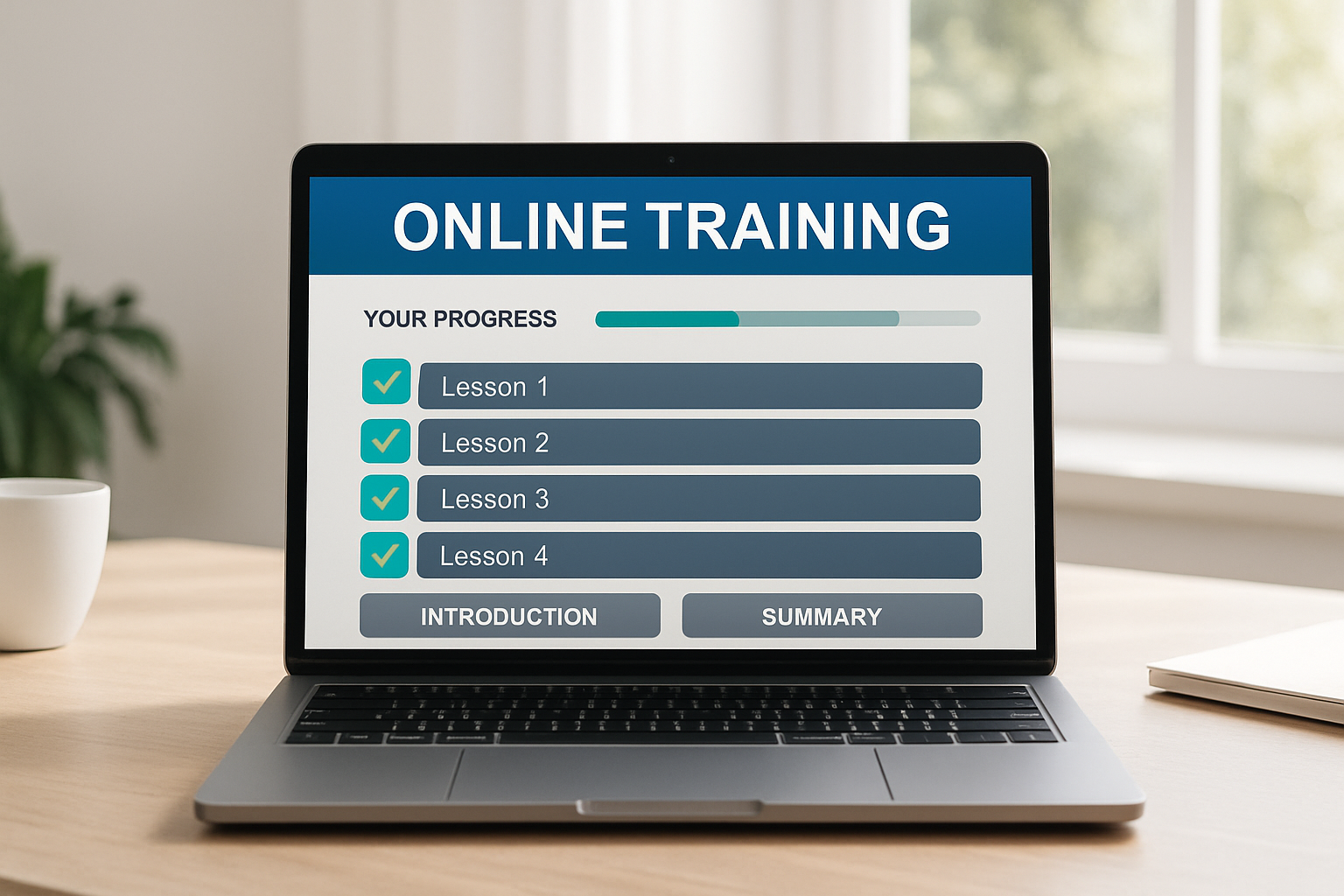
The core of how to learn RBT is completing a BACB-approved 40-hour training program that aligns with the RBT Task List (2nd edition). You must complete this training before you submit your application.
What the RBT Task List Covers
The RBT Task List is organized into six content areas:
- Measurement: How to collect data on behavior, including frequency, duration, and interval recording.
- Skill Acquisition: Implementing programs like Discrete Trial Training (DTT), naturalistic teaching, and prompting hierarchies.
- Behavior Reduction: Identifying antecedents and consequences, and implementing behavior intervention plans.
- Documentation and Reporting: Session notes, data sheets, and communicating with supervisors.
- Professional Conduct and Scope of Practice: Ethical behavior, maintaining client dignity, and understanding your role boundaries.
- Crisis and Safety: Responding to dangerous behavior and following safety protocols.
Where to Take the 40-Hour Training for RBT Certification
You have several options available:
| Training Format | Cost Range | Completion Time | Best For |
|---|---|---|---|
| Employer-provided training | $0 (paid on the job) | 1-2 weeks | People already hired at an ABA agency |
| Online self-paced courses | $50-$300 | 1-4 weeks | Independent learners |
| Community college programs | $200-$600 | 4-8 weeks | Students who prefer structured schedules |
| University extension programs | $300-$800 | 4-10 weeks | Those wanting academic credentials alongside RBT |
Many ABA agencies hire candidates without any prior credentials. Furthermore, they provide the 40-hour training at no cost as part of onboarding. If you are job-hunting, this is often the most efficient and affordable path.
The Competency Assessment: Passing the Practical Component for RBT
After your 40-hour training, you need to pass a competency assessment conducted by a BCBA, BCaBA, or an RBT Supervisor or Mentor. This is a hands-on evaluation, not a written test.
The assessor observes you directly implementing skills from each area of the RBT Task List. You will be evaluated on how you set up a discrete trial, how you collect data accurately, and how you respond to a client’s challenging behavior. You need to demonstrate each skill area to the assessor’s satisfaction.
Tips for passing the competency assessment:
- Practice data collection until it feels automatic. Supervisors frequently note that new RBTs struggle most with consistent, accurate recording.
- Role-play skills with a colleague before the formal assessment.
- Ask your supervising BCBA what specific programs your workplace uses so you can align your practice with real scenarios.
- Review the BACB’s RBT Competency Assessment form, which is publicly available on the BACB website.
The competency assessment must be completed within 90 days of your application submission date.
Submitting Your Application and Scheduling the RBT Exam
Once your training and competency assessment are complete, submit your RBT application through the BACB’s online system. The application fee is $50. After approval, you pay the $45 exam fee. Then you schedule your test through Pearson VUE testing centers located throughout the United States.
The exam consists of 75 multiple-choice questions. Additionally, 10 of these questions are unscored pilot items. You have 90 minutes to complete the test. The passing score is determined through a standard-setting process by the BACB and is not publicly posted as a fixed number. However, preparation resources suggest aiming for a strong understanding of all six task list areas.
Understanding the population you will be serving deepens your exam readiness. RBTs commonly work with children on the autism spectrum. Therefore, questions about foundational ABA concepts will be easier to contextualize if you understand the broader clinical picture. For instance, parents of twins sometimes ask can one twin have autism and the other not. Knowing that autism has a strong genetic component helps in family-facing conversations after you are certified.
Study Strategies That Actually Work
Knowing how to learn RBT goes beyond watching videos and hoping the concepts stick. Here are evidence-based study strategies:
Use the RBT Task List as your study map. Print it out and track each item as you study. If you can explain every task in plain language, you are ready.
Practice with flashcards. ABA is terminology-heavy. Terms like “extinction burst,” “reinforcement schedules,” “antecedent,” and “differential reinforcement” need to feel automatic by exam day.
Take full-length practice exams. Several publishers offer RBT practice tests for $15-$40. Taking timed practice exams under realistic conditions helps reduce anxiety and reveals weak areas.
Study with a colleague. If you are completing training through an ABA employer, pair up with another trainee. Explaining concepts to each other reinforces retention significantly.
Focus on the tricky topics. Most RBT exam takers report that behavior reduction procedures and the ethics section feel the most demanding. Therefore, dedicate extra time to these areas.
Connect behavioral concepts to real clients. If a child on your caseload pockets food instead of swallowing, connecting that observation to sensory behavior patterns enriches your understanding. Resources like is pocketing food a sign of autism can help you contextualize unusual behaviors you encounter on the job.
Supervision, Renewal, and Staying Credentialed as an RBT
Passing the exam does not mean you work independently. RBTs must receive ongoing supervision from a BCBA or BCaBA. This amounts to at least 5% of the hours you work each month. At least half of those supervision hours must be conducted face-to-face (in person or via live video).
Your RBT credential must be renewed annually. Renewal requirements include:
- Ongoing supervision throughout the credential year.
- Completion of a renewal competency assessment.
- Payment of the $35 renewal fee.
- Attestation that you have maintained ethical conduct.
Many RBTs use the certification as a stepping stone. In addition, they pursue a bachelor’s or master’s degree in behavior analysis, psychology, or special education. Eventually, they work toward the BCaBA or BCBA credential. If that path interests you, talk to your supervising BCBA early. They can guide your coursework choices and provide supervision hours that count toward future credentials.
Things to Know
- The BACB does not approve specific training programs. Any trainer who claims their program is “BACB-certified” is misrepresenting the situation. Look for trainers who follow the RBT Task List (2nd edition).
- You cannot supervise yourself. All RBT supervision must come from a credentialed BCBA, BCaBA, or RBT Supervisor designation holder.
- Autism is not caused by vaccines, brain injury, or bad parenting. Families often come to sessions with misconceptions. Understanding what the science actually says, including whether is autism reversible (it is not a condition with a cure, though skills and quality of life can improve dramatically), prepares you to be a compassionate, informed team member.
- The RBT exam has no published pass rate by the BACB. However, anecdotal reports from practitioners suggest that people who complete structured study plans pass at high rates on their first attempt.
- Background checks are required but minor offenses do not automatically disqualify you. The BACB evaluates cases individually.
- Working as an RBT in one state does not automatically transfer your credential to another state. However, the BACB credential is national, so most employers recognize it across state lines without additional testing.
Frequently Asked Questions
How long does it take to become an RBT from scratch?
Most people complete the entire process in four to eight weeks.
The 40-hour training typically takes one to four weeks depending on your schedule. The competency assessment and exam can be scheduled shortly after. If you are hired by an ABA company that provides training, the timeline can compress to three to four weeks.
Can I complete the 40-hour RBT training online?
Yes, you can complete the training entirely online through self-paced or instructor-led platforms.
The BACB requires only that the training cover the RBT Task List. It does not mandate in-person delivery. However, the competency assessment must involve direct observation of your skills. This typically requires an in-person component.
How much do RBTs earn in the United States?
The average hourly wage for RBTs in the U.S. ranges from $17 to $24 per hour, depending on location and employer.
In high-cost metro areas like New York City or San Francisco, rates can reach $28 to $32 per hour. Moreover, many ABA companies offer benefits, paid training, and tuition reimbursement programs.
What happens if I fail the RBT exam?
You can retake the RBT exam after a waiting period, with a retake fee of $45 each time.
The BACB does not publicly specify a maximum number of attempts within a credential year. However, you should contact the BACB directly if you have concerns. Focused study using the RBT Task List and practice exams significantly improves second-attempt outcomes.
Do I need a college degree to become an RBT?
No, a high school diploma or GED is the only educational requirement.
This makes the RBT one of the most accessible entry points into the behavioral health field. Many RBTs simultaneously pursue a college degree while working. They use their clinical experience to strengthen their applications to BCBA programs later.
The Bottom Line on How to Learn RBT
The path is clear, the costs are low, and the demand for qualified RBTs across the United States continues to grow. As ABA services expand, opportunities increase. Meet the eligibility requirements, complete your 40-hour training, pass the competency assessment, and study the RBT Task List thoroughly. Then schedule your exam through Pearson VUE.
Your next action step is straightforward: contact a local ABA agency. Ask whether they provide paid RBT training during onboarding, and submit an application. Many people land their first RBT position and complete their certification simultaneously. This is the fastest and most cost-effective route available.