Key Takeaways
- Autism is not brain damage — brain damage refers to injury to previously normal brain tissue, while autism involves a brain that developed differently from the earliest stages of formation
- The autistic brain has measurable structural and functional differences from a neurotypical brain — different patterns of connectivity, different regional development, and different processing organization — but these are developmental differences, not injuries
- Autism is legally and functionally considered a disability, though the disability framing is understood and applied differently across medical, legal, and autistic self-advocacy contexts
- Many autistic individuals — including those with Level 1 autism — live independently, build careers, and sustain relationships; outcomes depend heavily on support quality and environment fit
- Autism does improve in many meaningful ways with age, particularly with early intervention and continued support — though the neurological profile itself does not disappear
The Direct Answer: No — and Why This Distinction Matters
Autism is not brain damage. That answer is unambiguous in neuroscience, in clinical medicine, and in the diagnostic framework that defines autism.
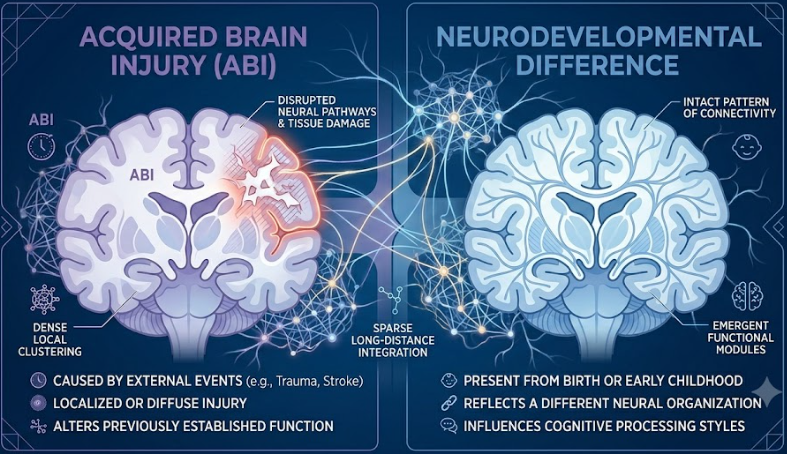
Brain damage is an acquired condition. It refers to injury or destruction of brain tissue that was previously developing or functioning normally — from physical trauma, stroke, oxygen deprivation at birth, infection, toxic exposure, or other events that disrupt a brain that was on a typical developmental trajectory. Brain damage impairs something that was present before the damaging event.
Autism does not work this way. An autistic brain was never a neurotypical brain that got damaged. The neurological differences that define autism are present from the earliest stages of prenatal brain development — before the brain has fully formed, before the circuits that will one day support language and social cognition have organized themselves. There is no “before” to restore to, because the brain in question never passed through a neurotypical phase.
This distinction is not merely technical. It shapes everything from how autism is understood scientifically to how autistic people are treated in clinical, educational, and social contexts. Framing autism as damage implies something broke — and that the goal is repair. The neuroscience tells a different story.
What Brain Damage Actually Is — and How It Differs From Neurodevelopmental Difference
To understand why autism is not brain damage, it helps to understand what brain damage actually produces.
Acquired brain injuries — whether from traumatic events, strokes, or oxygen deprivation — damage tissue that was functioning, destroying neurons, severing established connections, and impairing systems that had already developed. The result is typically a loss of function compared to the person’s prior baseline: a stroke patient loses the ability to form words they previously had; a traumatic brain injury patient loses executive function that was previously intact; a child with hypoxic brain injury at birth loses capacities that were beginning to emerge.
The clinical trajectory of brain damage is characterized by what has been lost. The therapeutic goal — rehabilitation — is to recover or compensate for lost function.
Autism has no “lost function” baseline. Autistic infants do not begin on a neurotypical developmental trajectory and then deviate from it. The differences in how an autistic brain processes social information, sensory input, and language are present from the beginning — organized into the brain’s architecture before birth. The autistic brain is not a broken neurotypical brain. It is a different kind of brain.
This is what places autism firmly in the category of neurodevelopmental disorder rather than acquired brain injury — and it is consistent with everything we know about autism’s genetic origins and prenatal neurodevelopmental course.
What the Autistic Brain Actually Looks Like
Decades of neuroimaging research have produced a detailed — though still incomplete — picture of how the autistic brain differs structurally and functionally from a neurotypical brain. These differences are real and measurable. They are also consistently different in character from what brain damage produces.
For a comprehensive look at the neuroimaging research, autism brain vs. neurotypical brain covers the structural and functional differences in depth. Here is an accurate summary of the most consistently replicated findings:
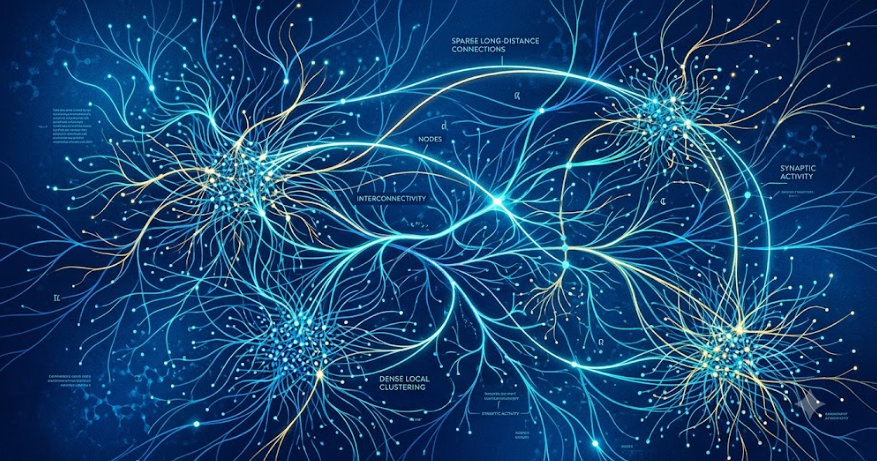
Connectivity differences. The most robust and replicated finding in autism neuroimaging is altered patterns of neural connectivity. Autistic brains tend to show increased local connectivity — stronger connections within nearby brain regions — and reduced long-range connectivity between distant brain regions. This altered connectivity pattern is thought to contribute to some of autism’s characteristic strengths (deep, detailed processing within specific domains) and challenges (integration of information across systems, like coordinating facial expression recognition with emotional processing).
Early brain overgrowth. Multiple studies have found that autistic children show accelerated brain growth in the first one to two years of life — particularly in the frontal lobe and white matter — followed by a normalization of brain volume in later childhood. This overgrowth trajectory, not seen in neurotypical development, begins prenatally and is associated with the earliest-appearing autism features.
Amygdala differences. The amygdala — involved in emotional processing, threat detection, and social-emotional learning — shows consistent differences in autism. Autistic children often have larger amygdalae in early childhood than neurotypical peers; some studies link amygdala differences to anxiety levels and social processing patterns.
Default mode network differences. The default mode network (DMN) — active during self-referential thinking, social cognition, and mind-wandering — shows different connectivity patterns and activation timing in autistic individuals. This network is central to the kind of social and introspective processing that differs in autism.
Cortical differences. Studies have found differences in cortical thickness, surface area, and the organization of minicolumns — the basic modular units of the cerebral cortex — in autism. These organizational differences reflect the developmental trajectory of the brain, not damage to established architecture.
None of these findings describe injury. They describe a brain organized differently from conception — a product of the genetic and developmental forces that shape autism, not of anything that went wrong after the brain was formed.
Why the Brain Develops Differently in Autism
The brain differences in autism originate in genetics and prenatal neurodevelopment. The genetic variants associated with autism — which affect how neurons migrate during early brain formation, how synapses are formed and pruned, and how neural circuits organize — produce a brain that is wired differently from its earliest moments.
Key processes implicated in autism’s neurodevelopmental origins include:
- Disrupted neuronal migration — the process by which neurons travel to their appropriate positions in the developing cortex — may be altered in autism, contributing to differences in cortical organization
- Altered synaptic development — many autism-associated genes are involved in how synapses form, mature, and are pruned. The characteristic connectivity differences in autistic brains may partly reflect altered synaptic development early in fetal brain formation
- Immune and inflammatory factors — some research has examined the role of maternal immune activation and neuroinflammation during prenatal development in autism, though these remain active areas of investigation rather than settled mechanisms
The result is a brain that is different — measurably, consistently, and in characteristic ways. But different is not damaged. The autistic brain is doing what it was built to do. The building specifications were different from the start.
Can Autism Improve With Age?
Yes — significantly, and often more than many families expect in the immediate aftermath of a diagnosis.
The autistic brain retains neuroplasticity — the capacity for structural and functional change — across the entire lifespan, not just in childhood. What this means practically is that skills, strategies, and functional capacities continue to develop well into adulthood. Improvement is real, common, and sometimes dramatic.
What typically improves with age and appropriate support:
Communication and language. Many autistic children who have limited or no speech at age three develop functional communication — through spoken language, AAC, or both — by school age. For verbal autistic individuals, the sophistication and flexibility of communication often continues to develop across adolescence and adulthood.
Social navigation. Autistic adults frequently report becoming significantly more comfortable in social situations with age — not because their neurology changed, but because they developed strategies, found appropriate social environments, and accumulated experience they could apply. This is skill-building, not recovery.
Emotional regulation. With explicit teaching and accumulated self-understanding, many autistic individuals become substantially better at managing sensory overwhelm, transitions, and emotional dysregulation as they move through adolescence and adulthood.
Self-knowledge. Perhaps the most transformative developmental factor in autism: understanding one’s own neurology. Autistic individuals who understand why they respond to the world the way they do — who have the vocabulary and framework to make sense of their experiences — consistently report better mental health outcomes and greater ability to advocate for their own needs.
What tends to remain consistent:
The underlying neurological profile. The connectivity differences, sensory processing differences, and characteristic cognitive patterns of autism do not disappear with age or intervention. What changes is what the person builds on top of that foundation.
Executive function differences. Challenges with planning, flexibility, task initiation, and organization — covered in depth at executive dysfunction and autism — tend to be persistent features of the autistic cognitive profile, though strategies and environmental accommodations can substantially reduce their functional impact.
Anxiety. Elevated anxiety is one of the most consistent and often most disabling features of autism across the lifespan. It tends not to resolve spontaneously and benefits from targeted support throughout life, not just in childhood.
Is Autism a Disability?
The answer to this question depends on which framework you are asking within — and both frameworks carry important truth.
Legally and functionally: yes. Under the Americans with Disabilities Act (ADA), autism qualifies as a disability and entitles individuals to reasonable accommodation in employment and public life. Under IDEA (Individuals with Disabilities Education Act), autism is a specific eligibility category for special education services. These legal frameworks exist because autism creates real, significant challenges in areas that affect major life activities — communication, social interaction, sensory management, executive functioning — that require accommodation to navigate.
Within the neurodiversity framework: it’s complicated. A growing number of autistic self-advocates and researchers — particularly through the lens of the neurodiversity movement — challenge the framing of autism as an inherently disabling disorder. Their argument is not that autism creates no challenges, but that many of those challenges arise from the mismatch between an autistic person’s neurology and an environment built exclusively for neurotypical people. Change the environment sufficiently — reduce sensory overwhelm, provide communication accommodation, eliminate unnecessary social performance demands — and the disability diminishes.
Both of these things can be true simultaneously: autism is a legal disability and a real source of significant functional challenge, AND the degree to which it is disabling is substantially shaped by the environments and systems autistic people are required to navigate. Neither framing erases the other. Acknowledging that autism is a disability does not require accepting that autistic people are lesser. It requires accepting that they deserve accommodation, support, and access.

Common Misconceptions About Autism and the Brain
“Autism is caused by brain damage at birth.” This is one of the most persistent misconceptions — particularly the idea that oxygen deprivation, birth complications, or perinatal events cause autism. While severe perinatal brain injury can produce a range of neurodevelopmental effects, autism specifically is not caused by birth injury. Its origins are prenatal and genetic. Some children with perinatal brain injuries have autism-like features — those are consequences of the injury, not autism in the neurodevelopmental sense.
“Vaccines damage the brain and cause autism.” As covered in the previous article in this series: this claim originated with a fraudulent, retracted study and has been definitively refuted by dozens of independent studies involving millions of children. Vaccines do not cause brain damage. Vaccines do not cause autism.
“Autistic people’s brains are just like neurotypical brains in all the important ways.” This overcorrection — sometimes offered in well-intentioned advocacy — erases real neurological differences that have genuine clinical and functional implications. Autism involves measurable differences in brain organization. Acknowledging those differences is not stigmatizing; denying them is not respectful. Accurate neuroscience serves autistic people better than comforting fiction.
“With enough therapy, the autistic brain will become neurotypical.” Therapy, intervention, and skill-building change what an autistic person can do and how they experience the world. They do not change the underlying neurological architecture. The goal of evidence-based intervention is not neurological transformation — it is building the skills and strategies that allow an autistic person to live well within their own neurology.
“Autism gets worse with age.” For the majority of autistic people, this is not accurate. Functional abilities tend to improve with age and intervention — sometimes dramatically. Some transitions (adolescence, midlife) can be temporarily destabilizing, but the overall developmental trajectory is toward greater capacity, not decline.
Practical Framework: How to Think About the Autistic Brain in Clinical Context
Step 1: Replace the damage framework with the difference framework The practical implications of understanding autism as a developmental difference rather than acquired damage are significant. It shifts the therapeutic goal from repair toward skill-building and accommodation — and that shift produces better outcomes and better clinical relationships.
Step 2: Understand that brain differences have functional implications worth addressing Rejecting the “damage” framing does not mean dismissing real challenges. The connectivity differences, sensory processing differences, and executive function patterns of autism have genuine functional consequences. Evidence-based intervention — ABA therapy, speech therapy, OT, CBT for anxiety — addresses those functional consequences directly and effectively.
Step 3: Pursue early intervention during high-plasticity developmental windows The autistic brain is most plastic — most responsive to intervention — in the first five years of life. Early, intensive, evidence-based support during this window produces the largest and most durable gains. This is not because the brain can be made neurotypical; it is because skill acquisition during high-plasticity windows compounds over time in ways that later acquisition cannot replicate.
Step 4: Maintain support into adolescence and adulthood The neuroplasticity that enables development does not end in childhood. Autistic adolescents and adults continue to benefit from targeted support — particularly around mental health, executive functioning, social navigation, and self-understanding. Treating early childhood as the only window for intervention misses the continued developmental opportunity of later years.
Step 5: Build on strengths alongside addressing challenges The same neurological differences that produce autism-related challenges often produce characteristic strengths — in pattern recognition, detail-focused attention, systematic thinking, and sustained focus within areas of deep interest. Evidence-based support for autistic individuals works most effectively when it addresses both dimensions. Social skills training for autism is most effective when built around the autistic individual’s existing strengths and communication style, not imposed as a replacement for them.
Families across Northern Virginia can connect with the Dream Bigger ABA team to explore how individualized ABA therapy in Vienna, VA and Gainesville, VA can support their child’s specific profile.

Conclusion
Autism is not brain damage. It is a neurodevelopmental difference — a brain organized differently from conception, shaped by genetics and prenatal development, producing a characteristic pattern of strengths and challenges that persists across a lifetime. The neuroimaging evidence is clear: autistic brains are different in measurable, consistent ways. But those differences are developmental in origin, not the product of injury to tissue that was previously normal.
That distinction matters clinically, ethically, and practically. It changes the therapeutic goal from repair to skill-building. It changes the prognosis from one of loss to one of development. And it changes how we — clinicians, families, educators, and society — are obligated to regard autistic people: not as broken, but as different. Not as damaged, but as deserving of support calibrated to who they actually are.
For families navigating an autism diagnosis — at whatever age, whatever level, whatever presentation — the most important takeaway is this: the autistic brain is capable of remarkable development with the right support. Early, evidence-based intervention builds on that capacity. The future is not fixed by a diagnosis.
Dream Bigger ABA delivers individualized, evidence-based ABA therapy for autistic children and their families across Northern Virginia — built on an accurate understanding of autism as a neurodevelopmental difference, and a genuine commitment to each child’s best possible outcomes. Connect with our team to explore services in Vienna, VA and Gainesville, VA.
Frequently Asked Questions
Why is autism life expectancy lower?
Research consistently finds that autistic individuals have shorter average life expectancy than the general population — with published estimates suggesting a gap of approximately 16–20 years on average. The reasons differ significantly by support profile. For autistic individuals with co-occurring intellectual disability and higher support needs, the primary contributors are medical: epilepsy (affecting approximately 30% of this group and carrying significant mortality risk through SUDEP — sudden unexpected death in epilepsy), aspiration and choking related to feeding and swallowing difficulties, and undertreated medical conditions that go undetected due to communication barriers between patients and providers. For autistic individuals without intellectual disability — including those with Level 1 autism — the primary contributors are mental health: elevated rates of depression, anxiety disorders, eating disorders, and suicide risk that significantly exceed population averages. This group’s life expectancy gap is largely a mental health crisis, not a medical one. Targeted mental health support, crisis intervention access, and strong social connection are the most meaningful protective factors for this population.
Is autism a disability?
Yes — legally, functionally, and in ways that matter for access to support and accommodation. Under the Americans with Disabilities Act, autism qualifies an individual for reasonable accommodation in employment and public settings. Under IDEA, autism is a specific eligibility category for special education. Functionally, autism creates significant challenges in areas affecting major life activities — social communication, sensory regulation, executive functioning, and adaptive behavior — that constitute genuine disability for many autistic people. Within the autistic self-advocacy community, there is meaningful debate about how disability is framed: many autistic people identify as disabled while rejecting the idea that autism is a tragedy or a lesser way of being. The social model of disability — which locates much of the disabling effect in environments built exclusively for neurotypical people rather than in the person — offers an important lens alongside the medical model. Both frameworks have clinical and practical value.
Is autism technically brain damage?
No — technically, clinically, and neurologically. Brain damage refers to injury or destruction of brain tissue that was previously developing or functioning normally. Autism involves a brain that developed differently from the earliest stages of prenatal formation — it is not a damaged neurotypical brain. There is no prior neurotypical state that was injured. The neurological differences in autism — altered connectivity patterns, early brain overgrowth, amygdala differences, cortical organization differences — are products of how the brain developed, driven by genetic factors that were present from conception. They are developmental differences, not acquired injuries. This distinction is not semantic. It changes how autism is understood scientifically, how it is appropriately treated clinically, and how autistic people deserve to be regarded — as people with a different kind of brain, not people with broken ones.
Can Level 1 autism live a normal life?
Many autistic individuals with Level 1 ASD — formerly called Asperger’s syndrome, characterized by autism without significant language or intellectual delay — live independently, hold professional careers, maintain long-term relationships, and raise families. The label “normal life” is worth examining: what most people mean is a self-determined, functional, satisfying life — and that outcome is within reach for many Level 1 autistic individuals, particularly with appropriate support and self-understanding. What should not be underestimated is the genuine difficulty that often accompanies a Level 1 profile: elevated rates of anxiety and depression, sensory challenges that significantly affect daily functioning, exhaustion from social masking, and executive functioning difficulties that can undermine performance in ways that are invisible to observers. For more on what this presentation involves, what is mild autism covers the Level 1 profile in depth. A good life is achievable — and more achievable with support than without it.
Can autism improve with age?
Yes — and often significantly. Most autistic people show meaningful improvement in functional abilities across development, particularly in communication, social navigation, emotional regulation, and adaptive behavior. Early, intensive intervention during the high-plasticity first five years of life produces the largest gains, but neuroplasticity continues across the lifespan and skill development does not stop in childhood. Autistic adults frequently report becoming substantially more comfortable and capable over time — understanding their own neurology, identifying environments that work for them, and developing strategies for managing their challenges. What does not typically change with age is the underlying neurological profile — the connectivity differences, sensory processing patterns, and characteristic cognitive style of autism persist. What changes is the person’s skill set, self-knowledge, and the degree to which their environment accommodates their profile. With the right support at the right time, improvement is not just possible — it is expected.