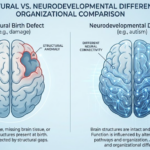
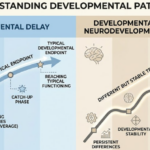
Executive dysfunction and autism refers to the difficulties autistic individuals experience with the set of mental skills that manage planning, organizing, initiating tasks, shifting attention, and regulating impulses and emotions. These are not laziness, poor attitude, or a lack of effort. They are neurologically rooted challenges that stem from how the autistic brain coordinates its executive control systems, and they affect daily life in ways that are often invisible to people who do not experience them firsthand.
What makes executive dysfunction particularly confusing for families is the inconsistency it produces. A child might complete a complex LEGO set independently but be completely unable to start a homework assignment. They might remember detailed facts about their favorite topic but forget to bring their backpack downstairs three times in a row. That gap between capability in preferred contexts and apparent inability in others is one of executive dysfunction’s most characteristic and frustrating features, and understanding why it happens changes everything about how you respond to it.
What Executive Function Actually Covers
Executive function is an umbrella term for a collection of higher-order cognitive processes managed primarily by the prefrontal cortex. These processes work together to help a person plan what needs to happen, initiate getting started, hold relevant information in working memory while doing it, monitor their own progress, adjust when something is not working, and regulate the emotions that arise throughout.
In autism, differences in how the prefrontal cortex develops and connects with other brain regions mean that these processes often do not work as automatically or efficiently as they do in neurotypical individuals. This is not a matter of intelligence. Autistic people with very high IQs frequently experience significant executive dysfunction, which is one reason why the condition is so often misunderstood by teachers and family members who assume that a smart child should be able to organize themselves.
The specific areas where executive dysfunction autism shows up most consistently include:
- Task initiation, which is the ability to start something even when you know what needs to be done
- Working memory, which is holding and using information in the moment without losing track of it
- Cognitive flexibility, which is shifting between tasks, perspectives, or plans when circumstances change
- Impulse control, which is pausing before acting or speaking when the environment demands it
- Emotional regulation, which is managing the intensity and duration of emotional responses
- Planning and organization, which is breaking a goal into steps and sequencing them logically
- Time perception, which is accurately sensing how much time has passed or is remaining
Each of these areas can be affected independently or in combination, and the profile looks different from person to person even within the autism community.
Things to Know About Executive Dysfunction and Autism
Several things about executive dysfunction autism are frequently misunderstood in ways that directly affect how children and adults are treated, and getting these right matters enormously.
Executive dysfunction is not visible from the outside in the way that other challenges are. A child who cannot initiate their homework looks, to an observer, like a child who is choosing not to do it. A teenager who loses track of time and misses a commitment looks like someone who does not care. The invisible nature of these difficulties is one reason they so frequently get misattributed to character rather than neurology.
Motivation affects executive function performance, but not in a moral sense. When an autistic person is highly motivated by a task, their executive function often performs considerably better. This is not evidence that they can always do it if they just try harder. It reflects how dopamine and reward pathways interact with executive control systems. The ability is inconsistent precisely because the underlying neurology is inconsistent, not because effort is being selectively withheld.
Executive dysfunction and autism-related rigidity are related but distinct. Rigidity, or insistence on sameness, is driven by a need for predictability and sensory-emotional regulation. Executive dysfunction involves the cognitive mechanics of planning and shifting. They frequently co-occur and amplify each other, but they respond to different kinds of support.
Support tools are not cheating. External scaffolding like checklists, visual schedules, timers, and reminders does not make executive dysfunction worse by creating dependence. It compensates for a neurological difference the same way glasses compensate for vision differences. Providing these tools is not lowering standards. It is accurate accommodation.
For families navigating executive dysfunction alongside a broader autism profile, individualized support from an experienced clinical team matters. ABA therapy in Fairfax, VA provides structured skill-building in exactly the areas executive dysfunction affects most, from task initiation to emotional regulation and daily living skills.

How Executive Dysfunction Shows Up in Daily Life
The clearest way to understand executive dysfunction autism is through what it actually looks like across the ordinary moments of a day, because the gap between clinical description and lived experience is wide.
Morning routines are a common flashpoint. Getting ready for school involves multiple sequential steps, each requiring initiation, working memory to remember what comes next, and time awareness to pace the sequence. For a child with executive dysfunction, any one of those components can fail silently, producing what looks from the outside like dawdling or defiance but is actually a genuine inability to move the sequence forward without external prompting.
Homework and school tasks present similar challenges. Knowing that an assignment exists and knowing how to do it are entirely separate from being able to start it. Task initiation is one of the most impaired executive functions in autism, and it is particularly resistant to purely motivational strategies. Telling a child to just get started does not provide the neurological push the system is missing.
Transitions between activities are difficult because they require cognitive flexibility, the ability to disengage from what is currently happening and shift mental resources to something new. This is why a five-minute warning before ending a preferred activity is not just courtesy. It is a genuine accommodation for a real neurological difficulty.
Emotional regulation failures often trace back to executive dysfunction. When the brain’s management systems are not working efficiently, emotional responses arise faster, feel more intense, and are harder to modulate before they escalate. This is one reason autistic children who are clearly intelligent and verbally capable can still experience meltdowns that seem disproportionate to the trigger. The regulation machinery, not the emotion itself, is where the difficulty lies.
Reading about regressive autism offers useful perspective on how developmental and neurological factors can shift a child’s functional profile over time, including in the executive function domain, which helps families understand why a child who seemed to be managing may suddenly struggle more.
Executive Dysfunction Across Different Settings
One of the most important things to understand about executive dysfunction autism is that it does not present uniformly across all environments, and this inconsistency creates real challenges for families trying to get appropriate support at school.
At home, where routines are familiar, the environment is controllable, and demands can be scaffolded by parents, executive dysfunction may be less visibly disruptive. The same child may completely fall apart in a school environment where expectations shift frequently, sensory demands are higher, and the pace of transitions is set by the group rather than the individual.
The reverse can also be true. Some children hold it together with enormous effort throughout the school day and then deregulate completely at home once the sustained effort of masking and compensating is released. This is sometimes called the “exploding at home” pattern, and it is directly connected to how much executive and regulatory effort the child has been exerting in the structured setting.
| Setting | Common Executive Dysfunction Patterns | Why It Looks Different Here |
| Home mornings | Task initiation failures, sequence breaks, time blindness | Multiple steps, low external structure, familiar enough to feel safe |
| School classroom | Difficulty starting assignments, losing materials, slow transitions | High demand, group pace, sensory load compounds executive load |
| After school | Emotional dysregulation, shutdown, meltdowns | Depletion after sustained compensatory effort all day |
| Unstructured social time | Impulsivity, difficulty reading shifting social context | No clear rules or scripts, requires rapid flexible adjustment |
| Preferred activities | Significantly better initiation and follow-through | Dopamine engagement supports executive system performance |
Practical Strategies That Actually Work
Supporting executive dysfunction autism effectively requires external scaffolding that substitutes for what the internal executive system cannot reliably provide on its own. The goal is not to eliminate the need for support but to make that support as natural and embedded in daily life as possible so the child can function with greater independence over time.
Visual schedules and checklists are among the most reliably effective tools across age groups. When the sequence of a task is externalized onto a list or chart, the child does not have to hold it in working memory while also trying to execute it. The visual reference does the holding so the child can focus on the doing.
Timers and time anchors address time blindness, the difficulty autistic individuals often have perceiving how much time has passed. A visual timer that shows time depleting rather than just counting up gives concrete, real-time feedback that spoken reminders cannot provide.
Breaking tasks into the smallest reasonable steps reduces the initiation barrier. The hardest part of any task for someone with executive dysfunction is getting started. A task described as write your essay is overwhelming. A task described as open your notebook and write the title is not. The first step needs to be small enough that it does not trigger the same initiation block as the full task.
Transition warnings, as mentioned throughout, are not optional extras. They are genuine accommodations for cognitive inflexibility. Five minutes before, two minutes before, and then a clear signal that the transition is happening gives the executive system time to prepare rather than being abruptly interrupted.
Emotional co-regulation strategies, practiced during calm moments rather than introduced during crisis, build the regulatory capacity that executive dysfunction erodes. This includes breathing techniques, sensory strategies, and environmental modifications that reduce the load on the system before it exceeds its capacity.
| Executive Function Area | Practical Support Strategy | What It Replaces Internally |
| Task initiation | Break tasks into smallest first step, use a start signal | The internal push to begin |
| Working memory | Written checklists, visual schedules, labeled storage | Holding the sequence in mind while executing |
| Time perception | Visual timers, time anchors, scheduled buffers | Internal sense of time passing |
| Cognitive flexibility | Advance warnings, transition objects, predictable structure | Ability to shift mental set smoothly |
| Emotional regulation | Co-regulation practice, sensory tools, environmental design | Modulating emotional intensity before escalation |
| Planning and organization | Color-coded systems, external planners, task breakdown | Internally generating and sequencing steps |
Our post on whether hyperfixation is a symptom of autism is a useful companion read here because the relationship between executive function and focused interest explains a great deal about the inconsistency families observe in their child’s daily functioning.
Clinicians who understand executive dysfunction can build these strategies into structured therapy rather than leaving families to piece it together alone. ABA therapy in Annandale, VA provides individualized programming that directly targets executive function skill-building alongside the broader social and adaptive goals in a child’s therapy plan.

Executive Dysfunction in Adolescents and Adults
Executive dysfunction autism does not resolve at a certain age, and the demands placed on executive function actually increase substantially as children move into adolescence and adulthood. Middle school and high school introduce longer-term projects, less moment-to-moment teacher structure, more complex social navigation, and greater expectations for independent organization, all of which hit hardest in exactly the areas executive dysfunction affects most.
Autistic teenagers with executive dysfunction frequently develop anxiety as a secondary consequence. When you cannot reliably initiate tasks, manage time, or regulate emotional responses, the accumulating sense of falling behind and failing to meet expectations creates chronic stress that eventually becomes its own clinical concern.
In adulthood, executive dysfunction affects employment, independent living, and relationships. An autistic adult may be genuinely skilled and knowledgeable in their field but struggle to meet deadlines, manage email, maintain household routines, or navigate the social-executive demands of workplace relationships. Understanding this broader picture helps families see that building scaffolding skills early is not just about getting through school. It is an investment in long-term independence.
Our post on autism life expectancy explores how quality of life across the lifespan is shaped by the supports and skills developed earlier, which places executive function intervention in its proper long-term context.
For families in our region, ABA therapy in Manassas, VA supports autistic individuals across age ranges with skill-building that grows with the person’s evolving developmental demands.
Final Thoughts on Executive Dysfunction Autism
Executive dysfunction autism is one of those features that explains so much once you understand it. The child who knows exactly what they need to do but cannot start. The teenager who seems capable but cannot follow through. The adult who is clearly intelligent but cannot manage the administrative demands of daily life. All of these patterns make a different kind of sense when you understand the neurological difference underneath them.
The most helpful reframe for families is moving from why will they not to why cannot they, not as a permanent conclusion but as the starting question for finding the right support. When you stop interpreting executive dysfunction as motivation failure and start seeing it as a scaffolding need, the entire approach to support shifts in a direction that actually helps.
Your child is not failing to try. Their brain is working hard in a system that is not built to support how it functions. The right external structures do not just make daily life easier. They make it possible for the genuine capability underneath the dysfunction to show up more reliably.
Frequently Asked Questions About Executive Dysfunction Autism
What does autistic executive dysfunction feel like?
Autistic executive dysfunction often feels like knowing exactly what you need to do but being completely unable to make yourself start, like hitting an invisible wall between intention and action. Tasks that seem simple from the outside can feel paralyzing. Time feels slippery and impossible to track accurately. Emotions arrive faster and with more intensity than the situation seems to call for. Many autistic individuals describe it as the brain being willing but the system simply not cooperating, which is an accurate reflection of what is neurologically happening.
What is an example of executive dysfunction in autism?
A clear example is a child who understands an assignment, knows the steps involved, and has the knowledge to complete it, but sits for an hour without writing a single word. Another common example is an autistic teenager who means to reply to a message, thinks about doing it multiple times throughout the day, and then genuinely forgets because working memory did not hold the intention long enough to trigger the action. These are not choices or avoidance. They are executive system failures that look different from the outside than they feel from the inside.
What is finger flicking in autism?
Finger flicking is a repetitive hand movement where an autistic person rapidly flicks or waves their fingers, typically as a form of stimming. Stimming, or self-stimulatory behavior, serves a regulatory function by providing sensory feedback that helps manage arousal levels, reduce anxiety, or express excitement. Finger flicking is one of many common motor stims in autism and is generally not harmful. It becomes worth addressing clinically only when it interferes significantly with daily functioning or causes physical discomfort.
What is the 6 second rule for autism?
The 6 second rule is an informal observation guideline used during developmental assessments to evaluate joint attention, noting whether a child can sustain shared focus on an object or activity with another person for roughly six seconds. It is not a DSM-5 diagnostic criterion but one behavioral marker among many that clinicians observe. Difficulty with joint attention connects directly to the social communication challenges in autism and also intersects with executive function, since maintaining shared attention requires cognitive resources that executive dysfunction can deplete.
What is pebbling autistic?
Pebbling is the autistic practice of sharing something small and personally meaningful, such as a link, meme, or object related to a specific interest, as a way of expressing affection and connection. The term is borrowed from penguin courtship behavior, where pebbles are offered as gifts. For autistic individuals who find conventional verbal expressions of care difficult or uncomfortable, pebbling is a genuine and thoughtful way of saying I was thinking of you. Understanding it as an expression of connection rather than a random non-sequitur changes how these moments land in relationships significantly.