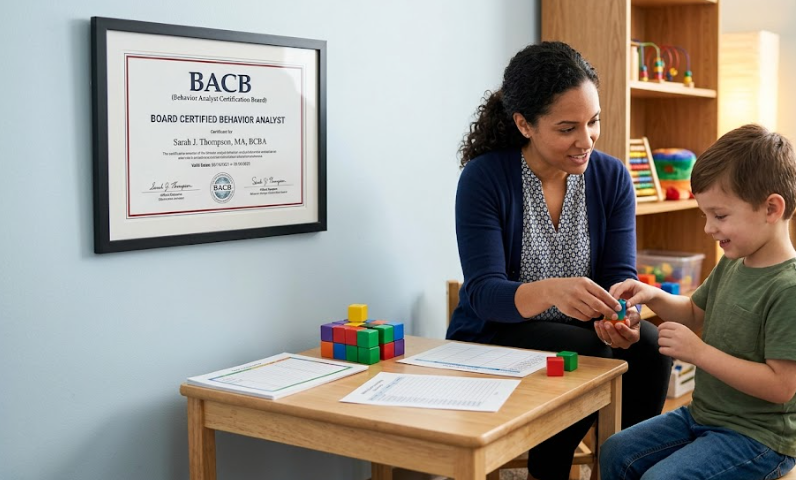
A Registered Behavior Technician (RBT) is a paraprofessional who delivers applied behavior analysis (ABA) therapy under the supervision of a Board Certified Behavior Analyst (BCBA). RBTs work directly with individuals, most commonly children with autism, to implement behavior intervention plans and help clients build meaningful skills.
Key Takeaway
- An RBT is a nationally credentialed paraprofessional who delivers ABA therapy under close BCBA supervision.
- The RBT credential is issued by the Behavior Analyst Certification Board (BACB) and requires a minimum of 40 hours of training plus a competency assessment.
- RBTs work on real, measurable goals: reducing harmful behaviors, teaching communication, and building daily living skills.
- Most RBT positions in the U.S. pay between $17 and $22 per hour, making it an accessible entry point into the behavioral health field.
- RBTs do not design treatment plans independently; they implement plans created and supervised by a BCBA or BCaBA.
- For families navigating an autism diagnosis, understanding what an RBT does helps you know exactly who is in the room with your child and why.
The RBT Credential: Where It Comes From and Why It Matters
The Registered Behavior Technician credential was established by the Behavior Analyst Certification Board (BACB) in 2014. Before this credential existed, there was no standardized national requirement for the frontline workers delivering ABA therapy. That was a real problem. Families had no reliable way to verify that the person sitting across from their child had met any consistent baseline of training.
The BACB is the nonprofit organization that also certifies BCBAs and BCaBAs (Board Certified Assistant Behavior Analysts). It sets the ethics codes, training standards, and renewal requirements for all three credential levels. When a technician earns and maintains their RBT credential, families and employers can look them up directly in the BACB’s public registry to confirm their status.
This matters more than it might seem on the surface. ABA therapy is intensive, often running 20 to 40 hours per week for children with autism. The person delivering most of those hours is the RBT, not the BCBA. A credentialed RBT is trained to collect data accurately, follow behavior plans consistently, and recognize when something isn’t working so they can flag it for their supervisor.
RBT Requirements: What It Takes to Earn the Credential
Becoming an RBT is one of the more accessible entry points into behavioral health careers. The requirements are deliberately structured so that motivated individuals without a graduate degree can qualify. Here is what the BACB requires as of 2024:
- Age: At least 18 years old.
- Education: A high school diploma or equivalent (GED accepted).
- Background check: A criminal background check is required.
- Training: Completion of the 40-hour RBT Task List training, which covers measurement, skill acquisition, behavior reduction, documentation, and professional conduct.
- Competency assessment: A BCBA or BCaBA must observe and verify that the candidate can perform core tasks in a real or simulated setting.
- RBT Exam: A 75-question multiple-choice exam administered through Pearson VUE testing centers.
Once credentialed, RBTs must renew annually. Renewal requires ongoing supervision (a minimum of 5% of all service hours each month must be supervised by a qualified BCBA) and a competency reassessment each year.
The exam has a passing rate of roughly 72-75%, which means it is not a rubber stamp. Candidates who do not study the task list carefully often need to retake it. Most RBT training programs run between 1 and 4 weeks.
What an RBT Actually Does Day to Day
Understanding the job description on paper is one thing. Knowing what an RBT does in a three-hour session with a six-year-old is another. Here is a realistic breakdown of daily responsibilities:
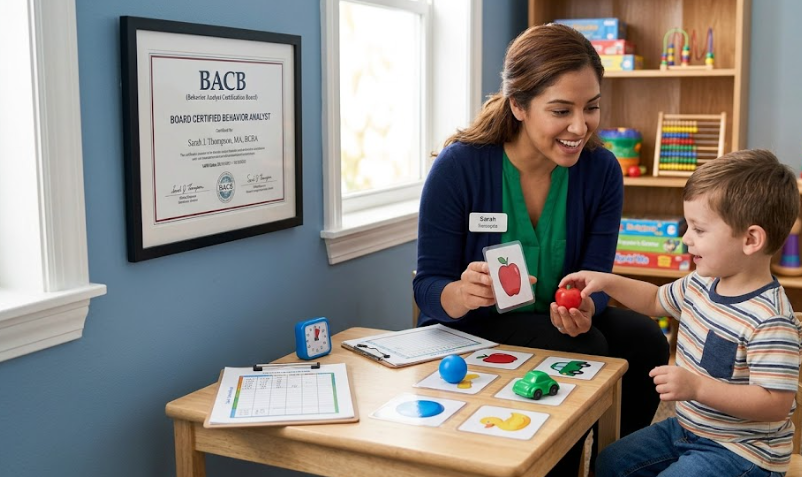
Skill acquisition programs: RBTs run structured teaching trials targeting skills outlined in the client’s treatment plan. These might include functional communication (asking for a toy instead of grabbing it), self-care tasks like brushing teeth, or academic readiness skills like matching shapes. Research supporting social skills training for autism consistently shows that direct, repeated practice with a trained technician is one of the most effective ways to build these abilities.
Behavior reduction: If a client engages in behaviors that interfere with learning or cause harm, the RBT follows specific protocols developed by the supervising BCBA. This includes things like extinction procedures, differential reinforcement, and redirection. The RBT does not improvise these protocols; they follow the written plan precisely.
Data collection: Every trial, every session, every behavior incident gets documented. RBTs record data in real time using apps, paper data sheets, or electronic health record platforms. This data feeds directly back to the BCBA, who analyzes it and adjusts the treatment plan accordingly.
Generalization and naturalistic teaching: Not all ABA happens at a table with flashcards. RBTs often work in homes, schools, and community settings to help clients use their skills in real-world environments. A child who learns to request a snack in a clinic needs to do the same thing at the grocery store.
Parent and caregiver communication: RBTs spend a significant amount of time with families and frequently serve as the most visible face of the therapy team. Clear, respectful communication about what happened in a session is a core part of the job.
RBT vs. BCBA: Understanding the Supervision Relationship
A common point of confusion for families is the difference between an RBT and a BCBA, and how they work together. The table below breaks down the key distinctions:
| Factor | RBT | BCBA |
| Education required | High school diploma | Master’s degree |
| Credential issuer | BACB | BACB |
| Primary role | Deliver therapy directly | Assess, design, supervise |
| Hours with client | Most direct hours | Supervisory visits |
| Can design treatment plans | No | Yes |
| Average U.S. hourly pay | $17-$22/hr | $35-$55/hr |
| Supervision required | Yes (BCBA oversight) | No (independent practice) |
The BCBA is the clinical decision-maker. They conduct assessments, interpret data, write and modify behavior intervention plans, and are legally and ethically responsible for the client’s outcomes. The RBT implements those plans with fidelity and precision.
This structure is intentional. ABA therapy is only effective when the treatment plan is actually carried out consistently. A BCBA who designs a brilliant plan but has no reliable technician to implement it will see poor outcomes. An RBT who follows the plan exactly but has no skilled BCBA updating it when it stops working will also see poor outcomes. Both roles are essential.
Who RBTs Work With: The Autism Connection and Beyond
While ABA therapy and the RBT role are most closely associated with autism, RBTs serve clients across a broader range of populations. These include individuals with developmental delays, traumatic brain injuries, intellectual disabilities, and behavioral health challenges.
That said, autism is by far the largest driver of demand for RBT services in the United States. Understanding how autism is diagnosed helps put the RBT’s role in context. The dsm 5 criteria for autism define autism spectrum disorder around persistent deficits in social communication and restricted, repetitive patterns of behavior. Many of the goals RBTs work on each day map directly to these diagnostic criteria.
It is also worth understanding the broader landscape. Debates around why are autism rates increasing highlight expanded diagnostic criteria, better screening, and increased awareness as key factors, not a single cause. As more children receive autism diagnoses, the demand for qualified RBTs continues to grow. The Bureau of Labor Statistics projects a 22% growth in the employment of behavioral disorder counselors through 2031, a category that includes RBTs and related roles.
Some families also turn to genetic testing for autism after a diagnosis to better understand underlying factors. While genetic information does not change an RBT’s day-to-day approach to treatment, it can inform the broader clinical picture that the supervising BCBA uses when designing interventions.

Things to Know
- RBTs cannot legally practice independently. Every RBT must have a qualifying supervisor. If an agency cannot tell you exactly who the supervising BCBA is, that is a serious red flag.
- The 40-hour training is a floor, not a ceiling. Many strong RBTs spend months building competency before they feel confident. Do not confuse the minimum requirement with readiness.
- Insurance coverage for ABA varies by state. All 50 states now have some form of autism insurance mandate, but coverage details differ significantly. Check your specific plan before assuming services are fully covered.
- RBTs must follow the BACB Ethics Code. Violations can result in credential revocation. Families can file complaints directly through the BACB if they believe an RBT or BCBA has acted unethically.
- Not all RBTs work in clinical settings. School districts, group homes, and telehealth companies all employ credentialed RBTs.
- The credential does not transfer to other behavior analysis credentials automatically. An RBT who wants to become a BCBA must earn a graduate degree, accrue supervised fieldwork hours, and pass a separate, significantly more demanding exam.
RBT Salary and Career Path in the United States
The average hourly wage for an RBT in the U.S. falls between $17 and $22 per hour, though this varies considerably by state and employer. In states like California, New York, and Massachusetts, rates can reach $25 to $28 per hour. Agencies that operate in high-cost-of-living markets often offer benefits packages that include health insurance, paid time off, and tuition reimbursement for employees pursuing a BCBA credential.
For many RBTs, this role is the first step in a longer career in applied behavior analysis. Common career paths include:
- RBT to BCaBA: Requires an associate’s or bachelor’s degree plus supervised hours.
- RBT to BCBA: Requires a master’s degree in behavior analysis or a related field, plus 2,000 supervised fieldwork hours.
- RBT to school-based behavior specialist: Some states have their own credentialing pathways for school staff.
Many large ABA companies in the U.S., including Centria Healthcare, Hopebridge, and Behavior Frontiers, run formal career development programs specifically for RBTs who want to move toward board certification.

The Bottom Line on What Is RBT
What is RBT comes down to this: it is a nationally standardized entry-level credential for the frontline professionals delivering ABA therapy, most often to children with autism and related developmental challenges. RBTs are trained, supervised, and accountable, and they represent the majority of the direct contact hours in any ABA program.
If your child has recently been diagnosed with autism or is beginning ABA services, understanding the RBT’s role helps you ask better questions, evaluate providers more effectively, and advocate clearly for your child’s care. Ask for your RBT’s BACB credential number, ask who their supervising BCBA is, and ask how often that supervisor observes sessions in person. Those three questions alone will tell you a great deal about the quality of the program you are considering.
Frequently Asked Questions
How long does it take to become an RBT?
Most people complete the requirements and earn their RBT credential within 4 to 8 weeks.
The 40-hour training can be completed online or in person, and many ABA employers provide it at no cost to new hires. Once training and the competency assessment are done, candidates schedule their Pearson VUE exam. Test results are typically available within a few days of testing.
Can an RBT work in a school setting?
Yes, RBTs can and frequently do work in public and private school environments as part of a student’s ABA-based support plan.
In school settings, the RBT typically supports students with Individualized Education Programs (IEPs) by implementing behavior support strategies during the school day. Supervision from a BCBA is still required, though it may be provided remotely or during weekly consultations depending on the district’s setup.
What is the difference between an RBT and a behavior therapist?
“Behavior therapist” is a general job title, while RBT is a specific, nationally recognized credential issued by the BACB.
Some agencies use the title behavior therapist, behavior technician, or ABA therapist interchangeably with RBT. The key question is whether the individual holds a current, verifiable BACB credential, which you can check at the BACB’s public registry. A job title alone does not tell you whether someone has met standardized training and competency requirements.
Does insurance pay for ABA therapy with an RBT?
Most major commercial insurance plans in the U.S. cover ABA therapy, including services delivered by credentialed RBTs under BCBA supervision.
Coverage typically requires a formal autism diagnosis and a treatment authorization. Medicaid programs in all 50 states also cover ABA therapy for eligible children, though billing and authorization processes vary by state. Families should contact their insurance provider directly to confirm in-network providers and annual benefit limits.
What happens if an RBT makes a mistake during a session?
RBTs are trained to document and report procedural errors to their supervising BCBA, who then determines whether a plan adjustment or retraining is needed.
No technician is perfect, and the supervision structure in ABA is specifically designed to catch and correct errors before they affect client outcomes. This is one reason why the minimum 5% monthly supervision requirement exists. Regular supervision check-ins, data review, and direct observation sessions all serve as quality controls within the therapy model.