Key Takeaways
- Television does not cause autism — autism is a neurodevelopmental condition rooted in genetics and prenatal brain development that cannot be triggered by postnatal screen exposure
- The correlation that sparked this theory — higher TV viewership areas having higher autism rates — was from a 2006 economic study that did not prove causation and did not replicate under better controls
- Autistic children often watch more TV than neurotypical children — but the relationship runs the other direction: autism leads to increased TV preference, not the other way around
- Excessive early screen time can affect language development and attention in neurotypical children — these effects are real and worth taking seriously, but they are not autism
- A controversial concept called “virtual autism” describes screen-induced developmental delays that can superficially resemble autism features — it is not the same as autism, and the effects are generally reversible with reduced screen time
The Direct Answer: No — TV Does Not Cause Autism
Television does not cause autism. Neither does YouTube, iPad use, background TV, or any other form of screen exposure after birth.
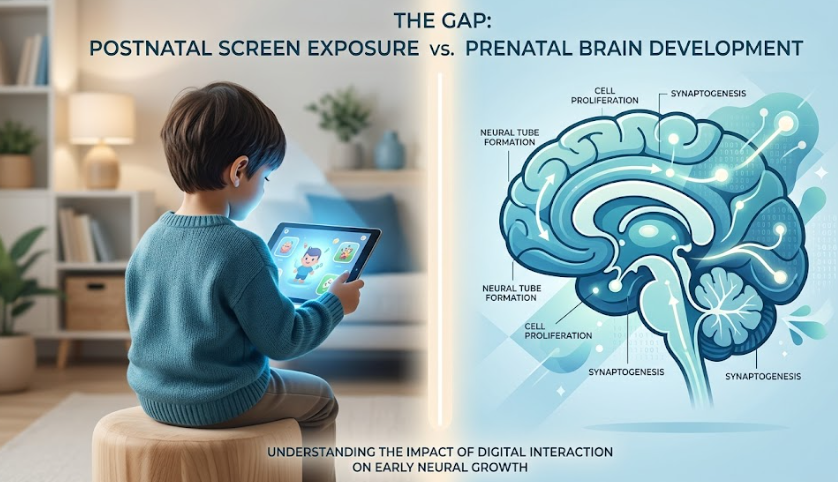
Autism is a neurodevelopmental condition — its neurological foundations are established during prenatal brain development, shaped by genetics and the intrauterine environment, and present before a child has ever seen a screen. A postnatal environmental exposure cannot restructure a brain architecture that was already organized differently in the womb.
If you are a parent who has searched this question because you are worried that your child’s TV habits caused their autism — or might cause it — that worry is understandable but scientifically unfounded. The guilt many parents carry around screen time and autism is not supported by the evidence. Autism’s origins are genetic and prenatal. They are not in the living room.
That said, the relationship between screens and autism is genuinely more nuanced than a simple yes or no. Understanding the real research — what it shows, what sparked the claim, and what screen time actually does affect — gives parents far better information than a blanket “screens are fine” or “screens are dangerous.”
Where the Theory Came From: The 2006 Cornell Study
The claim that TV causes autism traces most directly to a 2006 study by economists Michael Waldman, Sean Nicholson, and Nodir Adilov at Cornell University. The study used two datasets to examine the correlation between TV exposure and autism rates.
First, they found that US counties with higher cable TV subscription rates — used as a proxy for higher TV viewership — had statistically higher autism rates. Second, they examined rainfall data in California, Oregon, and Washington, reasoning that rainier areas push children indoors and toward more TV watching — and found that counties with higher rainfall had higher autism rates.
This study received significant media coverage. It was framed as suggesting that TV viewing in early childhood might be driving the rise in autism.
Several critical problems with this interpretation:
It was an economics study using ecological data. Waldman and colleagues were economists, not developmental researchers or clinicians. Their methods were designed to detect economic patterns, not to establish biological causation. Ecological correlations — patterns observed at the population level — cannot establish that any individual child’s TV watching caused their autism.
The controls were limited. The same counties with higher cable penetration and higher rainfall tend to differ in dozens of other ways — urbanization, access to healthcare, income levels, awareness of autism, and proximity to specialists who can diagnose it. Any of these confounders could explain the correlation.
The study did not replicate. When Waldman’s own team attempted a follow-up analysis with improved methodology, and when other researchers attempted to replicate the findings with additional controls, the associations weakened substantially or disappeared. A 2012 follow-up analysis found the original correlations did not hold under more careful examination.
The timing argument runs backward. Autism’s neurological differences are established prenatally. A child cannot develop autism from watching TV after birth any more than a left-handed child can become right-handed from watching right-handed people on screen.
The study is interesting as an economics exercise in ecological correlation. It is not evidence that TV causes autism.
The Real Relationship: Why Autistic Children Watch More TV
Here is the correlation that is genuinely robust in the research: autistic children tend to watch more TV and spend more time on screens than neurotypical children. This is consistently observed across multiple studies and is almost certainly real.
The question is which direction the relationship runs — and the answer, supported by the developmental evidence, is that autism leads to increased TV preference, not that TV exposure produces autism.
Several mechanisms explain why autistic children are drawn to screens:
Sensory predictability. Television provides a controlled, predictable sensory environment. The volume, pacing, and visual content stay within manageable parameters. For a child whose sensory system finds the unpredictability of social interaction overwhelming, the screen offers a reliable alternative.
Low social demand. Watching TV requires nothing socially. There is no turn-taking, no reading of facial expressions, no adjusting of behavior based on another person’s emotional state. For a child who finds those demands difficult, screen time provides genuine relief.
Pattern and repetition. Many autistic children are drawn to the repeated viewing of specific shows or videos — watching the same episode dozens of times, often to a degree that concerns parents. This repetition serves a regulatory function: the predictable content produces a predictable internal state. The DSM-5 criteria for autism explicitly includes insistence on sameness as a core feature — repeated viewing is an expression of that same pattern in a screen context.
Language processing. Some autistic children engage deeply with the language they hear on specific shows — scripting dialogue, repeating phrases, using show language in social contexts. This is called echolalia, and for some children, it represents a genuine language-learning pathway.
What this means for parents: if your autistic child watches a lot of TV, they are not making their autism worse. They are, in many cases, doing something that meets a genuine neurological need. That doesn’t mean unlimited screen time is the clinical recommendation — it means the screen time should be understood and addressed within the context of the child’s full profile, not treated as a harmful compulsion.
What Is “Virtual Autism”? And Is It Real?
In recent years, the term “virtual autism” has circulated — particularly after a 2018 paper by Romanian researcher Marius Zamfir describing cases of Romanian toddlers who were presenting with autism-like symptoms and who had experienced very high levels of screen time (6–12+ hours per day in some cases). When screen time was significantly reduced and parent-child interaction was increased, many of these children’s autism-like symptoms improved substantially.
This concept is worth engaging with honestly — because it reflects something real, even if the framing is imprecise.
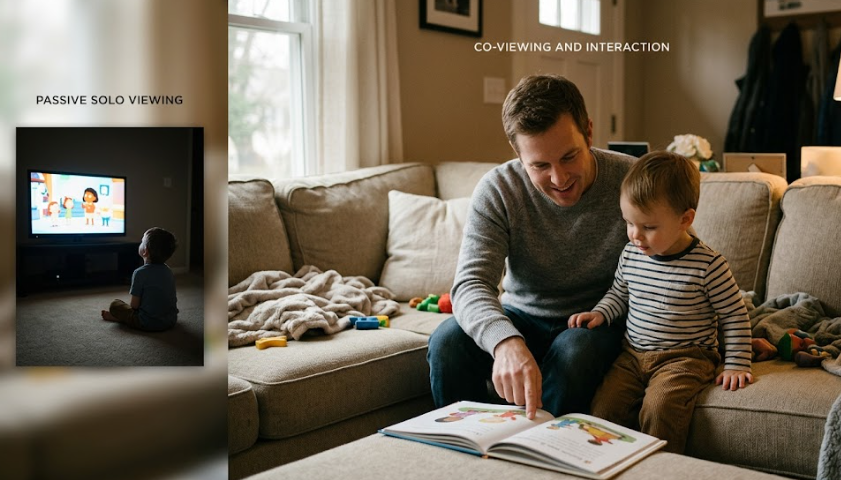
What the research describes: Children who spend extreme amounts of time in front of screens in early childhood — particularly at the expense of face-to-face interaction, language-rich environments, and responsive caregiving — can develop delays in language, social engagement, and joint attention that superficially resemble autism features. These delays appear to be largely reversible with environmental change.
What it does not describe: Actual autism spectrum disorder. Autism is a neurodevelopmental condition with genetic underpinnings, present from prenatal development, and persistent across the lifespan. Children whose screen-related developmental delays improve when screen time is reduced did not have autism — they had developmental delays associated with environmental deprivation that resolved when the environment changed. Calling this “virtual autism” is a misnomer that creates unnecessary confusion and guilt for parents of genuinely autistic children.
The practical takeaway: Very high screen exposure in early childhood, particularly at the expense of face-to-face interaction, can produce real and meaningful developmental delays in language and social attention. This is a genuine concern worth taking seriously — separate from autism causation. The American Academy of Pediatrics recommends avoiding screens (except video chatting) for children under 18–24 months and limiting content to high-quality, adult-supervised programming for children 2–5, for reasons related to language and attention development. These recommendations stand on their own merits, without needing to invoke autism causation.
What Screen Time Actually Does Affect
Separating what screen time does and does not do helps parents make genuinely informed decisions rather than reacting to fear.
Screen time in infancy and toddlerhood CAN affect:
- Language development — infants and toddlers learn language most effectively through contingent, responsive, face-to-face interaction. TV does not provide contingent responses to a child’s vocalizations, limiting its language-learning value. High screen time at the expense of face-to-face interaction can slow vocabulary development in neurotypical children.
- Attention regulation — fast-paced, highly stimulating content may affect the development of sustained attention in some children. This is an area of ongoing research without fully settled conclusions.
- Sleep — screen use before bedtime, particularly with blue-light-emitting devices, affects sleep onset and quality across all ages.
- Physical activity — screens are sedentary; excess screen time displaces physical activity with documented developmental benefits.
Screen time does NOT cause:
- Autism spectrum disorder
- Permanent language impairment in neurologically typical children
- Any condition that requires clinical intervention in the way that autism does
For autistic children specifically, the screen time picture is more individualized. Some autistic children benefit from structured, intentional screen-based activities — certain language apps, social skills video modeling programs, and educational content delivered through screens. Blanket restrictions often fail to account for how these children actually engage with and benefit from screens.
Addressing Parental Guilt Directly
If you are reading this article because you are a parent of an autistic child who watched a lot of TV as a toddler — or because you are currently pregnant and frightened about screen exposure — this section is specifically for you.
Your child’s autism was not caused by television. It was not caused by anything you did or did not do after your child was born. Autism’s origins are genetic and prenatal — in how your child’s brain developed before they took their first breath, shaped by the genetic code present in every cell of their body.
The guilt that many parents carry around this question is real and painful, and it is not supported by the scientific evidence. Releasing that guilt does not minimize the challenges your child faces or the care and attention you bring to their development. It simply frees up the emotional energy that guilt consumes — energy better spent on the things that actually matter.
As why autism rates are increasing covers in depth, the apparent rise in autism is driven by diagnostic and surveillance changes, not by any environmental exposure — screens included. Autism existed long before television did. It will not be explained by it.
Common Misconceptions About TV and Autism
“My child started watching TV more right before their autism was diagnosed — the TV must have done something.” The sequence reflects autism’s developmental trajectory, not causation. Autistic children often increase TV engagement during the same developmental window — 12 to 24 months — when autism signs typically become most visible. The autism was present before the TV watching increased. The TV watching increased because autism was already present.
“If TV doesn’t cause autism, why do autistic kids love it so much?” Because autism makes certain features of TV deeply regulating: predictability, controllable sensory input, no social demands, and the option for repetition. The affinity is a product of autism, not a cause of it.
“The AAP screen time guidelines exist because of the autism risk.” The AAP’s screen time guidance is based on research about language development, attention, and physical activity — not autism risk. The guidelines are worth following for those reasons, which stand entirely independent of autism.
“Reducing screen time will help my autistic child improve.” Reducing screen time for an autistic child is not equivalent to autism treatment. It may be appropriate for specific reasons — sleep hygiene, displacing more beneficial activities, addressing specific behavioral concerns — but it will not reduce autistic traits, which are neurological, not environmentally induced.
“Background TV affects autistic children’s development the way it does neurotypical children’s.” Background TV — TV playing while the child is doing other things — has been found to disrupt parent-child interaction and language-learning episodes in research on neurotypical children. For autistic children who are already sensitive to auditory input, background TV may additionally contribute to sensory overload. This is worth considering as a family management decision, not as autism prevention.
Conclusion
TV does not cause autism. The claim originated from a methodologically limited economic study that did not replicate, proposed a mechanism that contradicts everything we know about autism’s prenatal developmental origins, and has never been supported by clinical research. Parents whose autistic children watch a lot of television did not cause their child’s autism by allowing it. Children who watch substantial TV will not develop autism because of it.
What is true is that autism and screen preference have a real relationship — driven by autism’s characteristic draw toward predictable, controllable, socially undemanding sensory environments. Understanding that relationship helps families make thoughtful decisions about screen time for their autistic child, rooted in the child’s actual neurological profile rather than fear of something that was never the cause.
Autism’s origins are genetic and prenatal. Its best-evidenced interventions are behavioral and developmental. And for families who are ready to take the next evidence-based step — regardless of how they got here or what questions led them to this article — support is available.
Dream Bigger ABA provides individualized ABA therapy for autistic children and their families across Northern Virginia, grounded in the most current evidence and delivered with genuine care for each child’s specific profile. Connect with our team to explore services in Vienna, VA and Gainesville, VA.
Frequently Asked Questions
Is there a link between autism and TV?
Yes — but the relationship runs in a specific direction that matters enormously. Autistic children tend to watch significantly more TV and spend more time on screens than neurotypical children of the same age. This correlation is well-documented. What the research does not support is the interpretation that TV causes autism. The evidence consistently suggests the relationship is the other way: autism — with its characteristic preference for predictable, controllable sensory environments and its reduced orientation toward face-to-face social interaction — leads autistic children to self-select for TV at higher rates. They are drawn to screens because of their autism, not made autistic by their screens. Autism originates prenatally, driven by genetics — not from any postnatal environmental exposure including television.
What is the largest cause of autism?
The largest and most consistently supported contributor to autism is genetics. Twin and family studies estimate autism’s heritability at 64–91%, meaning genetic factors explain the substantial majority of why one person develops autism and another does not. Hundreds of genetic variants — most individually small in effect but cumulatively significant — have been associated with autism risk. The genetic architecture of autism is complex and polygenic: no single gene explains most cases. Beyond genetics, prenatal environmental factors including advanced parental age, certain first-trimester infections, extreme prematurity, and possibly prenatal air pollution exposure modify risk at the margins. Television, screen time, vaccines, dietary factors, and other postnatal exposures are not among the established causes. For families seeking clarity about the genetic picture in their specific family, genetic testing for autism provides an overview of what current genetic evaluation can and cannot tell you.
What billionaire has Asperger’s?
Elon Musk is the most publicly known billionaire to have self-disclosed an Asperger’s syndrome diagnosis, doing so on Saturday Night Live in May 2021. Asperger’s syndrome was the diagnostic label used for autistic individuals without significant language or intellectual delays before being unified under the broader autism spectrum disorder classification in the DSM-5 in 2013. Musk’s public disclosure — matter-of-fact and unapologetic — was widely noted, partly because it challenged the stereotype of autism as exclusively marked by significant impairment. Other highly successful and publicly identified autistic individuals include Temple Grandin, professor and author; Greta Thunberg, climate activist; and, retrospectively and speculatively, numerous historical scientific and creative figures. The broader point is consistent: autism and extraordinary accomplishment are not mutually exclusive. The neurological differences that create autism-related challenges can, in specific contexts and with appropriate support, also produce remarkable strengths.
Can excessive screen time cause autism?
No — autism cannot be caused by screen time, no matter how excessive. Autism is a neurodevelopmental condition established prenatally through genetic and intrauterine developmental processes. No postnatal exposure — including extreme screen time — can restructure the prenatal brain architecture that underlies autism. What very high screen time in infancy and toddlerhood CAN do is affect language development, attention regulation, and the quality of parent-child interaction — producing delays that may superficially resemble some autism features. Some researchers have used the term “virtual autism” to describe this pattern, though it is controversial and not mainstream, and critically — unlike genuine autism — these screen-induced delays are generally reversible when the environment changes. If your infant or toddler is watching many hours of TV per day at the expense of face-to-face interaction, reducing that exposure is developmentally sound for language and attention reasons. It will not prevent or produce autism.
What is the biggest red flag for autism?
The most clinically reliable early red flag for autism is the consistent absence of joint attention by 12–14 months. Joint attention refers to the triadic coordination of attention between a child, another person, and an external object or event — expressed through pointing to share interest, following a caregiver’s pointing gesture, and alternating gaze between a person and an object to communicate shared experience. When a child consistently does not point to show things of interest, does not follow a pointed finger, and does not look back and forth between a person and an object to check that the other person is sharing their attention — that pattern is the most predictive early marker of autism identified in developmental research. Additional major red flags include no babbling by 12 months, no single words by 16 months, no spontaneous two-word phrases by 24 months, consistent failure to respond to their own name despite normal hearing, and any loss of previously acquired communication or social skills at any age. Any of these signs warrants immediate evaluation — not a wait-and-see approach.