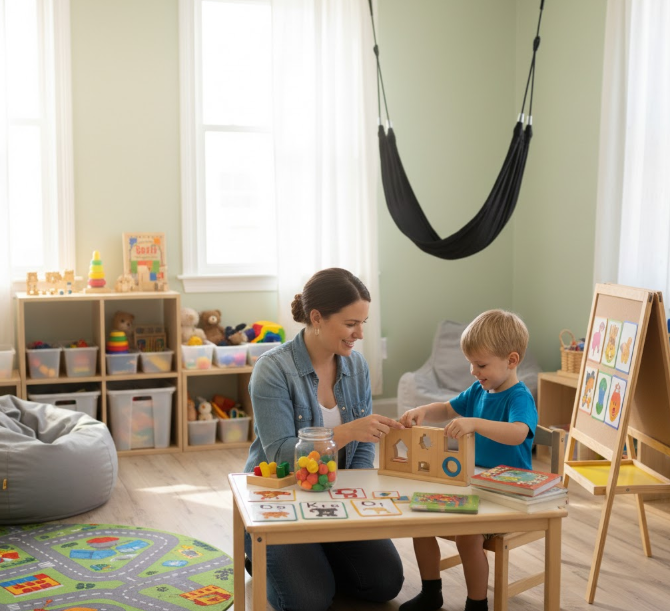
The best autism therapy Bixby offers centers on Applied Behavior Analysis (ABA) combined with speech and occupational therapy, all customized to your child’s unique strengths and challenges. Quality providers focus on evidence-based methods that build communication skills, reduce challenging behaviors, and support independence in daily life.
Choosing therapy for your child can feel overwhelming, especially when you want to make sure you’re picking the approach that truly helps. Families in Bixby have access to multiple therapy options, but understanding what works, why it matters, and how to find the right fit makes all the difference. This guide walks you through everything you need to know about autism therapy in your area.
What Makes Autism Therapy Effective in Bixby?
Effective autism therapy doesn’t follow a one-size-fits-all model. The most successful programs recognize that every child on the spectrum has different sensory preferences, learning styles, and communication needs. What works for one child might not click for another, which is why personalized treatment plans matter so much.
In Bixby, quality therapy providers start with comprehensive assessments that look beyond diagnosis labels. They observe how your child responds to different environments, what motivates them, and where they struggle most. This detailed understanding shapes goals that feel meaningful to your family rather than generic milestones that don’t fit your reality.
The therapy setting itself plays a role in outcomes. Some children thrive in clinic-based programs with structured routines and specialized equipment. Others make faster progress with in-home therapy where they practice skills in the exact environment where they’ll use them. Many families find that a combination approach, blending clinic sessions with home visits, gives their child the best foundation for growth.
Consistency between therapy sessions and daily life creates the biggest impact. When therapists collaborate closely with parents and caregivers, showing you how to reinforce skills during meals, playtime, and bedtime routines, your child practices more often and remembers what they’ve learned. This partnership transforms therapy from something that happens once or twice a week into a continuous learning experience.
Types of Autism Therapy Available
Different therapeutic approaches target specific areas of development. Understanding what each therapy does and how it helps lets you build a treatment plan that addresses your child’s most pressing needs.
Applied Behavior Analysis (ABA)
ABA therapy focuses on teaching new skills and reducing behaviors that interfere with learning or safety. Therapists break down complex abilities into smaller, manageable steps, then use positive reinforcement to help your child master each piece. This might look like rewarding your child for making eye contact, using words instead of gestures, or sitting calmly during circle time.
Research consistently shows that intensive ABA therapy, especially when started early, leads to significant gains in communication, social skills, and adaptive behaviors. Sessions typically involve one-on-one work with trained therapists who track progress carefully and adjust techniques based on what’s working. At ABA therapy in Fairfax, VA, therapists use data-driven approaches to ensure every session moves your child closer to their goals.
What sets ABA apart is its flexibility. Therapists can address everything from potty training and getting dressed independently to understanding emotions and making friends. The structured nature of ABA also helps children who need clear routines and predictable expectations to feel safe while learning.
Speech Therapy
Many children with autism struggle to express their needs, understand what others are saying, or engage in back-and-forth conversation. Speech therapy addresses these communication challenges through exercises that build vocabulary, improve articulation, and teach conversational skills like taking turns and staying on topic.
For nonverbal children, speech therapists might introduce alternative communication methods such as picture exchange systems or speech-generating devices. The goal isn’t always spoken language but rather giving your child reliable ways to communicate wants, feelings, and thoughts. This reduces frustration that often leads to challenging behaviors.
Speech therapy also helps with pragmatic language, the social use of communication. Your child might learn how to greet others appropriately, ask questions, or adjust their tone and volume for different situations. These skills make interactions smoother and help your child build relationships with peers and adults.
Occupational Therapy
Occupational therapy targets the physical and sensory skills children need for daily activities. This includes everything from holding a pencil and cutting with scissors to tolerating different textures, managing loud environments, and coordinating movements for playground equipment.
Sensory processing differences affect many children with autism. Some feel overwhelmed by bright lights or certain sounds, while others seek intense sensory input through spinning, jumping, or touching everything. Occupational therapists create sensory diets, personalized activities that help regulate these responses and keep your child calm and focused throughout the day.
Fine motor skills, self-care tasks, and play skills all fall under occupational therapy’s scope. Your child might practice buttoning shirts, using utensils properly, or playing cooperatively with toys. These abilities directly impact independence and confidence.
| Therapy Type | Primary Focus | Best For |
| ABA Therapy | Behavior modification, skill acquisition | Building communication, reducing challenging behaviors, developing independence |
| Speech Therapy | Communication and language | Improving verbal skills, introducing alternative communication, social language |
| Occupational Therapy | Sensory regulation, motor skills, daily living | Managing sensory sensitivities, developing self-care abilities, improving coordination |
How to Choose the Best Autism Therapy in Bixby
Selecting the right therapy provider requires more than reading website descriptions or checking insurance networks. You need to evaluate credentials, observe sessions, and trust your instincts about whether a program truly fits your child and family.

What to Look for in Therapy Providers
Start by verifying professional qualifications. Board Certified Behavior Analysts (BCBAs) should oversee ABA programs, while speech-language pathologists (SLPs) and occupational therapists (OTs) need state licensure. Don’t hesitate to ask about experience working specifically with autistic children, as general therapy skills don’t always translate well to the unique needs of the autism spectrum.
Observe how therapists interact with your child during evaluations or trial sessions. Do they follow your child’s lead and incorporate interests into activities? Or do they push through resistance without adjusting their approach? The best therapists balance structure with flexibility, maintaining clear goals while making sessions enjoyable and engaging.
Communication with families separates good programs from exceptional ones. Providers should regularly update you on progress, explain why they’re using specific techniques, and actively seek your input about what’s working at home. You’re the expert on your child, and therapists should treat your observations as valuable data that shapes treatment decisions.
Ask about staff turnover rates and how providers handle transitions when therapists leave. Consistency matters tremendously for children with autism, who often need time to build trust and comfort with new people. Programs with low turnover and clear transition protocols protect your child’s progress during inevitable staffing changes.
Understanding Insurance and Costs
Autism therapy can be expensive, with ABA sessions alone sometimes costing hundreds of dollars per hour without insurance coverage. Understanding your benefits before starting therapy prevents financial stress later. Many states mandate insurance coverage for autism services, but coverage limits, copays, and provider network restrictions vary widely.
Contact your insurance company to verify autism benefits, then ask potential providers whether they accept your plan. Some therapists offer sliding scale fees or payment plans for families paying out of pocket. Medicaid often covers comprehensive autism services if your child qualifies, though wait lists for providers who accept Medicaid can be lengthy.
Look beyond immediate costs to consider long-term value. Intensive therapy that produces faster skill gains might cost more upfront but could reduce the total years of support your child needs. Programs like ABA therapy in Reston, VA demonstrate how early intensive intervention creates lasting improvements that carry through childhood and beyond.
Don’t forget about related expenses like transportation to clinic appointments, taking time off work for parent training sessions, or purchasing recommended materials and equipment. Building these costs into your budget from the start prevents surprises.
| Evaluation Factor | Questions to Ask | Why It Matters |
| Therapist Credentials | Are BCBAs supervising ABA? Do therapists have autism-specific training? | Ensures evidence-based practices and expertise with autism |
| Progress Tracking | How often is data collected? When will we review goals? | Confirms accountability and allows adjustments based on results |
| Parent Involvement | What does parent training look like? How can I support skills at home? | Extends learning beyond sessions for faster progress |
| Treatment Approach | Is therapy naturalistic or table-based? How do you handle challenging behaviors? | Matches your preferences and child’s learning style |
What to Expect from Autism Therapy Sessions
Your child’s therapy experience will depend on their age, current abilities, and specific goals, but certain elements appear across most quality programs. Understanding typical session structure helps you know what’s normal and when to ask questions about your child’s treatment.
Initial sessions focus heavily on assessment and building rapport. Therapists spend time observing your child’s interests, testing different reinforcers to discover what motivates them, and establishing baseline skills. This period can feel slow because visible progress isn’t happening yet, but this groundwork determines everything that follows.
Once therapy begins in earnest, sessions typically blend structured teaching with natural environment training. Your child might work at a table learning to identify colors or match shapes, then transition to play-based activities where they practice requesting toys and taking turns. The best programs make learning feel like playing so your child stays engaged and eager to participate.
Challenging behaviors often increase temporarily when therapy starts. This happens because your child is learning new expectations and losing access to certain behaviors they previously used to communicate or escape demands. Skilled therapists anticipate this and have plans to manage it safely while teaching replacement behaviors. Understanding that this is a normal, temporary phase helps you stay consistent during difficult moments.
As your child progresses, therapy becomes more complex and moves toward real-world settings. Goals shift from basic compliance and simple requests to conversational skills, problem-solving, and managing emotions. Therapists might start practicing skills in community locations like grocery stores or parks, preparing your child for the variety of situations they’ll encounter in daily life. For children working on understanding social dynamics and emotional regulation, insights from guides about theory of mind in autism can inform therapy approaches.
Supporting Your Child’s Progress Between Sessions
What happens outside formal therapy hours matters just as much as the sessions themselves. Children who receive consistent practice and reinforcement at home typically progress faster than those who only work on skills during appointments.
Start by learning the techniques your child’s therapists use. Most programs offer parent training sessions where you practice prompting, reinforcing, and collecting data just like the professionals do. These skills let you turn everyday moments into learning opportunities without making your child feel like they’re constantly in therapy.
Create environments at home that support skill development. If your child is working on independent play, set up a designated play area with organized toys and clear expectations. If communication is the focus, model the language you want to hear and give your child plenty of chances to request things they want rather than anticipating every need.
Pay attention to patterns in your child’s behavior. When do challenging behaviors happen most? What seems to help your child calm down? Sharing these observations with therapists gives them crucial information for refining strategies. You might notice that meltdowns always happen before dinner when your child is hungry, or that your child focuses best after physical activity, insights that can reshape the therapy approach.
Celebrate small wins. Progress with autism therapy often comes in incremental steps that don’t look dramatic at first. Your child using a word consistently that they couldn’t say last month, tolerating a texture they previously refused, or playing beside another child without conflict are all significant achievements worth acknowledging. Families seeking specialized support for early intervention can explore options like ABA therapy in Centreville, VA for comprehensive programs.
Things to Know About Starting Autism Therapy
Beginning therapy brings up questions and concerns that other families have navigated before you. Being prepared for common experiences helps the process feel less overwhelming.
Wait times for quality providers can stretch weeks or even months, particularly for ABA therapy. Don’t wait to get your child on waiting lists while you’re still deciding between programs. You can always turn down a spot if you find a better fit elsewhere, but losing months to wait lists delays important intervention.
Your child might not love therapy at first. New places, new people, and new demands can feel threatening to children who prefer familiar routines. Give your child time to adjust, and talk with therapists about strategies to ease transitions. Most children warm up within a few weeks once they understand the routine and discover that therapy includes fun activities and rewards.
Progress isn’t linear. You’ll see weeks of great gains followed by plateaus or even temporary regression. This doesn’t mean therapy isn’t working or that your child is backsliding permanently. Development happens in bursts, and sometimes children consolidate skills internally before you see external changes.
Therapists should adjust goals regularly based on your child’s progress and changing needs. If you feel like your child is stuck on the same targets for too long without advancement, or if certain goals no longer feel relevant to your family’s priorities, speak up. Therapy should evolve as your child does.
Some families worry about their child becoming too dependent on prompts or rewards. Quality therapy programs systematically fade these supports as skills strengthen, teaching your child to perform abilities naturally and independently. If you notice your child requiring the same level of prompting months after mastering a skill, discuss fading procedures with the therapy team.

Connecting Therapy to Long-Term Outcomes
The ultimate goal of autism therapy extends beyond individual skills to overall quality of life. You want your child to feel confident, communicate effectively, build meaningful relationships, and participate in activities they enjoy.
Research on intensive early intervention shows that children who receive comprehensive therapy during preschool years often need less support as they grow older. Skills learned during these foundational years, things like responding to their name, following simple instructions, and communicating basic needs, become building blocks for more complex abilities later.
However, therapy isn’t about making your child less autistic or changing their fundamental personality. The aim is giving them tools to navigate a world not designed for neurodivergent minds while honoring their unique way of experiencing life. Families sometimes wonder about autism life expectancy and long-term outcomes, topics that quality therapy programs address with honesty and hope.
Many autistic adults credit childhood therapy with teaching them skills that improved their independence and self-advocacy, even as they also critique aspects of how therapy was delivered. This reminds us to keep checking in with our children about their therapy experience and adjusting approaches based on their feedback as they grow old enough to express preferences.
Success looks different for every child. For some, it means attending mainstream school with minimal supports. For others, it means living semi-independently with ongoing assistance. For still others, it means expressing themselves consistently through alternative communication and participating in community activities with support. All these outcomes represent meaningful progress when they help your child live a fuller, happier life.
Finding Additional Support for Your Family
Autism therapy addresses your child’s needs, but parents and siblings need support too. Caring for a child with autism brings unique stresses, and connecting with others who understand can make a tremendous difference.
Look for local parent support groups where you can share experiences, ask questions, and learn from families further along in the journey. Online communities also provide valuable connections, though be cautious about advice that contradicts your child’s professional team or promotes unproven interventions.
Respite care services give you breaks to rest and recharge. Many areas offer programs specifically for families with special needs children, providing trained caregivers who understand autism and can manage challenging behaviors safely.
Your own mental health matters for your child’s progress. Parents experiencing high stress or depression struggle to implement therapy strategies consistently at home and may inadvertently reinforce problematic behaviors. Don’t hesitate to seek counseling or support for yourself as you navigate this journey. For families concerned about early signs, reading about autism in infants provides helpful context.
Wrapping Up: Your Next Steps
Finding the best autism therapy Bixby provides starts with understanding your options, evaluating providers carefully, and trusting your instincts about what feels right for your child and family. Quality therapy combines evidence-based practices with genuine care for your child as an individual, not just another case file.
Don’t rush the decision. Take time to visit multiple programs, ask thorough questions, and imagine your child thriving in each setting. The right fit exists, and investing effort upfront to find it pays dividends in your child’s progress and your family’s peace of mind.
Remember that you’re not just choosing therapy for where your child is now but for where you hope they’ll go. Programs that grow with your child, adjusting intensity and focus as needs change, provide the most value over time. Professional teams like those at ABA therapy in Annandale, VA demonstrate how comprehensive support adapts through different developmental stages.
Your child has unique gifts and potential waiting to unfold. With the right therapeutic support, patience, and partnership between professionals and family, that potential becomes reality in ways that honor who your child truly is.
Frequently Asked Questions
What kind of therapist is best for autism?
A Board Certified Behavior Analyst (BCBA) overseeing ABA therapy provides the most comprehensive autism support, especially when combined with speech and occupational therapy. BCBAs specialize in autism intervention and use evidence-based methods to address communication, behavior, and skill development. For young children, early intensive ABA therapy supervised by experienced BCBAs consistently shows the strongest outcomes. Speech-language pathologists and occupational therapists complement ABA by targeting specific communication and sensory needs. The best approach often involves a coordinated team rather than relying on a single therapy type.
What is 90% of autism caused by?
Research indicates that approximately 90% of autism risk comes from genetic factors, not environmental causes. Hundreds of genes contribute to autism, with variations affecting brain development and neural connections. Family history significantly increases likelihood, as autism tends to run in families even when previous generations went undiagnosed. The remaining 10% involves prenatal factors like maternal health during pregnancy, certain medications, or complications during birth. Vaccines do not cause autism, a fact confirmed by decades of research, which you can learn more about in our article on can vaccines cause autism.
What is the 10 second rule for autism?
The 10-second rule means waiting 10 full seconds after giving an instruction before prompting or repeating yourself. Many children with autism process language more slowly than neurotypical peers and need extra time to understand requests and formulate responses. When adults repeat instructions too quickly, it interrupts this processing and can actually slow down response time. Counting to 10 silently gives your child space to process, reducing frustration for both of you. This technique works particularly well during therapy sessions and daily routines.
Which country is best for treatment of autism?
The United States and Canada offer the most comprehensive autism services with strong insurance mandates, though several European countries also provide excellent support. The U.S. leads in research and has widespread ABA therapy access, particularly in states with robust autism insurance coverage. Canada provides extensive publicly funded services through provincial health systems. Countries like the UK, Australia, Norway, and Sweden offer strong support networks and educational accommodations. Treatment quality depends more on individual providers and regional resources than national systems.
What is the safest country for autism?
Nordic countries, particularly Norway and Sweden, rank highest for autism acceptance, accessibility, and social safety nets. These nations provide comprehensive healthcare coverage, strong disability rights protections, and inclusive education systems. However, “safety” encompasses many factors beyond services. Canada, the Netherlands, and New Zealand also rate highly for autism-friendly policies and community acceptance. The best location depends on your family’s specific needs, resources, and priorities. Many families find that community support and understanding matter more than national policy when determining where their child thrives.