Autism to autism communication typically flows more naturally than neurotypical-autistic exchanges because both parties share similar processing styles, sensory experiences, and social expectations. Research shows that when autistic individuals interact with each other, they often experience less miscommunication and greater mutual understanding without the need to mask or translate their natural communication patterns.
This isn’t about one way of communicating being “better” than another. It’s about recognizing that connection happens differently when both people share the same neurological framework. Many autistic adults report feeling more relaxed, understood, and authentic when talking with other autistic people compared to mixed neurotype conversations.
What Makes Autism to Autism Communication Different?
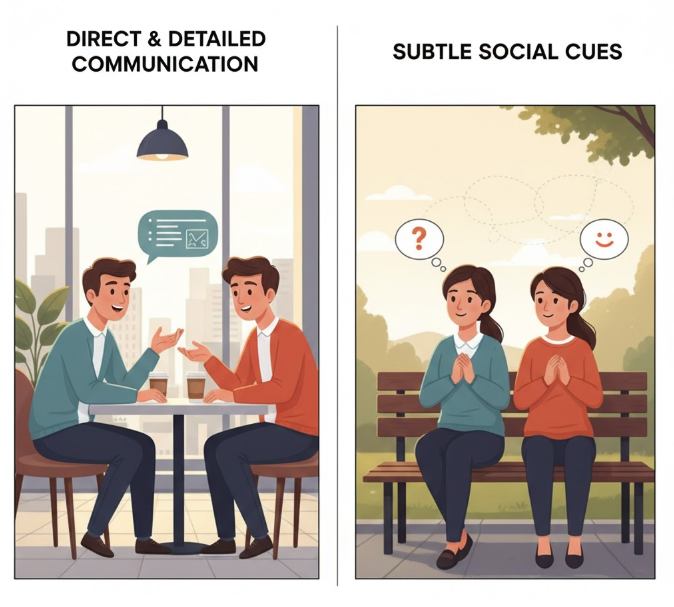
When two autistic people communicate, they often bypass the social friction that comes from different communication styles. Both individuals tend to value directness, literal language, and detailed sharing about special interests without the unspoken rules that govern typical social exchanges.
The key difference lies in shared understanding. Autistic people generally process information similarly, which means they don’t have to constantly translate their thoughts into neurotypical-friendly formats. They can skip small talk, be blunt without offense, and dive deep into topics without worrying about “oversharing.”
Shared Social Processing
Autistic individuals often share similar approaches to:
- Directness: Both parties appreciate clear, honest communication without hidden meanings
- Literal interpretation: Reduced confusion since both people tend to say what they mean
- Sensory awareness: Mutual understanding of sensory sensitivities and needs
- Social energy: Recognition that socializing takes real effort and needs breaks
- Special interests: Enthusiasm for detailed conversations without judgment
At Dream Bigger ABA, we recognize that communication success isn’t about fitting one mold. It’s about understanding how different neurotypes connect and supporting each person’s natural communication style while building skills for navigating a mixed-neurotype world.
Why Mixed Neurotype Communication Can Feel Harder
Research from 2020 shows what many autistic people have long reported: the “double empathy problem.” This theory suggests that communication breakdowns between autistic and neurotypical people happen because both groups have trouble understanding each other’s communication styles, not because autistic people lack social skills.
When an autistic person talks with a neurotypical person, both sides may misinterpret signals. The autistic person might miss implied meanings or social cues, while the neurotypical person might misread direct communication as rude or miss the depth of emotional expression that doesn’t show in typical ways.
How Autistic People Connect With Each Other
Connection between autistic individuals often happens through shared interests, parallel play, or information exchange rather than traditional social bonding. These connections can be just as meaningful and deep as any other friendship, they just look different.
| Connection Style | How It Works | Why It Matters |
| Info-dumping | Sharing detailed knowledge about special interests | Both people enjoy learning and don’t feel bored or overwhelmed |
| Parallel presence | Being together without constant interaction | Comfortable silence without pressure to fill space with talk |
| Direct requests | Asking clearly for what you need | Reduces guesswork and prevents misunderstandings |
| Sensory respect | Understanding sensitivity to sound, light, touch | Both people can adjust environments without explaining |
Many autistic adults describe these interactions as less exhausting because they don’t have to mask their natural behaviors or constantly monitor how they’re being perceived.
The Role of Masking in Different Interactions
Masking refers to the conscious or unconscious suppression of natural autistic traits to fit in with neurotypical expectations. This can include forcing eye contact, scripting conversations, suppressing stimming, or pretending to understand social cues.
When autistic people interact with each other, masking typically decreases. Both people can stim freely, discuss interests without time limits, and communicate needs directly. This reduction in masking can lead to:
- Lower anxiety during social interactions
- More authentic self-expression
- Reduced mental and physical exhaustion after socializing
- Stronger sense of belonging and acceptance
For parents seeking support for their children, ABA therapy in Centreville, VA offers strategies that honor natural communication styles while building skills for various social situations.
Does Research Support Better Autistic-to-Autistic Communication?
Yes. Multiple studies have documented this phenomenon. A 2023 study published in Autism Research found that autistic dyads (pairs) showed higher rapport and information transfer accuracy compared to mixed neurotype pairs. The autistic participants rated their interactions with other autistic people as more satisfying and less effortful.
Another study from the University of Edinburgh examined first impressions between autistic and non-autistic people. Researchers found that non-autistic observers rated autistic individuals more negatively on first impression, but these same traits didn’t affect how autistic people perceived each other. This suggests that the perceived “social deficit” in autism might actually be a mismatch between different communication styles rather than an inherent lack of social ability.
What About Non-Speaking Autistic Individuals?
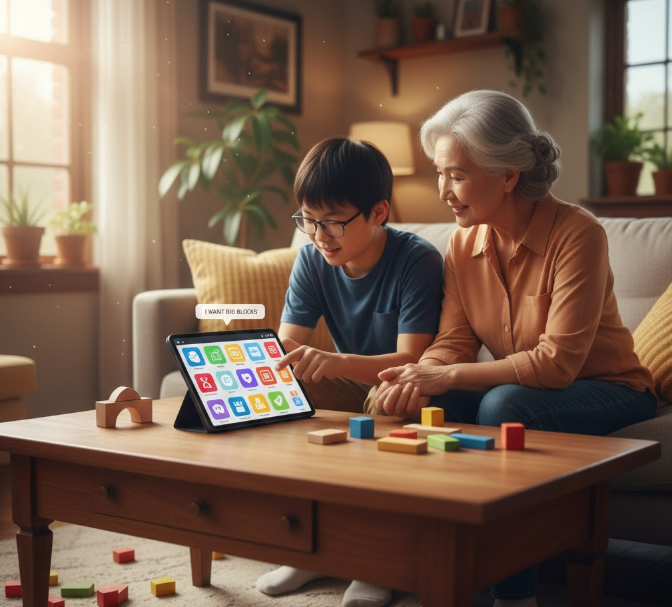
Communication extends far beyond spoken language. Many non-speaking or minimally speaking autistic people connect deeply with others through:
- Alternative and augmentative communication (AAC) devices
- Sign language
- Written communication
- Shared activities or parallel play
- Non-verbal cues that other autistic people may recognize more easily
The principle of easier autism to autism communication often applies here too. Non-speaking autistic individuals frequently report feeling more understood by other autistic people who don’t place the same emphasis on verbal communication or who recognize different communication methods as equally valid.
If your child uses alternative communication methods, ABA therapy in Leesburg, VA can help develop multiple communication pathways that work naturally for them.
Practical Ways to Support Autism to Autism Connection
Understanding that autistic people often communicate better with each other doesn’t mean isolation from neurotypical people is the answer. Instead, it means recognizing the value of autistic community and peer support while also building skills for navigating a diverse world.
Creating Opportunities for Autistic Peer Connection
Parents and support providers can help by:
- Finding autism-friendly social groups: Look for groups specifically for autistic individuals where masking isn’t expected
- Supporting online communities: Many autistic people connect more easily through text-based online forums
- Respecting different friendship styles: Not all friendships need to look like neurotypical friendships to be meaningful
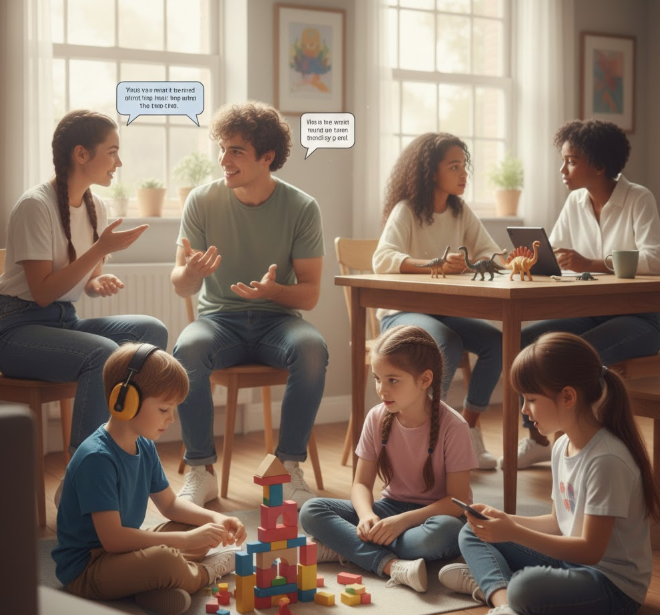
- Allowing parallel play: Kids playing side-by-side without direct interaction are still socializing
Supporting Communication Across Neurotypes
While autism to autism communication may feel easier, most autistic people still need to navigate neurotypical environments. Helpful strategies include:
| Strategy | Purpose | Application |
| Explicit teaching of implied rules | Make unspoken social expectations visible | “When someone asks ‘how are you,’ they usually expect a brief answer like ‘good’ rather than details” |
| Practice with low-stakes feedback | Build skills without judgment | Role-play situations with supportive adults who explain neurotypical responses |
| Respect for sensory needs | Reduce communication barriers | Allow sunglasses indoors, headphones, fidget tools during conversations |
| Communication preferences | Honor individual strengths | Some prefer texting over phone calls, or written instructions over verbal |
Common Misconceptions About Autistic Communication
“Autistic People Don’t Want to Socialize”
This myth persists despite evidence that autistic people desire connection just as much as anyone else. The difference lies in how that connection happens and how much energy it requires. Understanding theory of mind in autism helps explain some of these communication differences.
Many autistic individuals report:
- Wanting friends but struggling with how to make and keep them in neurotypical contexts
- Enjoying social time but needing more recovery time afterward
- Preferring smaller gatherings or one-on-one interactions over large groups
- Finding deeper connection through shared interests than through traditional small talk
“All Autistic People Communicate the Same Way”
Autism is a spectrum, which means communication styles vary widely. Some autistic people are highly verbal, others use few words. Some love eye contact with trusted people, others find it painful. Some script their conversations, others prefer spontaneous exchange.
What matters is recognizing patterns within the autistic community while respecting individual differences. The experience of easier communication with fellow autistic people is common but not universal.
Things to Know About Supporting Autistic Communication
Respect communication autonomy: Autistic people, including children, should have input into their communication goals. Forcing eye contact or eliminating stimming to appear “more normal” can be harmful.
Recognize masking costs: While some masking may help in certain situations, constant masking leads to autistic burnout, anxiety, and loss of identity. Balance skill-building with acceptance of natural traits.
Value autistic friendship: Don’t dismiss connections between autistic children as “less than” typical friendships. These relationships often provide crucial support and understanding.
Communication is a two-way street: Neurotypical people also need to learn to understand autistic communication styles, not just the other way around. This is where the double empathy problem becomes important in planning support.
If you’re noticing communication patterns in your child and want professional guidance, exploring resources about autism in infants can provide early insight into developmental differences.
Building Communication Skills at Dream Bigger ABA
At Dream Bigger ABA, we believe in a balanced approach. We recognize the value of autistic peer connection while helping individuals develop tools to communicate effectively in various environments. Our therapy doesn’t aim to make autistic children “normal” but rather to:
- Expand communication options and flexibility
- Reduce barriers to connection with diverse neurotypes
- Support self-advocacy and expression of needs
- Respect natural communication preferences while building new skills
This means we celebrate info-dumping about special interests while also teaching when to pause and invite others into the conversation. We honor the need for direct communication while explaining that some people use indirect language. We support stimming while teaching awareness of when it might inadvertently distract or hurt others.
Families in Virginia can access ABA therapy in Alexandria, VA and throughout the region to receive this neurodiversity-affirming support.
Final Thoughts: What Autism to Autism Communication Teaches Us
Understanding autism to autism communication reveals something important about human connection: we all communicate more easily with people who share our neurological framework. This isn’t unique to autism, it’s universal. The difference is that autistic people have spent generations being told their natural communication is wrong, while neurotypical communication remained the unquestioned standard.
Recognizing that autistic people connect naturally with each other doesn’t mean separating autistic and neurotypical communities. Instead, it calls for mutual effort in understanding across neurotypes. Neurotypical people can learn to value directness, reduce reliance on unstated rules, and recognize different forms of empathy. Autistic people can develop skills for navigating neurotypical spaces without sacrificing their authentic selves.
At Dream Bigger ABA, we support this balance. Every individual deserves to communicate in ways that feel natural while gaining tools to connect across differences. Whether your child thrives in autistic peer groups, neurotypical settings
Frequently Asked Questions
Do autistic people communicate better with other autistic people?
Yes, many autistic people report easier and more natural communication with fellow autistic individuals. Studies show higher rapport and less misunderstanding between autistic pairs compared to mixed neurotype conversations. This happens because both people share similar processing styles, appreciate directness, and don’t rely on implied social rules. However, individual experiences vary, and some autistic people connect well with neurotypical individuals too. The key is recognizing that communication matching affects ease of interaction for everyone.
What is the 10 second rule for autism?
The 10 second rule means waiting at least 10 seconds after asking a question before repeating or rephrasing it. Autistic individuals often need extra processing time to understand questions, formulate responses, or physically produce speech. Interrupting this processing can reset the entire cycle, making communication harder. This rule helps reduce pressure and gives the person time to respond at their natural pace. It’s especially important for non-speaking or minimally speaking individuals using AAC devices.
What is the biggest red flag for autism?
The most significant early indicator is limited or absent social communication and interaction by expected developmental milestones. This might include not responding to their name by 12 months, lack of pointing or showing objects to share interest by 14 months, or minimal eye contact during interaction. However, autism presents differently in each person. Some children show these signs clearly while others develop typically until regressive autism occurs. Professional evaluation considers multiple factors rather than single behaviors.
What are the 12 signs of autism in adults?
Common signs include difficulty with social reciprocity, preference for routine, sensory sensitivities, intense special interests, direct communication style, difficulty reading social cues, preference for solitude, stimming behaviors, executive function challenges, literal thinking, social exhaustion, and masking effort. Not every autistic adult shows all these signs, and many neurotypical people have some of these traits. What matters is the pattern, intensity, and impact on daily life. Many adults only discover their autism when learning about nonverbal autism or other presentations.
What is 90% of autism caused by?
There is no single cause that accounts for 90% of autism cases. Autism results from complex interactions between genetic and environmental factors. Research shows strong genetic components, but no single gene causes most cases. Environmental factors during pregnancy may play a role, but vaccines do not cause autism, as proven by extensive research. Current understanding points to multiple genes and prenatal development factors combining differently in each person, explaining why autism presents so variably across individuals.
, or both, our goal is helping them build genuine connections that honor who they are.