Key Takeaways
- A functional behavior assessment (FBA) looks at what happens before and after a behavior, and what the behavior may communicate or accomplish.
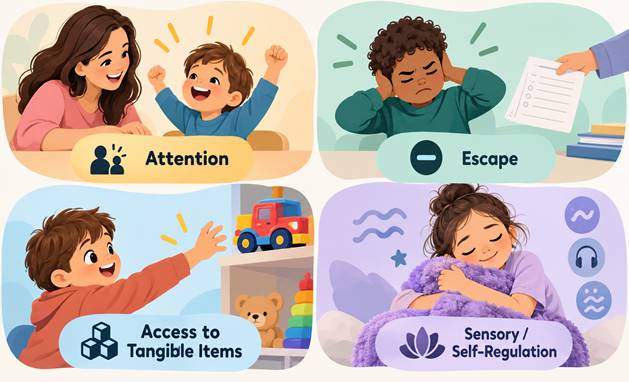
- Common behavior-function categories include attention, avoiding or escaping situations, obtaining items or activities, and sensory or automatic reinforcement. These are hypotheses to investigate, not labels for a child.
- Information from family members, educators, direct observation, and relevant health context helps the team understand patterns rather than react to isolated incidents.
- FBA findings should guide practical, positive support that teaches safer communication or replacement skills and adjusts the environment.
- Parents can ask who conducts the assessment, how hypotheses are checked, how progress is measured, and how the child’s comfort and autonomy are respected.
Functional Behavior Assessment (FBA) for Children is a topic many families search when they want clear, practical guidance instead of vague advice. Understanding functional behavior assessment can help parents, caregivers, and professionals make better decisions about communication, routines, school, and the kinds of support that may improve daily life.
This article gives a parent-friendly overview of functional behavior assessment, explains what families may notice in real life, and outlines practical next steps. It is general educational information, not a diagnosis or individualized medical advice. When health, safety, or mental health is involved, families should also involve the appropriate licensed professional
What Functional Behavior Assessment Means
At a practical level, functional behavior assessment should be understood in the context of daily life: how it affects comfort, communication, learning, independence, relationships, and participation. For some families, the main issue is not the label itself but the way the issue shows up during routines such as getting ready for school, handling changes, playing with peers, or communicating needs.
A strengths-based approach matters here. Rather than assuming a child is being difficult or unmotivated, it helps to ask what they may be communicating, what skills they still need, and what environmental changes could reduce stress. This mindset is especially important in autism-related topics, where outward behavior may hide sensory, emotional, medical, or communication barriers.
Why This Topic Matters for Families
Families often search for functional behavior assessment because they are trying to make sense of a pattern they see at home, in school, or during community activities. Clear information can make it easier to decide what to monitor, what to try at home, and when to ask for an evaluation or therapy support.
| Area | Why it matters | Possible next step |
| Daily routines | The issue may affect sleep, transitions, hygiene, mealtimes, or independence. | Identify the exact part of the routine where things break down. |
| Communication | Children may need better ways to express discomfort, confusion, or preferences. | Use visuals, modeling, or AAC support when relevant. |
| School and social life | Difficulties can affect participation, learning, or peer relationships. | Coordinate with teachers and other support providers. |
| Family stress | Unclear patterns often create worry and inconsistent responses. | Use a shared plan so adults respond more consistently. |

Common signs, patterns, or examples connected to the topic.
Common Signs, Triggers, or Patterns to Notice
While every child is different, families often notice a few repeating themes when functional behavior assessment is affecting daily life. Looking for patterns can be more useful than focusing on one isolated incident.
• changes in routines or participation
• stress, avoidance, or frustration around the topic
• a need for clearer structure, communication, or accommodations
A simple observation log can help: write down when the issue happened, what was happening just before it, how the child responded, and what seemed to help. Over time, that context can be useful for pediatricians, therapists, schools, or mental health professionals.
Practical Support Strategies
There is rarely one perfect fix. Support usually works best when it combines environment changes, skill-building, clear communication, and consistency across adults. For functional behavior assessment, the goal is not simply to stop a problem but to reduce barriers and build more functional ways for the child to cope, communicate, or participate.
• use clear and respectful communication
• break skills or situations into smaller steps
• coordinate support across home, school, and therapy when relevant
When relevant, therapy may help break a difficult skill into smaller steps, teach replacement behaviors or coping tools, and track whether progress is transferring into everyday settings. Families should ask how a provider will respect the child’s autonomy, motivation, communication preferences, and sensory needs during treatment.
| Support area | Example approach | Why it helps |
| Environment | Reduce avoidable stressors and build predictable routines. | Prevention often works better than reacting after a crisis. |
| Communication | Teach requests, comments, choices, and help-seeking. | Children do better when they can communicate what they need. |
| Skill-building | Practice one realistic target at a time. | Smaller steps make progress easier to notice and maintain. |
| Coordination | Share strategies with school or caregivers. | Consistency across settings improves carryover. |
Practical strategies families and professionals can build into a support plan.
When to Seek Professional Support
Professional support may be worth pursuing when functional behavior assessment is affecting health, safety, learning, daily routines, emotional well-being, or family stress. The right professional depends on the concern: a pediatrician, psychologist, BCBA, occupational therapist, speech-language pathologist, school team, or mental health clinician may all have a role.
Support should be individualized. A helpful provider should be able to explain what the goal is, how it will be taught or supported, how progress will be measured, and how the plan will generalize into real life rather than staying confined to one setting.
Internal Resources for Texas Families
If your family is exploring autism support services in Texas, these location pages may also be helpful:
• ABA therapy in Plano, TX — location-specific information for families comparing ABA therapy options.
• ABA therapy in Frisco, TX — location-specific information for families comparing ABA therapy options.
• ABA therapy in Mckinney, TX — location-specific information for families comparing ABA therapy options.
• ABA therapy in Round Rock, TX — location-specific information for families comparing ABA therapy options.
• ABA therapy in Pearland, TX — location-specific information for families comparing ABA therapy options.

Support may involve family routines, school planning, and therapy collaboration.
Frequently Asked Questions
Is this the same as ABA?
Not necessarily. Some keywords describe a specific ABA strategy, while ABA itself is a broader service model with multiple teaching and assessment approaches.
How do families know if it is being used well?
Parents should look for individualized goals, respectful teaching, child assent, clear progress measurement, and generalization into real daily routines.
Can this be used at home?
Families may be taught ways to support the skill at home, but the plan should fit real routines and never turn every interaction into a drill.
What should parents ask a provider?
Ask why the method was chosen, how goals are measured, how prompts are faded, how the child’s preferences are honored, and how skills transfer outside therapy.
Does it work for every child?
No single strategy works for every learner. Good providers adjust the plan based on the child’s response, strengths, comfort, and family priorities.
Final Thoughts
Understanding functional behavior assessment can help families respond with more clarity, compassion, and consistency. The most useful plan is usually the one that reduces stress, respects the child, and targets skills that make daily life easier and more meaningful.
Before publishing, have a qualified clinician review any clinical or medical statements for accuracy and alignment with your practice approach. Also confirm that any local service references reflect the areas your team currently serves.
Research & Further Reading
The following resources informed the terminology and recommended professional safeguards in this draft. They are background references, not a claim that every sentence has been independently verified or that every method is suitable for every child.
IRIS Center (Vanderbilt University): Functional Behavioral Assessment, elementary module — Explains why behavior functions matter and describes the FBA process.
IRIS Center: FBA summary and ABC observation process — Describes operational definitions, interviews, observation, and behavior hypotheses.
AFIRM / UNC: Functional Behavior Assessment practice brief — Evidence-based practice resources and planning checklist.
Behavior Analyst Certification Board: Ethics Code for Behavior Analysts — Professional ethics relevant to assessment, consent and client welfare.
Editorial Note
For internal editorial review: This article is educational information, not individualized medical, psychological, diagnostic, or treatment advice. A licensed or appropriately credentialed clinician, ideally a BCBA familiar with the practice, should review intervention descriptions, examples, clinical claims, and child-assent considerations before publication. Verify source links, current evidence, provider credentials, service availability, and all Texas location statements. Illustrative images are AI-generated and do not depict actual Dream Bigger ABA staff, clients, or documented treatment sessions. Obtain consent for any future identifiable client photographs. The article must not promise outcomes, imply one therapy suits every learner, or imply that links to location pages prove service availability.