Autism vs Aspergers refers to diagnostic terms that once described separate conditions but are now understood as part of the same spectrum. Asperger’s syndrome was historically used for individuals with autism-like traits but without significant language delays, while autism encompassed a broader range of symptoms including communication challenges.
The distinction between these terms has evolved significantly since 2013, when medical professionals began using “autism spectrum disorder” (ASD) as a single diagnosis. Understanding this shift helps families, educators, and individuals navigate support options and recognize that autism presents differently in each person. This guide breaks down what these terms mean, how they’ve changed, and what matters most for getting the right support.
Access personalized support for your child. Explore our ABA therapy in Centreville, VA for evidence-based interventions.
What the Terms Autism and Aspergers Originally Meant
The terms “autism” and “Asperger’s syndrome” were once used to describe what professionals viewed as distinct developmental conditions. Both fell under the broader category of pervasive developmental disorders, but clinicians diagnosed them separately based on observable differences in language development and symptom severity.
Historical Background of Asperger’s Syndrome
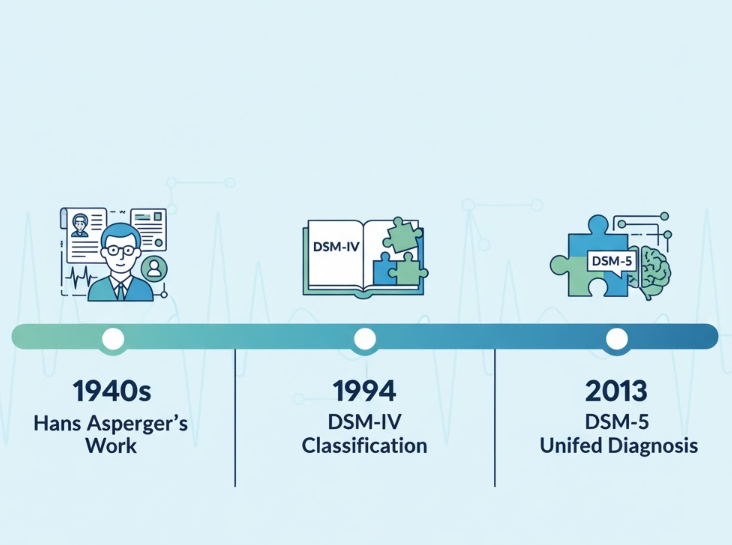
Austrian pediatrician Hans Asperger first described a pattern of behaviors in children during the 1940s. These children showed difficulties with social interaction and displayed restricted interests, yet they spoke at typical ages and showed average or above-average intelligence.
His work remained relatively unknown until the 1980s, when English translations brought wider attention. In 1994, the American Psychiatric Association added Asperger’s syndrome to the DSM-IV as a separate diagnosis from autism. This classification remained standard practice until 2013.
Medical professionals used Asperger’s syndrome to identify individuals who demonstrated autism-like social challenges without the language delays typically associated with classic autism. Many with this diagnosis excelled academically but struggled to understand social cues, maintain friendships, or adapt to change.
How Classic Autism Was Defined
Classic autism, often called autistic disorder, described children who showed developmental differences before age three. These differences typically included delayed or absent speech, limited interest in social interaction, and repetitive behaviors or intense focus on specific topics.
Unlike Asperger’s syndrome, classic autism diagnoses often involved noticeable language impairments. Some children remained nonverbal, while others developed speech but used it in unusual ways, such as repeating phrases or speaking in a monotone voice.
The severity of symptoms varied widely. Some individuals required substantial daily support, while others functioned more independently with targeted help. Sensory sensitivities, resistance to routine changes, and difficulty understanding others’ perspectives were common across the spectrum.
The 2013 Diagnostic Shift That Changed Everything
In 2013, the American Psychiatric Association released the DSM-5, which fundamentally changed how autism is diagnosed and understood. This update removed Asperger’s syndrome as a separate diagnosis and merged it with other related conditions under the single umbrella term “autism spectrum disorder.”
Why Asperger’s Was Removed as a Separate Diagnosis
Research showed that the boundaries between Asperger’s syndrome and other autism-related diagnoses were unclear and inconsistent. Different clinicians often disagreed about which diagnosis fit a particular individual, making it difficult to provide appropriate services or conduct meaningful research.
The evidence suggested that Asperger’s and autism weren’t truly separate conditions but rather different presentations of the same underlying neurological difference. Language ability and cognitive skills varied widely among all individuals on the spectrum, making these factors unreliable markers for separate diagnoses.
By creating a single spectrum diagnosis, clinicians could focus on each person’s specific support needs rather than trying to fit them into rigid diagnostic categories. This approach recognized that autism presents differently in different people, with varying strengths and challenges across multiple areas.
Understanding the Autism Spectrum Model
The autism spectrum model acknowledges that autism characteristics exist on a continuum rather than in distinct categories. Instead of separate diagnoses, the DSM-5 uses “levels” to describe the amount of support an individual needs:
- Level 1 (Requiring Support): Individuals may have difficulty initiating social interactions and struggle with organization and planning. They can usually function independently with some assistance.
- Level 2 (Requiring Substantial Support): People at this level show more noticeable social communication difficulties and restricted or repetitive behaviors that interfere with functioning in various settings.
- Level 3 (Requiring Very Substantial Support): Individuals need intensive daily support due to severe challenges with social communication and behaviors that significantly limit functioning.
This model better captures the reality that someone might need significant support in one area (like sensory processing) but minimal support in another (like academic learning). It also acknowledges that support needs can change over time or in different environments.
Key Differences Between Historical Autism and Aspergers Diagnoses
While both terms now fall under autism spectrum disorder, understanding the historical distinctions helps explain why some people still use these terms and how presentations can differ across the spectrum.
| Feature | Historical Autism Diagnosis | Historical Asperger’s Diagnosis |
| Language Development | Often delayed or absent; some remained nonverbal or developed speech later than typical | Language developed on time or early; vocabulary often advanced for age |
| Cognitive Ability | Varied widely; some individuals had intellectual disabilities while others had average or above-average intelligence | Generally average to above-average intelligence; no intellectual disability present |
| Social Interaction | Limited interest in social engagement; difficulty understanding social rules and reading emotional cues | Desire for social connection but struggled with social skills; missed subtle social cues |
| Repetitive Behaviors | Common across all areas; included stimming, strict routines, and intense focus on specific interests | Present but sometimes less obvious; often manifested as deep expertise in particular subjects |
| Early Detection | Typically identified before age three due to obvious developmental delays | Often diagnosed later in childhood when social demands increased beyond the child’s capabilities |
| Communication Style | Used limited or unusual language patterns; some relied on non-verbal communication methods | Spoke fluently but often in formal or pedantic ways; struggled with back-and-forth conversation flow |
Language and Communication Patterns
Language development served as a primary distinguishing factor between these historical diagnoses. Children with classic autism often showed delayed speech milestones or didn’t develop spoken language at all. Those who did speak might have used echolalia (repeating words or phrases) or had trouble using pronouns correctly.
In contrast, those diagnosed with Asperger’s syndrome typically met language milestones on schedule or even early. They might have used advanced vocabulary and spoken in complete sentences at a young age. However, their communication challenges appeared in conversational skills, understanding figurative language, or recognizing when others lost interest in their topic.
Social Understanding and Interaction
Both groups experienced social difficulties, but the nature of these challenges differed. Individuals with classic autism often showed limited interest in social interaction or seemed unaware of others’ attempts to engage. They might not respond to their names, make eye contact, or seek to share experiences with others.
People with Asperger’s syndrome usually wanted friendships and social connections but didn’t intuitively understand the unwritten rules governing social situations. They might dominate conversations with their special interests, stand too close to others, or miss sarcasm and jokes. This gap between social desire and social skill often led to frustration and isolation.
Learn to recognize early signs in your child. Read our guide on signs of autism in toddlers age 2 for developmental milestones to watch.
What This Means for Individuals Previously Diagnosed with Aspergers
The diagnostic change affected thousands of individuals who had received an Asperger’s syndrome diagnosis before 2013. Many questions arose about whether their diagnosis would change, what it meant for their identity, and how it would impact their access to services.
Identity and Self-Understanding
Some individuals strongly identify with the Asperger’s label and continue using it to describe themselves, even though it’s no longer an official medical diagnosis. For many, this term represented an important part of understanding their experiences and connecting with others who shared similar challenges.
Others have embraced the broader autism spectrum disorder diagnosis, appreciating that it includes a wider community and removes the implied hierarchy between “high-functioning” and “low-functioning” labels. The autism community includes diverse voices with different preferences about terminology.
What matters most is respecting how individuals choose to describe themselves. Whether someone uses “Asperger’s,” “autism,” “autistic,” or “person with autism,” their preference deserves acknowledgment and respect.
Access to Services and Support
The diagnostic shift didn’t remove anyone’s existing diagnosis or eliminate their eligibility for services. Individuals who received an Asperger’s syndrome diagnosis before 2013 automatically fall under the autism spectrum disorder umbrella. They maintain access to the same supports and accommodations they had before.
In some cases, the change actually improved access to services. Previously, some support programs excluded those with Asperger’s syndrome, arguing they didn’t have “true autism.” The unified diagnosis removed this barrier and recognized that all individuals on the spectrum may benefit from tailored interventions.
Support needs vary widely across the spectrum. Some individuals benefit from social skills groups, occupational therapy for sensory challenges, or speech therapy for pragmatic language. Others might need help with organization, anxiety management, or navigating employment. The key is identifying specific needs rather than relying on diagnostic labels to determine support.

Get comprehensive care tailored to your child’s needs. Discover our ABA therapy in Reston, VA for individualized treatment plans.
How Autism Presents Differently Across the Spectrum
Autism spectrum disorder encompasses a wide range of characteristics and support needs. Understanding this diversity helps families and professionals provide appropriate interventions and recognize that there’s no single “autism experience.”
Common Core Features Across the Spectrum
Despite the variety in how autism presents, certain core features appear across the spectrum, though they manifest differently in different individuals:
Social Communication Challenges: All individuals on the spectrum experience some difficulty with social communication. This might mean limited speech, trouble understanding nonverbal cues, difficulty maintaining conversations, or challenges interpreting others’ intentions and emotions.
Restricted and Repetitive Behaviors: These can include physical movements like hand-flapping or rocking, insistence on routines and sameness, intense and focused interests, or unusual sensory responses. The specific behaviors and their intensity vary considerably.
Sensory Processing Differences: Many people with autism experience sensory input differently than neurotypical individuals. They might be oversensitive to sounds, lights, textures, or tastes, or they might seek out sensory experiences more intensely than others.
Factors That Influence Presentation
Several factors shape how autism characteristics appear in different individuals:
Age and Development: Autism looks different at various life stages. Toddlers might not respond to their names or engage in pretend play. School-age children might struggle with peer relationships and classroom demands. Adults might face challenges with employment, independent living, or maintaining relationships.
Cognitive and Language Abilities: Intellectual and language abilities significantly influence how autism presents. Someone with strong verbal skills might mask their social difficulties better than someone who is minimally verbal, even though both experience similar underlying challenges.
Gender Differences: Research suggests autism may present differently in girls and women, who might develop better social camouflaging strategies or have interests that seem more socially typical. This can lead to later diagnosis or missed diagnosis altogether.
Co-occurring Conditions: Many individuals on the spectrum also have ADHD, anxiety, depression, or other conditions that interact with and influence how autism characteristics appear.
Supporting Individuals on the Autism Spectrum
Effective support recognizes that each person on the autism spectrum has unique strengths, challenges, and goals. The most helpful interventions are tailored to individual needs rather than based on outdated diagnostic labels.

Evidence-Based Interventions
Applied Behavior Analysis (ABA) remains the most extensively researched intervention for autism. ABA uses behavioral principles to teach new skills and reduce challenging behaviors through structured, individualized programs. Modern ABA focuses on making learning enjoyable and meaningful while respecting each person’s autonomy and dignity.
Other evidence-based approaches include:
Speech and Language Therapy: Addresses communication challenges, whether that means developing spoken language, using alternative communication systems, or improving conversational skills and social language use.
Occupational Therapy: Helps with sensory processing difficulties, fine motor skills, daily living skills, and adapting environments to support success.
Social Skills Training: Teaches specific social interaction skills through structured practice, role-playing, and real-world application with feedback and support.
The most effective intervention plans combine multiple approaches based on individual needs and involve consistent implementation across home, school, and community settings.
Creating Supportive Environments
Environmental modifications can dramatically impact an individual’s ability to function successfully:
Sensory Considerations: Adjust lighting, reduce background noise, provide comfortable seating, and allow breaks in quiet spaces. Some individuals benefit from weighted blankets, fidget tools, or noise-canceling headphones.
Clear Communication: Use concrete language, visual supports, and written instructions. Avoid idioms and sarcasm that can be confusing. Give advance notice before transitions or changes.
Structured Routines: Predictable schedules reduce anxiety and help individuals know what to expect. Use visual schedules and timers to support transitions.
Acceptance and Understanding: Perhaps most importantly, create environments where neurodiversity is accepted and individuals feel valued for their unique contributions rather than judged for their differences.
Find specialized support in your area. Learn about our ABA therapy in Woodbridge, VA for expert autism services.
Addressing Common Misconceptions About Autism vs Aspergers
Several persistent myths about autism vs Aspergers continue to circulate, despite the updated diagnostic criteria and growing understanding of autism spectrum disorder.
The “High-Functioning” vs “Low-Functioning” Myth
One common misconception divides people into “high-functioning” (often equated with historical Asperger’s) and “low-functioning” (equated with classic autism). These labels are misleading and harmful.
Functioning labels fail to capture the reality that individuals have different abilities in different areas. Someone might excel academically but struggle with basic self-care. Another person might be nonverbal but have strong problem-solving abilities. Functioning can also vary by day, situation, or stress level.
These labels also influence how others perceive support needs. “High-functioning” implies someone doesn’t need help, potentially denying them necessary services. “Low-functioning” can limit expectations and opportunities, overlooking strengths and potential.
A more helpful approach describes specific support needs: “He needs help with daily routines and uses a communication device” provides more useful information than “He’s low-functioning.”
All Autism Is Not the Same as Aspergers Was
Some people mistakenly believe that since Asperger’s is now part of autism spectrum disorder, all autistic individuals must have the characteristics historically associated with Asperger’s syndrome. This isn’t true.
The spectrum includes people with a wide range of abilities, from those who are minimally verbal and need intensive daily support to those who live independently and have successful careers. Language abilities, cognitive skills, and support needs vary tremendously.
The unified diagnosis recognizes that these variations exist within a single condition rather than representing fundamentally different disorders. The common thread is differences in social communication and restricted or repetitive patterns of behavior, but how these manifest differs from person to person.
Understand the broader context of autism. Read about autism awareness colors and what they represent in advocacy.
When to Seek Evaluation and Support
Early identification and intervention significantly improve outcomes for children on the autism spectrum. Parents, caregivers, and educators should know when to seek professional evaluation.

Signs That Warrant Professional Assessment
Consider evaluation if a child shows several of these characteristics:
In Toddlers and Young Children:
- Limited or no eye contact
- Doesn’t respond to their name by 12 months
- Shows little interest in other children
- Delayed speech or language skills
- Repeats words or phrases over and over
- Gets upset by minor changes in routine
- Has unusual sensory responses (covering ears at normal sounds, excessive smelling or touching of objects)
- Lines up toys or objects in specific patterns
In Older Children and Teens:
- Difficulty making or keeping friends
- Takes things literally and misses social cues
- Speaks in a formal or pedantic manner
- Has intense, focused interests
- Struggles with changes or transitions
- Shows anxiety in social situations
- Has difficulty understanding others’ perspectives
- Engages in repetitive movements or rituals
Remember that autism presents differently in different individuals. Some children show obvious signs early, while others develop typically at first and show differences only when social demands increase.
Finding Qualified Professionals
Several types of professionals can diagnose autism spectrum disorder:
Developmental Pediatricians: Doctors who specialize in child development and can conduct comprehensive evaluations.
Child Psychologists or Neuropsychologists: Mental health professionals trained in autism assessment who use standardized diagnostic tools.
Child Psychiatrists: Medical doctors specializing in mental health who can diagnose autism and address co-occurring conditions.
Look for professionals with specific training and experience in autism assessment. Ask about their diagnostic process, the tools they use, and how they incorporate parent and teacher observations.
A comprehensive evaluation should include:
- Detailed developmental history
- Observation of the child in different settings
- Standardized assessments of communication and social skills
- Evaluation of cognitive abilities
- Assessment of adaptive functioning
- Parent and teacher questionnaires
Explore the relationship between autism and cognitive ability. Check out our article on is autism an intellectual disability for important distinctions.
Looking Forward: Understanding Autism vs Aspergers Today
The shift from separate diagnoses to the unified autism spectrum disorder represents progress in understanding neurodevelopmental differences. While some people still use the term Asperger’s to describe their experiences, the medical community recognizes autism as a spectrum with diverse presentations.
| Old Understanding | Current Understanding |
| Separate conditions requiring different treatments | Single spectrum with varying support needs |
| Based primarily on language ability and IQ | Based on social communication and repetitive behaviors across all ability levels |
| “High-functioning” vs “low-functioning” labels | Support levels that can vary by area and change over time |
| Focus on deficits and what needs fixing | Recognition of both challenges and strengths; neurodiversity perspective |
This updated understanding benefits individuals, families, and professionals by:
Reducing Stigma: Eliminating the hierarchy between different autism diagnoses and recognizing that all individuals on the spectrum deserve respect and support.
Improving Access: Ensuring that support services are based on individual needs rather than outdated diagnostic categories.
Promoting Acceptance: Encouraging society to embrace neurodiversity and create inclusive environments where autistic individuals can thrive.
Advancing Research: Allowing scientists to study autism as a whole rather than artificially dividing the population, leading to better understanding and more effective interventions.
The conversation around autism continues to evolve. Self-advocates, researchers, clinicians, and families all contribute perspectives that shape how we understand and support autistic individuals. What remains constant is the need for individualized, respectful approaches that recognize each person’s unique profile of strengths and challenges.
Final Thoughts on Understanding Autism vs Aspergers
The distinction between autism vs Aspergers has evolved significantly over the past decade. What once seemed like separate conditions are now understood as different presentations of autism spectrum disorder. This change reflects scientific progress and creates opportunities for more personalized, effective support.
Whether someone received an Asperger’s diagnosis years ago or a recent autism spectrum disorder diagnosis, what matters most is accessing appropriate support and understanding. Labels can be useful for obtaining services and connecting with communities, but they shouldn’t limit expectations or define a person’s potential.
If you’re navigating an autism diagnosis, whether for yourself or a loved one, remember that autism vs Aspergers terminology is less important than finding the right support, building on strengths, and creating environments where autistic individuals can succeed. The autism community is diverse, vibrant, and full of individuals with unique gifts to share with the world.
Frequently Asked Questions About Autism vs Aspergers
What’s the difference between Asperger and autism?
Asperger’s syndrome was historically diagnosed separately from autism, primarily for individuals with autism characteristics but without significant language delays. Since 2013, both terms fall under the single diagnosis of autism spectrum disorder (ASD). The main historical difference was language development, as those with Asperger’s typically spoke on time while those with classic autism often had delayed or absent speech.
What are the 12 signs of Asperger’s?
Historical Asperger’s signs included: difficulty reading social cues, trouble making or maintaining friendships, formal or pedantic speech patterns, intense focused interests, preference for routines and predictability, sensory sensitivities, difficulty with changes, taking things literally, missing sarcasm or humor, challenges with nonverbal communication, strong attention to detail, and anxiety in social situations. These signs are now recognized as autism spectrum characteristics that can appear in varying combinations and intensities.
How to tell if you have autism or Asperger’s?
Since Asperger’s is no longer a separate diagnosis, you would receive an autism spectrum disorder diagnosis if you meet the criteria. Professional evaluation by a qualified clinician is necessary to determine if you’re on the autism spectrum. This involves comprehensive assessment of social communication skills, restricted and repetitive behaviors, developmental history, and current functioning. Self-reflection on social experiences, communication patterns, and sensory sensitivities can help you decide whether to seek evaluation.
What are the 7 types of autism?
There aren’t officially seven types of autism. Under current diagnostic criteria, autism spectrum disorder is a single diagnosis with different levels of support needs (Level 1, 2, or 3). Historically, the DSM-IV listed five pervasive developmental disorders: autistic disorder, Asperger’s syndrome, pervasive developmental disorder-not otherwise specified (PDD-NOS), childhood disintegrative disorder, and Rett syndrome. These are now either merged into autism spectrum disorder or classified separately, as with Rett syndrome.
What is 90% of autism caused by?
Autism doesn’t have a single cause, and no evidence supports that 90% is caused by one factor. Research indicates autism results from a complex interaction between genetic and environmental factors. Genetic factors play a significant role, with heritability estimated at 50-90%, but this doesn’t mean a single gene causes autism. Instead, many genes contribute small effects. Environmental factors during pregnancy, such as parental age, prenatal medication exposure, or complications, may contribute to risk but don’t solely cause autism.