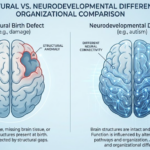
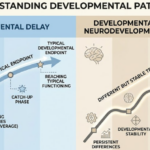
Is autism an intellectual disability? No. Autism spectrum disorder is a neurodevelopmental condition that affects social communication and behavior, while intellectual disability is defined by significant limits in intellectual functioning and adaptive skills.
Many families ask, “is autism an intellectual disability” because the two can occur together and schools or clinics sometimes discuss them at the same time. This guide explains the why, how, and which: why the confusion happens, how professionals tell them apart, and which label or combination best fits a real child so you can pursue the right help.

Quick Definitions You Can Use Today 🧠
- Autism spectrum disorder (ASD): Differences in social communication plus patterns of restricted or repetitive behavior. Intelligence can be above average, average, or below average.
- Intellectual disability (ID): Significant limitations in general intellectual functioning and adaptive behavior. Both must be present, with onset in childhood.
Bottom line for daily life: ASD describes how someone communicates and processes the world. ID describes the level of thinking and independent living skills. A person can have ASD without ID, ID without ASD, or both.
Why People Mix These Terms Up
- History and language. Older systems grouped a lot of childhood differences together. Families still hear outdated phrases in the community that blur the lines.
- Overlap in support needs. Autistic children who need extra help with daily living may also qualify for ID services. That overlap can make it sound like the diagnoses are the same, even though they are not.
- School categories vs clinical diagnoses. A school might use an eligibility category such as “Autism” or “Intellectual Disability” to provide services. Clinicians use DSM-5-TR criteria and standardized tests. The pathways are related but not identical, which adds to confusion for parents.
- Communication profiles. Limited speech, echolalia, or difficulty with back-and-forth conversation can occur in ASD with any IQ level, and also in ID. Without careful testing, the surface looks similar.
How Clinicians Tell the Difference 📊
Professionals use multiple tools together, not a single test:
- Developmental history that documents early milestones and behaviors.
- Autism-specific observations such as ADOS-2 or similar structured play and conversation tasks.
- Cognitive testing for IQ or general problem solving.
- Adaptive behavior scales that measure real-world daily living, socialization, and communication.
- Language assessment to separate speech mechanics from social use of language.
Side-by-side Snapshot: ASD vs ID
| Area | Autism Spectrum Disorder (ASD) | Intellectual Disability (ID) |
| What it is | Neurodevelopmental difference in social communication plus restricted or repetitive behaviors | Significant limits in intellectual functioning and adaptive behavior |
| Core features | Social reciprocity differences, sensory interests, repetitive patterns | Global learning pace slower than peers and difficulty generalizing skills |
| How measured | Clinical observation, caregiver interview, autism tools | Standardized IQ tests and adaptive behavior scales across settings |
| Language profile | May include atypical prosody, echolalia, strong vocabulary with social use challenges | Language tends to align with overall cognitive level |
| Social profile | Interest in people can be present but expressed differently; challenges with unwritten rules | Social difficulties consistent with general developmental level |
| Can both be diagnosed? | Yes. If criteria for both are met independently | Yes. Co-occurrence is recognized in diagnostic manuals |

Which Label Applies To My Child?
Think in three steps:
- Does your child show autistic traits that are not explained by general developmental level? For example, strong memory for facts, narrow interests, or sensory seeking along with challenges in back-and-forth conversation. If yes, ASD is likely applicable.
- Are intellectual scores and adaptive daily living scores significantly below age expectations across the board? If yes, ID may apply.
- Do both sets of criteria stand on their own? Some children meet criteria for both. Others meet only one. The correct identification matters because it points to the most effective plan.
Real-world examples
- Maya, age 7: Reads early, loves space facts, struggles with group play and flexible thinking. Adaptive skills are age-appropriate. Likely ASD without ID.
- Dante, age 8: Global delays in learning and self-care. Friendly and social with simple language. No restricted interests or social reciprocity differences beyond his overall level. Likely ID without ASD.
- Lara, age 10: Limited expressive speech, intense sensory needs, difficulty with transitions, and cognitive scores in the ID range. Likely ASD with co-occurring ID.
If you live in Northern Virginia and want a team to walk through these steps, you can explore ABA therapy in Reston VA or ABA therapy in Woodbridge VA for individualized support and coordinated evaluation.
What This Means For School and Services 🎒
Educational eligibility. Schools evaluate how a condition affects access to learning. A student could qualify under Autism, Intellectual Disability, Other Health Impairment, or Speech-Language Impairment, depending on the main barriers. This label determines services, not intelligence or potential.
Individualized Education Program (IEP). The IEP should match present levels, goals, and supports. For ASD, this often includes social-communication goals, visual supports, sensory regulation, and behavior plans. For ID, it often includes functional academics, daily living skills, and consistent generalization practice across environments.
Community services. Outside school, clinical diagnoses open doors to therapies and insurance coverage. Here is how goals often differ:
Program Focus by Profile
| Profile | Common Goals | Helpful Strategies |
| ASD without ID | Conversation skills, flexibility, coping tools, social problem solving | Visual schedules, peer-mediated practice, interest-based teaching, cognitive-behavioral strategies |
| ID without ASD | Functional academics, self-care, safety, money and time concepts | Task analysis, high repetition, concrete materials, community-based instruction |
| ASD with ID | Communication access, behavior regulation, independent living, generalization | Augmentative and alternative communication, consistent routines, sensory supports, caregiver coaching |
How ABA Fits In And Who It Helps 🧩
Applied Behavior Analysis is a framework for teaching meaningful skills by breaking them into clear steps, practicing in supportive ways, and measuring progress. The approach is customized to the learner, not a one-size plan.
- For autistic learners without ID: ABA can target social cognition, flexible problem solving, and pragmatic language, often alongside speech therapy.
- For learners with ID but not ASD: ABA helps with daily living routines, safety, and preparing for community participation.
- For those with both: ABA weaves communication access, sensory regulation strategies, and functional academics into one plan.
Curious about big questions families ask while exploring therapy options? Read Can autism be cured? for a thoughtful perspective, then follow up with Is autism a learning disability? to see how learning differences compare with formal disability labels.
The Evaluation Process: What To Expect
- Intake and history. You will share early developmental milestones, current strengths, and concerns.
- Observations across settings. Clinicians watch social play, communication, and flexibility at home and school when possible.
- Standardized testing. This can include cognitive, language, adaptive, and autism-specific tools.
- Feedback meeting. You receive written results, a clear explanation of what each score means, and a practical plan.
- Action plan. Services are matched to the profile rather than the label alone.
Tip: Bring videos of natural routines such as dinner, playtime, or transitions. Home clips show authentic communication that rarely appears in a short clinic visit.

Practical Tips For Families Getting Started ✅
- Prioritizing daily living wins. Choose two routines that matter now, like morning dressing and homework setup. Teach one step at a time and celebrate small gains.
- Use visual supports everywhere. A pocket schedule on the phone, picture checklists on the fridge, or simple first-then cards can reduce stress quickly.
- Practice in tiny doses. Ten minutes of focused, fun practice across the day is often better than one long session.
- Generalize on purpose. After a skill shows up at home, practice it at the store, a park, and a grandparent’s house.
- Team up with school. Ask for one shared goal between home and classroom to double the progress you see.
Why The Right Label Matters
- Services match needs. If social communication is the main barrier, target ASD-aligned supports even when IQ is average. If global learning is the barrier, target ID-aligned supports.
- Expectations stay high. With accurate labels, teams avoid underestimating strengths or overlooking hidden needs.
- Long-term planning improves. Knowing whether challenges are social, cognitive, or both guides choices about communication systems, independent living skills, and community participation.
Common Misunderstandings To Avoid
- “Limited speech equals ID.” Not necessarily. Some nonspeaking autistic people demonstrate strong problem-solving once given the right communication access.
- “High grades mean no support needed.” Bright autistic students can still need help with group work, transitions, or sensory regulation to keep thriving.
- “The label is the plan.” Labels open doors, but measurable goals and responsive teaching drive progress.

Choosing Supports That Fit Your Child
If your child primarily struggles with social understanding, rigidity, and sensory regulation, focus on ASD-aligned supports such as visual schedules, peer practice, and interest-based teaching. If your child primarily needs help learning at a slower pace and building independence in self-care, focus on ID-aligned supports such as explicit instruction and repeated practice. When both are present, blend approaches and monitor which strategies produce the most independence at home, in class, and in the community.
Local to Northern Virginia and looking for a hands-on team? Consider starting with ABA therapy in Reston VA or ABA therapy in Woodbridge VA. Programs can coordinate with schools, train caregivers, and build daily living wins that matter to your family.
A Note On Language And Identity
Many adults prefer identity-first language such as “autistic person,” while others prefer person-first language like “person with autism.” Ask the individual and follow their lead. Respectful language is part of supportive care.
Key Takeaway: is autism an intellectual disability?
No. Autism describes differences in social communication and behavior. Intellectual disability describes global cognitive and adaptive functioning. They can occur together, yet they require different testing and often different supports. Understanding which description fits unlocks better goals, smarter strategies, and more satisfying progress for your child.
Frequently Asked Questions
Is autism considered an intellectual or developmental disability?
Autism is a developmental disability, not automatically an intellectual disability. Clinically, ASD is defined by social communication differences and patterns of restricted or repetitive behavior. Some autistic people have average or high intelligence, some have intellectual disability, and many fall between. What matters for services is functional impact. Strong testing should assess social communication, IQ, and adaptive skills separately so supports match real needs at home and school.
What is considered an intellectual disability?
Intellectual disability means significant limits in IQ and adaptive behavior that begin in childhood. Evaluations typically include standardized cognitive testing and caregiver questionnaires about daily living, socialization, and communication. The diagnosis is not based on school grades alone. Adaptive behavior must be limited across settings such as home and community, not only in the classroom, and support needs usually remain consistent over time.
What category of disability does autism fall under?
Autism falls under neurodevelopmental or developmental disability. In schools, eligibility might be listed as Autism, which triggers support for social communication, sensory regulation, and behavior. In healthcare, ASD is categorized as a neurodevelopmental condition. A person with ASD might also meet criteria for other categories like Intellectual Disability or Speech-Language Impairment, but those are additional labels, not replacements for autism.
Is low functioning autism intellectual disability?
Not necessarily. The phrase “low functioning” is being used less because it hides strengths and does not guide helpful plans. Some nonspeaking autistic people show strong reasoning with the right communication system. Others have co-occurring ID. The only way to know is to measure cognitive ability, adaptive skills, and autism features separately, then design supports that raise independence and communication access across settings.