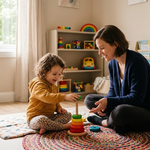
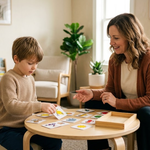
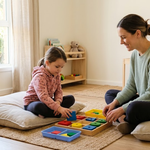
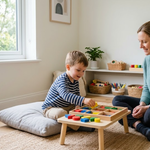
Autism homeschooling is the choice to educate an autistic child at home rather than in a traditional school setting, and for a growing number of families it is not a last resort after school has failed but a deliberate first choice that allows the learning environment, pace, and curriculum to be built around how their child actually learns rather than how the average classroom is designed to teach. It removes many of the sensory, social, and organizational barriers that make traditional school genuinely difficult for autistic students and replaces them with an environment the family controls entirely.
The decision about autism homeschooling is not simple, and it is not right for every family or every autistic child, but understanding what it genuinely offers, what its real challenges are, and what the most effective approaches look like helps families make an informed decision rather than one driven by crisis or by assumptions about what homeschooling means in practice.
Why Families Choose Homeschooling for Autistic Children

The reasons families move toward autism homeschooling are as varied as autistic profiles themselves, but several consistent themes appear across the experiences of families who have made this choice and found it genuinely transformative for their child.
Sensory overwhelm in traditional school settings is one of the most frequently cited drivers. The sensory environment of a typical school building, fluorescent lighting across every space, the acoustic chaos of cafeterias and hallways, the physical proximity of twenty or more peers in a classroom, and the unpredictable sensory events of a busy school day, creates a cumulative sensory load that many autistic students spend their entire school day managing rather than learning through. By the time these students reach home they are so thoroughly dysregulated that the behavioral and emotional challenges of the evening hours reflect not defiance or difficulty but complete nervous system depletion. Homeschooling removes that sensory load almost entirely, allowing the child to learn in a sensory environment the family has specifically optimized for their needs.
Pacing mismatch is another consistent driver. Traditional classroom instruction moves at a pace set by the average student and the curriculum calendar rather than by any individual child’s readiness. Autistic students who need more processing time for certain concepts but who move through others at extraordinary speed, or who learn in bursts and plateaus rather than the steady linear progression that school scheduling assumes, are consistently poorly served by the fixed-pace model of classroom instruction. Homeschooling allows the pace to be set by the child’s actual readiness rather than the calendar, which produces both better learning outcomes and significantly less academic anxiety.
Social exhaustion and the consequences of autism masking across a full school day drive many families to reconsider the traditional model. An autistic child who manages to hold their behavior within school-acceptable limits across the school day by suppressing their natural communicative and regulatory tendencies arrives home having depleted every resource they had and then collapses into behavioral crisis in the one environment where they feel safe enough to let go. Homeschooling eliminates the daily masking demand that produces this pattern, allowing the child to be authentically autistic throughout the learning day rather than performing neurotypicality for seven hours and paying the regulatory price afterward.
Inadequate IEP implementation is unfortunately a practical driver for many families. When the legally required accommodations and services described in an autism IEP are consistently not being delivered as written, and when the gap between what the document promises and what the child is experiencing persists despite advocacy, some families conclude that the energy required to maintain that advocacy fight is better invested in building an alternative.
At ABA therapy in Leesburg, VA, families who choose homeschooling are supported in integrating ABA therapy goals into their home learning environment, because the skills built in therapy and the learning happening at home need to reinforce each other to produce the comprehensive developmental progress both are aiming toward.
What Autism Homeschooling Actually Looks Like
The mental image most people bring to homeschooling is school replicated at home: a desk, a textbook, a schedule that mirrors the school day, and a parent playing teacher. For autistic learners this model is not only unnecessary but is often specifically counterproductive, because it preserves many of the features of traditional schooling that drove the family toward homeschooling in the first place.
Effective autism homeschooling typically looks quite different from this image. It is individualized in a way that no classroom can replicate, beginning from the specific child’s current developmental level, learning style, sensory profile, and genuine interests rather than from a grade-level curriculum that assumes a standard developmental trajectory. It distributes learning across multiple formats and environments rather than concentrating it in a single setting. And it builds the child’s natural strengths and passions into the academic program rather than treating them as distractions from real learning.
Interest-led learning, sometimes called unschooling when taken to its fullest expression, uses the autistic child’s deep and often encyclopedic engagement with their special interests as the primary vehicle for academic learning across multiple subject areas. A child whose special interest is trains can study history through railway history, mathematics through train schedules and engineering calculations, geography through rail networks, physics through locomotive mechanics, and literacy through train-related books and writing projects. The academic content is genuinely covered, often to a depth well beyond grade level, while the child’s intrinsic motivation provides the engagement and persistence that external academic structures can rarely replicate for autistic learners.
Structured flexibility, a middle path between rigid school replication and fully unstructured learning, works well for autistic children who need predictability and routine but whose learning is best served by flexibility within that structure. A predictable daily framework with consistent start times, transition routines, and break schedules provides the autistic nervous system with the regularity it relies on for regulation, while the specific content, format, and pace within that framework flexes to meet the child where they are each day.
For families navigating the sensory dimensions of creating an effective home learning environment, reading about autism sensory room setups provides practical guidance on how dedicated sensory spaces within the home support the regulatory foundation that learning requires, because a child who cannot achieve adequate sensory regulation cannot learn effectively regardless of how well-designed the curriculum is.
Things to Know About Autism Homeschooling
Before exploring curriculum approaches and the practical challenges of homeschooling autistic children, these foundational points establish the accurate framework for understanding what autism homeschooling is and what it realistically involves:
- Homeschooling does not mean the parent must be the child’s only teacher or therapist. Therapy services, online programs, co-ops, tutors, and community-based learning all contribute to a homeschool education.
- Autistic children who are homeschooled can still access speech therapy, occupational therapy, and ABA therapy as private services or, in some jurisdictions, through the school district even while being educated at home.
- Socialization in homeschooling is not the automatic deficit it is sometimes assumed to be. Interest-based communities, homeschool co-ops, therapy groups, and structured extracurricular activities provide social opportunities that for many autistic children are more genuinely accessible than school-based socialization.
- Legal requirements for homeschooling vary by state and country. Families should understand their jurisdiction’s specific notification, assessment, and record-keeping requirements before beginning.
- Homeschooling works best when it is built around the specific child’s learning profile rather than adopted as a replication of classroom schooling in the home environment.
- Parent wellbeing matters enormously in homeschooling sustainability. Building in support structures, respite, and co-teaching arrangements from the beginning produces more sustainable outcomes than attempting to manage everything alone.
- Children who are homeschooled can transition back to school environments at any point, and the skills, confidence, and self-knowledge built during a homeschooling period often make subsequent school re-entry more successful than the original school experience was.
Curriculum Approaches That Work for Autistic Learners

Curriculum selection for autism homeschooling is one of the most practically significant decisions families make, and it is worth investing time in understanding the landscape of available approaches before committing to one, because the right curriculum match significantly reduces the daily friction of homeschooling while the wrong one can make it unsustainable.
Structured curricula with explicit and sequential instruction work well for autistic learners who need clear expectations, predictable formats, and explicit rather than implied learning objectives. Programs that break skills into clearly defined steps, provide consistent review, and offer concrete mastery criteria before advancing reduce the ambiguity that creates anxiety for many autistic learners and give both the child and the parent a clear picture of where they are and where they are going academically.
Multi-sensory curricula engage multiple sensory channels simultaneously in the learning process, using visual, auditory, and tactile input together to build academic skills. This approach works particularly well for autistic learners who process through sensory experience rather than purely abstract symbol manipulation, and it connects to the sensory processing strengths that many autistic children demonstrate when learning is delivered through their preferred sensory channels rather than solely through auditory instruction.
Project-based and inquiry-based learning builds academic skills through extended investigation of topics the child is genuinely interested in, producing both deep content knowledge and the organizational and communicative skills involved in developing and presenting a project. For autistic children with intense special interests, project-based learning provides a natural bridge between what the child already cares about deeply and the academic skills the learning is intended to build.
Online and technology-based programs provide structured, often self-paced academic instruction in formats that many autistic learners find more comfortable than human-directed instruction, particularly for children who are strong readers and independent learners. The predictability of computer-delivered instruction, the absence of the social complexity of human instructional interaction, and the ability to pause, repeat, and progress at the learner’s own pace make online programs a genuinely effective component of many autism homeschooling approaches.
Integrating Therapy into Homeschooling
One of the most significant practical advantages of homeschooling for autistic children is the flexibility it creates for integrating therapy into the daily schedule in ways that produce better generalization than after-school therapy bolt-ons to a full traditional school day.
When an autistic child attends school full-time and receives therapy in the late afternoon or evening, therapy is happening at the point in the day when their regulatory resources are most depleted from the accumulated demands of the school day. The child who most needs to be available and regulated for effective therapy work is arriving at therapy already exhausted. Homeschooling redistributes this load, allowing therapy to be scheduled at times when the child is genuinely available and regulated, which produces better therapeutic outcomes for the same or fewer therapy hours.
More significantly, homeschooling creates the opportunity to practice therapy goals across the natural daily environment in real time rather than in the artificial context of a therapy room. When a speech therapist has identified communication targets, those targets can be practiced across the entire homeschool day in the contexts where the child will actually need to use them. When an occupational therapist has designed a sensory diet, the sensory diet activities can be distributed throughout the day as part of the homeschool routine rather than compressed into a brief home program delivered after a long school day.
ABA therapy goals integrate particularly naturally into homeschooling environments because the behavioral and skill-building targets of ABA are most effective when they are generalized across real daily contexts rather than practiced only in structured therapy settings. A homeschooling parent who has been coached in ABA principles and communication strategies by their child’s BCBA becomes one of the most powerful agents of their child’s development precisely because they are present across the entire learning day in the real environment where skills need to be used.
At ABA therapy in Reston, VA, parent coaching for families who homeschool their autistic children includes specific guidance on how to incorporate ABA strategies into daily learning routines, because the integration of therapy and homeschooling produces outcomes that neither can achieve as effectively in isolation.
For families managing the communication development goals that are central to many autistic children’s homeschool programs, reading about speech therapy for autism provides the foundational understanding of what communication development involves and how home-based communication support complements formal speech therapy.
Homeschooling Approaches by Learning Profile
| Learning Profile | What Works Best | Curriculum Considerations |
| Strong visual learner | Multi-sensory programs with heavy visual component, video-based instruction, visual schedules | Programs with visual step-by-step instructions, minimal reliance on verbal-only delivery |
| Special interest driven | Interest-led and project-based learning, unit studies built around special interests | Flexible frameworks that allow interest integration rather than rigid content sequences |
| Needs high structure | Scripted curricula with clear daily routines, explicit mastery criteria, predictable format | Programs with structured lesson plans, clear scope and sequence, consistent daily format |
| Hyperlexic or strong reader | Literature-based curricula, reading-heavy programs, written rather than verbal instruction | Programs that leverage reading strength as a learning vehicle across multiple subjects |
| Needs movement and sensory input | Kinesthetic learning approaches, hands-on materials, frequent movement integration | Programs with physical and manipulative components, flexible physical environment |
| Significantly below grade level | Mastery-based programs that work from the child’s actual level regardless of age | Programs organized by skill level rather than grade level, no assumed prior knowledge |
Social Opportunities in Autism Homeschooling
The social dimension of homeschooling is the area families most frequently worry about when considering the choice, and it is worth addressing directly because the reality of socialization in autism homeschooling is quite different from the isolated image the concern often assumes.
Homeschool co-operatives, where groups of homeschooling families share teaching and learning across different subjects and activities, provide structured social and learning environments with smaller groups and more adult supervision than traditional classrooms. For autistic children who find large group environments overwhelming but who can engage meaningfully in smaller, more structured social contexts, co-ops often provide a qualitatively better social experience than school-based peer interaction.
Interest-based community groups, from chess clubs to coding groups to nature exploration programs to robotics teams, provide the kind of socially organized around shared genuine interest that many autistic children find more accessible and more enjoyable than the age-cohort-based social structure of school. When social interaction is scaffolded by a shared activity that everyone genuinely cares about, the unstructured social demands that make peer interaction so exhausting for many autistic children are reduced by the structure the shared interest provides.
Therapy groups, including social skills groups that are a core component of social skills therapy autism, provide supported peer interaction with similarly matched children in a therapeutic context designed specifically to build the social communication skills that generalize to natural environments over time.
At ABA therapy in Manassas, VA, social skills development for homeschooled autistic children is supported through group programs and community-based practice opportunities that address the genuine social development needs of autistic children outside of the traditional school social environment.
Homeschooling Challenges and How to Address Them
| Challenge | Why It Occurs | Practical Solutions |
| Parent burnout | Full-time teaching alongside caregiving is genuinely exhausting without support structures | Build in regular respite, share teaching with co-ops or online programs, connect with homeschool community |
| Curriculum overwhelm | The range of available options creates decision paralysis | Start with one structured curriculum, adjust after observing what works rather than researching indefinitely |
| Generalization of skills | Learning at home does not automatically transfer to community environments | Deliberately practice skills across multiple real environments weekly |
| Accessing therapy services | Private therapy costs can be significant without school-provided services | Research school district obligations for home-educated children, explore insurance coverage |
| Social opportunities | Home environment does not provide automatic peer contact | Actively build interest-based group participation, co-ops, and therapy groups into the weekly schedule |
| Tracking progress | Without grades and report cards, assessing progress requires deliberate planning | Use portfolio documentation, mastery-based assessment, and regular professional evaluation |
Frequently Asked Questions
Autism homeschooling raises specific and important questions for families weighing this option or navigating it in practice. These answers address the most commonly asked ones directly.
Can an autistic child live independently?
Many autistic individuals live independently as adults, and the likelihood of independent living is significantly influenced by the quality of skill-building support received in childhood and adolescence, including the development of daily living, communication, and self-advocacy skills that homeschooling can support very effectively.
Independent living exists on a spectrum and means different things for different autistic individuals. Some autistic adults live entirely independently with no formal support. Others live semi-independently with periodic support for specific tasks. Others thrive in supported living arrangements that provide daily assistance while preserving significant autonomy. The trajectory toward independence is most effectively built through deliberate, consistent skill development across the developmental years rather than through assumptions about what is or is not possible based on current functioning. Homeschooling creates specific opportunities to build the daily living skills, self-regulation strategies, and self-advocacy capacities that independent adult functioning requires, because the home environment is exactly the context where those skills are actually needed and can therefore be practiced in their natural setting rather than as isolated therapy room exercises. For the broader picture of how autistic adults navigate independence and what factors shape those outcomes, reading about autism in adults provides important context for families thinking about the long-term developmental goals that should inform their homeschooling approach.
What is the life expectancy of a person with autism?
Research indicates that autistic individuals have a lower average life expectancy than the general population, primarily due to higher rates of co-occurring medical conditions, epilepsy, and significantly elevated rates of suicide rather than autism itself being a life-limiting condition.
Studies have consistently found that autistic individuals overall live shorter lives on average than neurotypical peers, with the gap most pronounced for those with co-occurring intellectual disabilities and medical conditions. The primary contributing factors include significantly higher rates of epilepsy, which carries its own mortality risk, elevated rates of drowning and accident-related deaths connected to safety awareness differences, dramatically higher rates of suicidal ideation and completed suicide particularly in autistic individuals without intellectual disability who experience the pain of social exclusion and unrecognized neurodivergence without the buffering that sometimes comes with more visible support needs, and higher rates of co-occurring physical health conditions. Homeschooling addresses several of the quality-of-life factors that connect to mental health outcomes specifically, including reducing the chronic stress of an inadequately accommodated environment, eliminating the daily masking demand that drives anxiety and depression in autistic young people, and building self-knowledge and self-acceptance that protect against the identity fragmentation that contributes to mental health deterioration. Detailed information on this topic is available in the autism life expectancy resource.
What is the best homeschool for an autistic child?
The best homeschool approach for an autistic child is one that is built around their specific learning profile, sensory needs, communication style, and genuine interests rather than any single curriculum or method, typically combining structured predictability with flexibility for interest-led learning and multi-sensory content delivery.
There is no universally best homeschool program for autistic children because autistic learning profiles are too varied for any single approach to be optimal across the range. The most consistently effective approaches share certain characteristics regardless of their specific structure: they build genuine predictability into the daily routine, they work from the child’s actual current level rather than their chronological age, they incorporate the child’s special interests as learning vehicles rather than obstacles, they use multi-sensory content delivery that engages the child’s processing strengths, and they are flexible enough to respond to the child’s regulatory state each day rather than rigidly adhering to a plan when the child is clearly unavailable for structured learning. For families beginning to research curriculum options, starting with a structured program that provides daily clarity while evaluating over several months whether the pace and format genuinely match the child’s learning style produces better outcomes than attempting to design a fully customized program from scratch without the reference point of a structured baseline.
What is the hardest age for autism?
Adolescence is consistently identified as the most challenging developmental period for autistic individuals, when the social demands of peer relationships peak, the gap between autistic and neurotypical social development is most visible, and mental health challenges including anxiety and depression are most prevalent and most serious.
Adolescence concentrates multiple converging challenges for autistic individuals in ways that make this period particularly difficult regardless of whether the young person is in school or homeschooling. The neurological and hormonal changes of puberty add sensory and emotional dysregulation challenges at precisely the point when social and academic demands are highest. The identity questions of adolescence, understanding and accepting oneself as autistic in a world that frequently communicates that autistic difference is a problem, become urgent during the developmental period when identity formation is the central psychological task. Mental health challenges, including anxiety, depression, and the long-term consequences of years of autism masking, often peak during adolescence. For homeschooling families, the adolescent years require deliberate attention to mental health support, peer connection through interest-based communities, identity development conversations, and the transition planning toward adult independence that needs to begin well before adulthood arrives rather than being addressed reactively when school ends.
Which curriculum is best for autism?
No single curriculum is universally best for autism, but the most consistently effective curricula for autistic learners share structured and explicit instruction, clear mastery criteria, multi-sensory content delivery, predictable daily format, and flexibility to incorporate the child’s genuine interests as learning vehicles.
Among structured curricula, programs built on explicit and systematic phonics instruction for literacy, sequential and concrete mathematics programs that use visual and manipulative representations alongside abstract symbol work, and science and social studies programs that use project-based and hands-on investigation tend to work well across a range of autistic learning profiles. For families whose children are highly motivated by technology, well-designed online programs provide structured self-paced instruction in formats that many autistic learners find genuinely engaging. For families whose children have intense special interests, unit study approaches that build academic skills across subjects through the lens of a single topic provide the motivational engine that makes sustained engagement possible. The most honest guidance is to start with a structured program that provides daily clarity, observe carefully which elements are genuinely working and which are consistently producing friction, and adapt accordingly rather than committing indefinitely to any approach that is not producing engagement and progress. The autism classroom accommodations framework provides useful context for the kinds of structural and sensory features that effective autistic learning environments share, whether in school or at home, and applying those principles to curriculum selection and home learning environment design produces a more effective homeschool setup than curriculum selection alone.