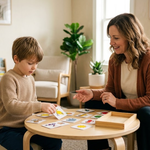
Autism classroom accommodations are the specific modifications, supports, and environmental adjustments that allow autistic students to access learning, participate meaningfully in school, and develop the academic and functional skills that their education is supposed to build. They are not special treatment or lowered expectations. They are the removal of unnecessary barriers that have nothing to do with what a student knows or can learn and everything to do with how the school environment is structured by default.
Without adequate autism classroom accommodations, many autistic students spend their school days managing sensory overwhelm, navigating communication barriers, and compensating for executive function differences rather than actually learning, which means their academic performance reflects their unaccommodated challenges rather than their genuine capabilities. Getting accommodations right changes that equation entirely and often reveals academic potential that an unaccommodated environment consistently obscured.
Why Autistic Students Need Specific Classroom Accommodations

The classroom environment as it exists in most schools was designed around a neurotypical learning profile that assumes students can filter background noise without effort, tolerate fluorescent lighting across a full school day, manage transitions without advance preparation, process verbal instructions at standard speaking pace, and navigate the social complexity of group learning without explicit support. For neurotypical students, these assumptions are approximately correct. For autistic students, they describe a set of demands that compete directly with learning before any academic content has been introduced.
Sensory processing differences mean that the physical environment of a typical classroom carries a sensory load that most neurotypical students do not consciously register but that autistic students process at a significantly higher level of intensity. The hum of fluorescent lights, the ambient noise of twenty other students moving and working, the feel of a chair against the back of legs, the smell of markers and cleaning products, all of which a neurotypical nervous system filters to the background automatically, may demand active conscious attention from an autistic nervous system that does not have the same automatic filtering capacity. The cognitive resources consumed by this sensory management are not available for learning, which means that the sensory demands of an unaccommodated classroom are functionally equivalent to asking a student to simultaneously learn and solve a different difficult cognitive problem throughout the school day.
Communication differences affect how autistic students receive and process instruction, how they demonstrate understanding, and how they participate in the social learning contexts that classrooms involve. An autistic student who processes verbal instructions more slowly than the pace at which they are delivered, who struggles with the ambiguity of implied or figurative language, or who communicates understanding through written or visual means more reliably than verbally needs accommodations that address these specific differences rather than being assessed as though their performance reflects their comprehension rather than the mismatch between delivery format and processing style.
Executive function differences affect organization, task initiation, time management, and the ability to manage the transitions and shifting demands that structure a typical school day. Autistic students who know the academic content but cannot manage the organizational demands of tracking multiple assignment deadlines, preparing materials for different classes, or transitioning between activities on the school’s schedule without preparation are experiencing a real disability-related barrier that accommodation can address directly.
At ABA therapy in Fairfax, VA, coordination with school teams is a built-in component of each autistic student’s support plan, because the skills built in therapy only produce their full benefit when the school environment is accommodated well enough for those skills to be practiced and demonstrated rather than being overwhelmed by unaddressed environmental barriers.
Sensory Accommodations That Make the Classroom Accessible
Sensory accommodations are often the highest-impact starting point for autism classroom accommodations because they address the foundational regulatory barriers that affect every other aspect of school participation simultaneously.
Lighting modification is one of the most effective and most underimplemented sensory accommodations in school environments. Standard fluorescent lighting flickers at a frequency that many autistic individuals perceive consciously and find significantly distressing, and its spectrum is weighted toward the blue-green wavelengths that are most activating to the nervous system. Replacing fluorescent tubes with warmer LED alternatives in the classroom, or simply turning off overhead lights and using natural light and warm lamp alternatives where possible, can produce noticeable improvements in autistic students’ regulatory stability across the school day. Where lighting cannot be changed structurally, tinted glasses or seating the student away from the most intense light sources addresses the same need with individual accommodations.
Acoustic management addresses the auditory processing demands of the classroom environment. Noise-canceling headphones, permitted throughout independent work periods and explicitly written into the student’s accommodation plan so they are available in all settings rather than only when remembered by individual teachers, reduce the auditory processing load that background classroom noise creates. White noise machines or sound-absorbing materials in the classroom reduce the reverberation that makes classrooms acoustically challenging for students with auditory hypersensitivity. The detailed neurological picture of why auditory processing differences create such consistent classroom barriers is covered in autism noise sensitivity, and understanding that picture helps school teams implement acoustic accommodations with greater intention and consistency.
Preferential seating is a deceptively simple accommodation that, when implemented thoughtfully, addresses multiple sensory channels simultaneously. Seating near a door enables quick access for sensory breaks without crossing the classroom and creating additional social and sensory demands. Seating away from high-traffic areas reduces unexpected tactile and auditory intrusions. Seating near natural light reduces fluorescent light exposure. Seating at the front reduces the visual complexity of twenty other students within the immediate visual field. The right seat location is determined by the specific sensory profile of the individual student rather than a generic front-of-class preference.
Proprioceptive and movement accommodations address the sensory seeking that many autistic students show through fidgeting, rocking, chair tipping, and other movement behaviors that are often addressed through behavioral management rather than recognized as sensory regulation attempts. A wobble cushion on the chair seat provides movement and proprioceptive input during seated work without requiring the student to leave their seat. A resistance band looped around the chair legs provides foot pressure. A standing desk option for portions of the day allows postural change that delivers the proprioceptive input the nervous system is seeking. Scheduled movement breaks built into the day, rather than permitted only when behavior has escalated, provide regulatory input proactively rather than reactively.
Things to Know About Autism Classroom Accommodations
Before exploring communication, executive function, and social accommodations in depth, these foundational points establish the framework for understanding what accommodations actually are and how they should be approached:
- Accommodations do not change what a student is expected to learn. They change how instruction is delivered and how understanding is demonstrated to remove disability-related barriers from the measurement of academic knowledge.
- Modifications, which do change the content or level of what is expected, are different from accommodations and require different justification and documentation in the IEP or 504 plan.
- Accommodations that are vaguely described are consistently less effective than those that are specific, because vague accommodations depend on individual teacher discretion and are easily deprioritized in busy classrooms.
- The most effective accommodation plans are developed from a comprehensive individual assessment of the specific student’s sensory, communication, and executive function profile rather than from a generic autism accommodation checklist.
- Accommodations should be available consistently across all school settings, including specials, the cafeteria, assemblies, and the bus, rather than only in the primary classroom.
- Reviewing whether accommodations are actually being implemented is as important as writing them into the plan, because the gap between what is documented and what is happening in practice is one of the most common sources of inadequate school support for autistic students.
Communication Accommodations in the Classroom

Communication accommodations address the differences in how autistic students receive, process, and express information that affect their participation in instruction, demonstration of learning, and interaction with teachers and peers throughout the school day.
Processing time accommodations recognize that many autistic students need more time to process verbal information than the pace of standard classroom instruction assumes. Extended processing time, formally documented as extended time accommodation, applies not just to tests and quizzes but to in-class verbal instructions, questions, and discussions. A classroom teacher who understands the 10 second rule, addressed in the FAQ below, applies this processing time understanding across every verbal interaction rather than only in the formally tested contexts where extended time is most commonly implemented.
Visual supports transform verbal-only instruction into a format that is simultaneously auditory and visual, which significantly improves processing for many autistic students whose visual processing is stronger than auditory processing alone. Written instructions on the board alongside verbal delivery, step-by-step visual task cards for multi-stage assignments, visual schedules that make the structure of the school day predictable and concrete, and visual timers that make time passage transparent all reduce the processing demand of verbal-only instruction without altering the academic content.
Alternative demonstration of learning accommodations ensure that autistic students can show what they know through formats that match their communication strengths rather than only through the formats that are most socially conventional. A student who understands a concept thoroughly but cannot produce fluent written prose may demonstrate that understanding more accurately through typed responses, voice recording, drawing, oral response with extended time, or multiple-choice format. The format through which understanding is demonstrated should not be confused with the understanding itself when the two are separated by a communication accessibility barrier.
AAC access across the school day is a critical communication accommodation for autistic students who use speech-generating devices or other augmentative communication systems. The device must be available, charged, and accessible in every setting the student participates in, not only during speech therapy sessions. Staff in all settings must be sufficiently trained in supporting the student’s AAC use to respond appropriately when the student communicates through their device. The detailed framework for what comprehensive AAC support looks like across school settings is covered in speech therapy for autism.
Executive Function and Organization Accommodations
Executive function differences affect autistic students’ ability to manage the organizational, transitional, and self-regulatory demands of the school day independently, and accommodations that externalize these demands produce immediate and significant improvements in functioning without requiring the student to develop executive function capacities that may be genuinely difficult for them regardless of practice.
Visual daily schedules posted at the student’s desk, updated each morning to reflect the actual schedule for that day, address the transition anxiety that schedule unpredictability creates by making the day’s structure visible, concrete, and predictable from the moment the student arrives. When schedule changes occur, providing advance written notice rather than only verbal announcement allows the autistic student to process the change before the transition arrives rather than encountering it without preparation.
Homework reduction accommodations address the reality that many autistic students are significantly more fatigued by the sensory and social demands of the school day than their neurotypical peers, leaving them with less regulatory capacity for after-school homework than teachers typically assume. Reducing homework volume while maintaining academic expectations through in-school work time, or providing homework in a structured format that reduces the executive function demands of organizing and initiating the work, produces better academic outcomes than full homework loads that overwhelm already depleted regulatory capacity.
Task breakdown accommodations address the executive function challenge of initiating and managing multi-step tasks by providing the step-by-step structure externally that the student’s own executive function system cannot reliably generate internally. Written task cards, numbered steps on worksheets, and teacher check-ins at specified completion points all reduce the initiation and organization demands of complex tasks without reducing the academic content.
At ABA therapy in Annandale, VA, the executive function skills that school accommodations support are also directly targeted in therapy, ensuring that the external supports provided through accommodations are building toward increasing independence over time rather than creating permanent dependence on adult-managed structure.
Classroom Accommodation Categories and Examples
| Accommodation Category | Specific Examples | What It Addresses |
| Sensory environment | Noise-canceling headphones, fluorescent light alternatives, wobble cushion, movement breaks | Reduces sensory load competing with learning |
| Processing time | Extended time on all tasks, 10 second wait after questions, reduced pace of verbal instruction | Addresses slower or different verbal processing speed |
| Visual supports | Written instructions alongside verbal, visual schedule, task cards, visual timer | Supports processing through visual channel strength |
| Communication | AAC device access in all settings, alternative assessment formats, oral response option | Removes communication format barrier from content assessment |
| Organization and executive function | Visual schedule, advance notice of changes, task breakdown supports, homework reduction | Externalizes executive function demands |
| Sensory breaks | Scheduled movement breaks, access to sensory space, permission to use fidget tools | Maintains regulatory capacity across the school day |
| Social and emotional | Quiet lunch option, peer buddy support, pre-taught classroom routines, designated trusted adult | Reduces social demand and provides predictable support |
| Testing | Separate quiet room, extended time, breaks permitted, familiar adult present | Removes sensory and social interference from academic measurement |
Social and Emotional Accommodations in the Classroom
The social environment of the classroom carries a significant demand for autistic students that is often underestimated in accommodation planning because it does not fit neatly into academic categories. Addressing social and emotional barriers to participation is as legitimate and as impactful as addressing sensory or communication barriers.
Structured peer interaction supports address the reality that unstructured social time, including group projects, partner work, and free choice activities, creates a disproportionate social demand for autistic students who need the explicit structure that structured academic time provides in order to participate meaningfully. Assigning rather than selecting partners for collaborative work, providing structured roles within group projects, and teaching group work procedures explicitly rather than assuming they will be navigated intuitively removes the barriers to social-academic participation that unstructured formats create.
A designated trusted adult in the school building, explicitly named in the accommodation plan and available for the student to approach when they need support, provides the predictable relational anchor that many autistic students need to feel safe enough to function in the broader school environment. This is not a supervision arrangement but a specific person the student knows they can go to, which reduces the anxiety of navigating the complex and sometimes unpredictable social landscape of school.
Cafeteria and lunch accommodations address one of the most consistently overwhelming environments in any school building. Permission to eat in a quieter location, a predictable seat that is theirs each day, earlier or later lunch timing that avoids peak cafeteria noise, and permission to use headphones during lunch all reduce the sensory and social demands of a mealtime environment that many autistic students find genuinely overwhelming in its standard form.
For families building their understanding of how social accommodations connect to the broader framework of social skills development for autistic students, reading about social skills therapy autism provides the detailed picture of how school accommodations and social skills therapy work together to support genuine social participation rather than simply managing social avoidance.
How Teachers Can Implement Accommodations Effectively

Accommodation effectiveness depends as much on consistent and skillful implementation as on the quality of the accommodation design, and there are specific practices that distinguish teachers whose autistic students thrive from those whose students have accommodations on paper but experience limited benefit from them in practice.
Proactive rather than reactive accommodation delivery means implementing supports before the student reaches a point of dysregulation rather than introducing them after a crisis has already occurred. A sensory break scheduled mid-morning regardless of the student’s behavioral state is more effective than a sensory break offered after behavior has escalated because it maintains regulatory capacity rather than attempting to restore it after depletion. A visual schedule provided at the start of the day before transitions begin is more effective than a warning given at the moment a difficult transition is about to happen.
Universal design principles benefit autistic students when applied across whole-class instruction rather than only in individual accommodations. Using visual supports alongside verbal instruction, building in movement breaks for the whole class, providing written instructions for all students, and using a predictable classroom structure that makes the day’s organization transparent to everyone simultaneously benefits autistic students while improving access for many neurotypical students as well.
Staff communication about accommodation needs ensures that the autistic student’s supports are consistent across substitute teachers, specialist teachers, and all staff who interact with them during the school day. An accommodation plan that is known only to the primary classroom teacher produces inconsistent implementation in every other setting the student participates in, which is both unfair to the student and counterproductive to the regulatory stability that consistent accommodation is supposed to build.
At ABA therapy in Ashburn, VA, teacher consultation and school team collaboration are available components of the support framework for autistic students, because the most effective accommodation implementation happens when school staff understand not just what to do but why each accommodation addresses a specific neurological barrier rather than providing a preference.
For families and educators building the broader understanding of how sensory processing differences create the specific classroom barriers that accommodations address, reading about sensory integration therapy autism provides the neurological foundation for understanding why sensory accommodations belong at the center of classroom support planning rather than at its margins.
Accommodations Across the School Day
| Time of Day | Common Challenge Points | Recommended Accommodations |
| Arrival and morning routine | Transition from home, unpredictability, peer crowding in hallways | Alternate arrival time or route, visual morning routine schedule, quiet space for settling |
| Morning instruction block | Sustained attention demands, sensory load of classroom, verbal processing pace | Visual supports, noise-canceling headphones for independent work, processing time built in |
| Transitions between subjects | Unpredictability, sensory demands of hallways, change in structure | Advance transition warning, early departure from class, visual transition supports |
| Lunch and recess | High sensory demand of cafeteria, unstructured social time | Quiet lunch option, structured peer activity option, predictable physical space |
| Afternoon instruction block | Accumulated sensory and regulatory fatigue, reduced executive function capacity | Scheduled afternoon movement break, reduced demand tasks after lunch, preferred activity option |
| Assessment and testing | Anxiety, sensory distractions, time pressure, group environment | Separate quiet room, extended time, breaks permitted, oral response option where appropriate |
| End of day transition | Transition to home, unpredictability of dismissal, sensory demands of packing up | Visual end-of-day routine, early or alternate dismissal where needed, predictable sequence |
Frequently Asked Questions
Autism classroom accommodations raise specific and urgent questions for parents, teachers, and school teams working to ensure autistic students receive the support they are both legally entitled to and genuinely need. These answers address the most commonly asked ones directly.
How do you accommodate autism in the classroom?
Effective autism classroom accommodations address sensory processing, communication, executive function, and social participation barriers through specific, consistently implemented supports including sensory tools, visual schedules, extended processing time, alternative communication formats, and structured social support across all school settings.
Accommodating autism in the classroom begins with understanding the specific profile of the individual autistic student rather than applying a generic autism accommodation list, because autistic students vary enormously in which barriers are most significant and which accommodations will therefore produce the most benefit. A student with significant auditory hypersensitivity and strong visual processing needs different primary accommodations than a student whose primary barriers are executive function and social communication, even though both are autistic. The most effective approach combines a comprehensive sensory profile assessment, a communication assessment, and an understanding of the student’s behavioral and emotional regulatory patterns to design an accommodation plan that addresses the actual barriers present rather than the theoretical barriers commonly associated with autism. Consistent implementation across all school settings, regular review of whether accommodations are working as intended, and open communication between parents and school staff about what is and is not working in practice complete the picture of effective classroom accommodation.
What are reasonable accommodations for students with autism?
Reasonable accommodations for autistic students include extended time on assessments, noise-canceling headphones, preferential seating, visual schedules and task supports, alternative formats for demonstrating learning, sensory break schedules, access to a quiet workspace, advance notice of schedule changes, and AAC access in all settings.
The concept of reasonableness in accommodation language is a legal standard that means the accommodation does not create an undue burden on the school while meaningfully reducing the disability-related barrier it addresses. For autism, the accommodations most consistently identified as both reasonable and effective cover sensory, communication, and executive function domains. Importantly, the reasonableness standard does not mean accommodations must be inexpensive or require no effort. It means they must be implementable within the ordinary resources and responsibilities of a school environment. Noise-canceling headphones are reasonable. A private one-to-one teaching environment throughout the school day is not. Most of the accommodations that make the most meaningful difference for autistic students fall comfortably within the reasonable range, and the barrier to implementation is more often insufficient understanding of why they are necessary than genuine resource limitation.
What is the 10 second rule for autism?
The 10 second rule is a communication strategy where the person supporting an autistic individual waits a full 10 seconds after asking a question or giving a direction before adding more language, providing the processing time the autistic nervous system needs without additional input arriving before the first has been processed.
In the classroom context, the 10 second rule is one of the most practically impactful and most universally implementable communication accommodations available because it requires no equipment, no preparation, and no IEP documentation to apply. It simply requires the teacher to pause after directing a question or instruction to an autistic student and wait without filling the silence with prompts, repetitions, or additional questions. Many teachers find this pause uncomfortable because it violates the rapid-pace interaction norm of classroom instruction, but for autistic students whose verbal processing follows a different timeline than that norm assumes, the pause is not silence but active cognitive work. Teachers who implement the 10 second rule consistently often find that students they assumed were non-compliant or disengaged were in fact processing and would have responded given adequate time, and that the accommodated interaction reveals comprehension that the unaccommodated interaction was systematically obscuring.
What are the intervention strategies for autism?
Core autism intervention strategies in educational settings include visual supports, structured predictable environments, sensory accommodations, explicit social skills instruction, AAC and communication supports, positive behavioral support planning, and coordinated related services including speech therapy and occupational therapy.
Intervention strategies for autism in school settings work at multiple levels simultaneously. At the environmental level, sensory accommodations and predictable structure reduce the baseline barriers that affect all learning before any academic content is introduced. At the instructional level, visual supports, alternative formats, extended processing time, and explicit rather than assumed social and communicative knowledge address the specific learning differences that autism creates. At the behavioral level, functional behavioral assessment and positive behavioral support planning address behavioral challenges as communication and regulatory signals rather than misconduct, identifying the function of each behavior and addressing that function rather than only suppressing the behavioral expression. At the relational level, a trusted adult relationship, peer support structures, and social skills instruction build the social-emotional safety that makes school a place where learning can happen rather than a place where survival management consumes all available resources. The most effective comprehensive strategies are described in detail within the autism IEP framework, which is the legal and educational structure through which all of these strategies are formalized and made consistent.
What is the best early intervention for autism?
The best early intervention for autism is a comprehensive, individualized approach combining ABA therapy for skill development, speech therapy for communication, and occupational therapy for sensory and motor needs, delivered in naturalistic contexts and beginning as early as possible after identification.
Early intervention in autism is consistently identified in the research literature as producing better long-term outcomes than later-starting support, because the neurological plasticity of the early childhood years makes the developmental foundations built during this period more durable and more generative of subsequent learning than foundations built after this window. The specific combination of interventions matters less than the comprehensiveness, individualization, and naturalistic quality of the approach, though the most evidence-supported early interventions include ABA therapy, speech-language therapy, and occupational therapy delivered in coordinated fashion around each child’s specific developmental profile. For autistic children entering school settings, the transition from early intervention to school-based services is a critical juncture where well-designed autism classroom accommodations ensure that the progress made in early intervention is supported and built upon rather than lost in a school environment that does not accommodate the needs those interventions were addressing. For the full picture of how early developmental milestones connect to the intervention timing question, reading about autism in infants provides the developmental foundation for understanding why early identification and early action matter as much as the research consistently shows they do.