Finding the right support for a child with autism can feel overwhelming, but a board certified behavior analyst Ringwood families can access offers structured, evidence-based care that makes a real difference. A BCBA is a licensed professional who designs and oversees Applied Behavior Analysis (ABA) therapy, one of the most thoroughly researched interventions for autism spectrum disorder available in the United States.
Key Takeaways
- A BCBA holds graduate-level credentials and must pass a national certification exam administered by the Behavior Analyst Certification Board (BACB).
- ABA therapy supervised by a BCBA is covered by most insurance plans in New Jersey under state-mandated autism coverage laws.
- BCBAs in Ringwood create individualized treatment plans based on each child’s specific assessment results, not a one-size-fits-all program.
- Early intervention, typically before age five, produces the strongest long-term outcomes according to research from the National Institute of Mental Health.
- Families play an active role in ABA therapy, and a skilled BCBA will train parents and caregivers to reinforce skills at home.
- Ringwood families have access to both clinic-based and in-home ABA services through providers in Passaic County and surrounding northern New Jersey areas.
What a BCBA Actually Does Day to Day
Most people have heard the acronym BCBA, but fewer understand what that professional actually does during a typical week. A board certified behavior analyst Ringwood providers employ will spend their time across several distinct activities, none of which look like a traditional therapy session in a quiet office.
A BCBA starts with a functional behavior assessment (FBA). This process identifies why a child engages in specific behaviors, not just what those behaviors look like on the surface. For example, a child who throws objects during mealtime might be communicating frustration, seeking attention, or trying to escape an uncomfortable sensory experience. The BCBA determines the function of that behavior before designing any intervention.
After the assessment, the BCBA writes a treatment plan that outlines measurable goals, the specific teaching strategies to be used, and how progress will be tracked. This plan is individualized. A child working on requesting needs verbally has different targets than a child working on peer interaction or emotional regulation.
The BCBA then supervises registered behavior technicians (RBTs), the direct-care staff who implement the program with the child during sessions. BCBAs are required by the BACB to provide a minimum of 5% supervision hours for each RBT they oversee, and in most quality programs, that number is higher. They review data collected during sessions, adjust programs when progress stalls, and meet regularly with families to review goals.
The Credentials Behind the Title: What Makes a BCBA Qualified
Not every person working in behavioral health carries the same level of training. Understanding the credential helps you ask the right questions when evaluating providers.
To become a BCBA, a candidate must:
- Hold a master’s degree or higher in behavior analysis, education, or psychology
- Complete a graduate-level coursework sequence approved by the BACB
- Accumulate a minimum of 2,000 supervised hours of practical experience
- Pass the BCBA national certification exam
- Maintain continuing education credits and adhere to the BACB’s Professional and Ethical Compliance Code
In New Jersey, BCBAs working with individuals with autism must also comply with state licensure requirements under the New Jersey Board of Psychological Examiners. This adds an additional layer of accountability beyond the national credential.
It is worth understanding the difference between a BCBA and a BCaBA (Board Certified Assistant Behavior Analyst). A BCaBA holds a bachelor’s degree and works under the supervision of a BCBA. They are not independent practitioners. When you are evaluating a program, confirm that a BCBA, not just a BCaBA, is overseeing your child’s treatment.
You can verify any BCBA’s credentials and check for disciplinary history through the BACB’s public registry at bacb.com. This step takes about two minutes and is strongly recommended before starting services.
How ABA Therapy Works in a Ringwood Setting
ABA therapy is not one technique. It is a framework of teaching strategies grounded in the science of behavior, and how it looks in practice depends on the child’s age, skill level, and goals.
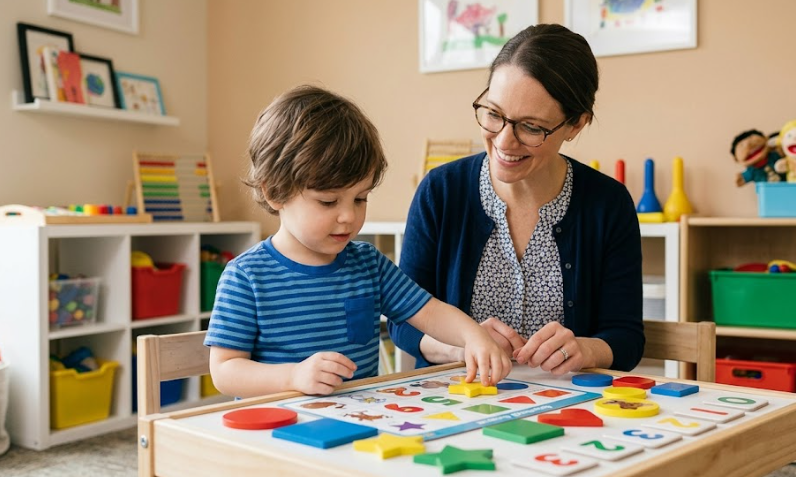
For young children newly diagnosed with autism, therapy often involves discrete trial training (DTT), a structured teaching method where skills are broken into small steps and taught through repeated practice with reinforcement. A child learning to identify colors, for example, might work on that skill in short, focused practice blocks several times per session.
For older children or those with stronger language skills, naturalistic teaching approaches are common. This means embedding learning into play, daily routines, and social interactions rather than structured table work. A child working on requesting help might practice that skill during art projects, outdoor play, or snack time.
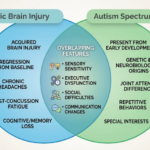
Understanding the diagnostic framework behind a child’s profile can help families appreciate why goals are set the way they are, as the dsm 5 criteria for autism covers two core domains: social communication deficits and restricted or repetitive behaviors, and a BCBA’s treatment targets are typically organized around addressing both areas in practical, functional ways.
Families sometimes come in with assumptions shaped by media portrayals or cultural narratives, and addressing autism stereotypes early in the process helps both parents and clinicians stay focused on the individual child’s actual profile rather than a generalized picture of what autism looks like.
What Mild Autism Looks Like and Why BCBA Support Still Matters
One of the most common questions parents ask is whether their child’s needs are “significant enough” to warrant ABA services. This question often comes up when a child has received a diagnosis that feels less severe than expected.
Understanding what is mild autism is an important starting point, as children with mild autism may have strong verbal skills, perform well academically, and navigate many social situations independently, but still face real challenges with flexible thinking, peer relationships, emotional regulation, or sensory processing.
These challenges can become more pronounced as academic and social demands increase with age. A BCBA can help these children by targeting the specific skills that are creating barriers, without over-pathologizing areas where the child is already thriving. The goal of ABA is never to change who a child is. It is to equip them with skills that give them more choices, more independence, and better access to the environments and relationships they want.
For families in Ringwood and the surrounding Passaic County area, this often means working with a BCBA on skills like:
- Initiating and maintaining conversations with peers
- Managing transitions between activities or settings
- Coping with unexpected changes to routines
- Self-advocacy skills for academic settings
- Recognizing and responding to social cues
These are practical, functional goals that translate directly into improved daily life outcomes.

Insurance, Costs, and Coverage in New Jersey
Cost is a real concern for most families, and the good news for Ringwood residents is that New Jersey has strong autism insurance mandates. Under New Jersey law, fully-insured health plans are required to cover medically necessary ABA therapy with no annual or lifetime dollar cap. This law applies to plans regulated by the state, which includes most employer-sponsored plans and individual market plans purchased through Get Covered NJ.
Self-funded ERISA plans (often offered by large national employers) are governed by federal law rather than state law, so coverage can vary. If your plan is self-funded, contact your HR department directly and request the Summary Plan Description to confirm ABA benefits.
Here is a general breakdown of how ABA services are typically structured and funded:
| Service Type | Typical Hours Per Week | Primary Funding Source |
| Early Intensive ABA (under 5) | 20-40 hours | Insurance + possible DDD funding |
| School-age ABA (clinic or home) | 10-20 hours | Insurance |
| Social skills groups | 1-2 hours | Insurance or private pay |
| Parent training sessions | 1-2 hours | Insurance |
| BCBA assessments | Varies | Insurance |
The New Jersey Division of Developmental Disabilities (DDD) also provides funding for individuals with autism who meet eligibility criteria. For children in Ringwood, the DDD’s Northern Regional Office in Morris County handles applications and service coordination.
Out-of-pocket costs, when they apply, vary widely. Initial assessments may run $500 to $2,000 without insurance. Monthly co-pays for ongoing therapy depend on your plan’s structure.
Things to Know
- The BACB maintains a public registry where you can verify any BCBA’s credentials, certification status, and disciplinary history in minutes.
- In New Jersey, BCBA services must be authorized as medically necessary by your insurance company before starting, which requires documentation from your child’s diagnosing physician.
- Waitlists for quality ABA providers in northern New Jersey can run three to six months, so starting the search before a diagnosis is finalized is often a practical move.
- A BCBA is required to write a new or updated treatment plan every six months, and insurance authorization must be renewed on a similar schedule.
- Not all ABA programs are identical in quality. Look for programs that conduct formal assessments, use data to drive decisions, and provide regular parent training as part of the program model.
- Ringwood is served by providers across Passaic County, and some providers also offer telehealth options for parent training and BCBA consultation sessions.
How to Evaluate and Choose a BCBA in Ringwood
Choosing a provider is one of the most consequential decisions a family makes in this process. The right BCBA should feel like a partner, not just a service provider.
Questions worth asking during an intake or consultation call:
- How many RBTs does each BCBA supervise, and how often does the BCBA observe sessions directly?
- How frequently will the BCBA meet with our family to review progress?
- What assessment tools do you use, and can you walk me through the results?
- How do you handle it when a child is not making progress on a goal?
- What is your approach to reducing challenging behaviors?
Red flags to watch for include programs that cannot explain their data collection process, BCBAs who are supervising more than 10 to 12 clients simultaneously, and providers who discourage parent involvement in the treatment process.
Quality ABA programs will welcome your questions and will be transparent about how clinical decisions are made.
The Bottom Line on Board Certified Behavior Analyst Ringwood
Choosing the right support for your child is not a small decision, and the quality of the BCBA overseeing that support matters enormously. A strong clinician brings both technical expertise and genuine partnership with your family, building a program that reflects your child’s individual strengths, challenges, and goals.
If you are in the Ringwood area and beginning this process, start by verifying credentials through the BACB registry, asking detailed questions during your intake conversations, and making sure parent training is built into whatever program you choose. The first step is simply making that first call to a provider and asking how they work.
Frequently Asked Questions
How long does ABA therapy typically last for a child in Ringwood?
There is no single answer, as duration depends on the child’s goals, age at start, and rate of progress.
Some children receiving early intensive intervention reach their goals and transition out of ABA services within two to three years. Others may continue with a reduced number of hours through elementary school. A skilled BCBA will regularly assess whether continued services are producing meaningful benefit and will plan for eventual discharge from the start.
Can a BCBA work with my child at their school in Ringwood?
Yes, in many cases a BCBA can collaborate with school staff or provide consultation within an educational setting.
Some families arrange for their private BCBA to observe at school and coordinate with teachers on consistent strategies. This can be particularly useful for children with IEPs who need behavioral support across home and school environments. New Jersey school districts may also have BCBAs on staff as part of their special education teams.
Is ABA therapy appropriate for teenagers with autism?
ABA is effective across the lifespan, and adolescent-focused programs are available through many providers in the Ringwood area.
For teenagers, goals typically shift toward self-advocacy, vocational readiness, independent living skills, and managing social dynamics in secondary school. The teaching methods adapt to the individual’s age and maturity level while still following the same evidence-based principles.
What is the difference between a BCBA and a child psychologist?
A BCBA specializes specifically in behavior analysis and ABA therapy, while a child psychologist may offer a broader range of assessments and therapeutic approaches.
Psychologists in New Jersey can conduct diagnostic evaluations, provide cognitive testing, and deliver talk-based therapies. BCBAs focus on observable behavior, skill acquisition, and behavior reduction through data-driven programming. Some children benefit from having both professionals involved in their care.
How do I get my child started with a board certified behavior analyst Ringwood providers offer?
The typical first step is obtaining a formal autism diagnosis from a licensed psychologist or developmental pediatrician, followed by a referral to an ABA provider.
Once you have a diagnosis, contact ABA providers in the Ringwood or Passaic County area to request an intake. The provider will contact your insurance company to verify benefits, obtain authorization, and schedule an initial BCBA assessment. From there, the BCBA develops the treatment plan and services begin.