Registered Behavior Technicians (RBTs) in Glenpool, Oklahoma work directly with children and individuals on the autism spectrum, delivering Applied Behavior Analysis (ABA) therapy under the supervision of a Board Certified Behavior Analyst (BCBA). If your child has recently received an autism diagnosis or you’re exploring behavioral support options in the Glenpool area, understanding how RBT services work can help you make a confident, informed decision for your family.
Key Takeaways
- RBTs in Glenpool are supervised by BCBAs and deliver one-on-one ABA therapy sessions targeting communication, behavior, and daily living skills.
- Early intervention, ideally before age 5, produces the strongest long-term outcomes for children receiving ABA therapy.
- Insurance coverage for ABA therapy in Oklahoma is mandated under state law, making services more accessible for most families.
- Sessions typically take place in the home, school, or clinic setting, depending on your child’s individualized treatment plan.
- Choosing a provider means evaluating staff credentials, BCBA supervision ratios, and how well the team communicates progress to parents.
- Skill maintenance requires consistency; gaps in therapy or transitions between providers can contribute to regression if not managed carefully.
What an RBT Actually Does During Sessions
An RBT, or Registered Behavior Technician, is a paraprofessional trained and credentialed by the Behavior Analyst Certification Board (BACB). The credential requires 40 hours of formal training, passing a national competency assessment, and working under the ongoing supervision of a BCBA. In Glenpool and throughout the Tulsa metro region, RBTs are the primary faces families see on a day-to-day basis.
During a typical session, an RBT works directly with your child on goals outlined in an individualized treatment plan. These goals might include:
- Building functional communication skills (words, sign language, or AAC devices)
- Reducing self-injurious or disruptive behaviors through replacement strategies
- Strengthening play and social interaction skills
- Teaching self-care tasks like hand washing, tooth brushing, or dressing
- Generalizing learned skills across different environments and people
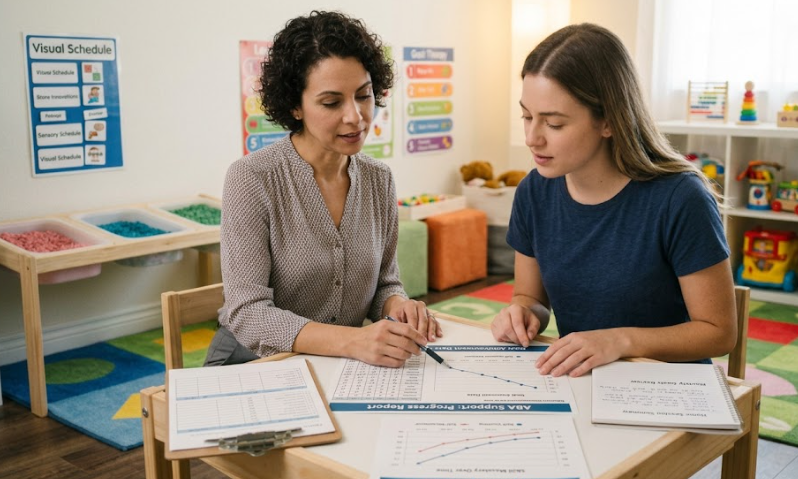
Sessions are data-driven. The RBT records every trial, every prompt, and every response. That data goes to the supervising BCBA, who reviews it regularly and adjusts the treatment plan as your child progresses.
Why Glenpool Families Are Seeking ABA Services Now
Demand for qualified RBT Glenpool providers has grown noticeably over the past several years. One significant driver is the documented rise in autism prevalence. According to the CDC, approximately 1 in 36 children in the United States is now identified with autism spectrum disorder, up from 1 in 150 just two decades ago. Researchers continue to study why are autism rates increasing, with evidence pointing to better diagnostic criteria, broader awareness, and a combination of environmental and genetic contributors.
For families in Glenpool, this increase means more children are receiving diagnoses at younger ages, and more parents are actively seeking behavioral support early. Oklahoma has seen corresponding growth in ABA provider networks, with clinics and in-home services expanding into suburban Tulsa communities like Glenpool, Bixby, and Jenks.
Early diagnosis has also been shaped by advances in genetic testing for autism, which can help identify certain chromosomal or single-gene conditions associated with autism spectrum disorder. While genetic testing does not change an ABA treatment approach directly, it can give families important context about their child’s profile and inform decisions about additional medical or developmental supports.
The combination of rising awareness, improved diagnosis, and expanded insurance mandates has made ABA therapy more accessible than ever before for families in this region.
How ABA Therapy Is Structured in Glenpool
Understanding the structure of ABA services helps you know what you’re signing up for before the first session begins. Services are not one-size-fits-all. The intensity, setting, and focus areas depend on your child’s age, skill level, and specific challenges.
Intake and Assessment
The process starts with a comprehensive assessment conducted by a BCBA. This includes:
- A review of your child’s medical and developmental history
- Direct observation of your child in natural settings
- Standardized assessments such as the VB-MAPP or ABLLS-R
- Parent interviews to understand daily routines and family priorities
From this assessment, the BCBA develops a treatment plan with specific, measurable goals. The RBT then implements that plan during scheduled sessions.
Session Settings
| Setting | Best For | Typical Frequency |
| In-Home | Young children, generalization to daily routines | 10-25 hours/week |
| Clinic-Based | Structured learning, peer interaction opportunities | 15-30 hours/week |
| School-Based | Classroom behavior, IEP goal support | Varies by district |
| Community | Generalization in public, life skills | As needed |
Supervision Requirements
Oklahoma follows BACB standards, which require that RBTs receive at least 5% of their total service hours in direct supervision from a BCBA or BCaBA. For families, this means the supervising clinician should be an active, visible part of your child’s program. Ask potential providers how often the BCBA observes sessions directly, whether they meet with you to review data, and how changes to the treatment plan are communicated.

Building the Right Skills: Communication and Social Development
Two of the most common goals in ABA programs for children with autism center on communication and social interaction. RBTs spend a significant portion of session time on these areas because they have downstream effects on virtually every other life domain.
For children who are non-verbal or minimally verbal, communication goals might focus on requesting preferred items, protesting unwanted activities, or labeling objects. For children with more developed language, the focus shifts to conversation skills, perspective-taking, and understanding social cues.
Structured social skills training for autism is often incorporated directly into ABA programs, particularly for school-aged children. This might include role-playing peer interactions, practicing turn-taking in games, or learning how to join a group conversation. Some providers in the Glenpool area offer group social skills sessions alongside individual ABA therapy, which allows children to practice skills with real peers in a supported environment.
Parents play a critical role in this process. When parents understand the specific language and prompting strategies the RBT uses, they can reinforce skills throughout the day at home. Provider teams that invest time in parent training see better outcomes for children because learning doesn’t stop when the session ends.
What to Watch For: Regression and Progress Plateaus
Even with strong programming, families sometimes notice periods where their child appears to lose previously mastered skills. This is called skill regression, and it is more common than many parents expect. Transitions between providers, gaps in services due to scheduling or insurance issues, illness, and significant changes in routine can all trigger regression.
Understanding skill regression in autism can help you advocate more effectively for your child when you notice these patterns. A competent RBT and BCBA team will monitor data closely and identify early signs of skill deterioration before they become significant. When regression is detected, the treatment plan should be adjusted promptly rather than waiting for the next scheduled review.
Some strategies that help minimize regression include:
- Maintaining consistent session schedules even during school breaks
- Ensuring smooth transitions when changing providers or therapists
- Communicating any major home or school changes to the clinical team
- Building maintenance trials into session programming for mastered goals
Insurance and Cost of RBT Services in Glenpool
Cost is a practical concern for every family considering ABA therapy. The good news for Oklahoma families is that the state mandates insurance coverage for ABA therapy. Oklahoma’s autism insurance reform law requires fully insured commercial health plans to cover ABA therapy for individuals diagnosed with autism spectrum disorder, with no arbitrary age caps or dollar limits on medically necessary care.
What this means practically:
- Most major commercial insurers operating in Oklahoma, including BlueCross BlueShield of Oklahoma, CommunityCare, and Aetna, are required to cover ABA therapy.
- SoonerCare (Oklahoma Medicaid) covers ABA services for eligible children, which is particularly important for lower-income families.
- Families using self-pay or out-of-network services should expect to pay $120-$200 per hour for RBT-delivered sessions, with BCBA supervision billed separately.
When contacting providers, ask them upfront to verify your specific benefits before services begin. Reputable agencies in the Glenpool area will handle insurance verification as part of the intake process at no extra cost to you.
Things to Know
- RBTs must renew their certification annually and complete ongoing supervision hours. Ask your provider when your child’s RBT last renewed their BACB credential.
- High RBT turnover is a real challenge in the ABA industry. Ask providers about their average staff tenure before committing to services.
- Not all ABA programs look the same. A quality program avoids overly rigid, drill-based instruction and incorporates naturalistic teaching methods throughout the day.
- Session hours matter, but quality of those hours matters more. Consistent, engaged, data-driven sessions outperform high-hour programs with poor supervision.
- If a provider cannot tell you who your child’s supervising BCBA is or how often they review session data, that is a red flag.
- Family involvement is not optional in good ABA programs. If parent training is not included in your child’s treatment plan, ask why.

The Bottom Line on RBT Glenpool Services
Finding quality RBT Glenpool services is one of the most important steps a family can take after an autism diagnosis. The right provider combines credentialed, well-supervised RBTs with a BCBA who communicates clearly, adjusts the program based on real data, and treats your family as a genuine partner in the process.
Your next step is straightforward: compile a short list of ABA providers serving the Glenpool area, verify RBT and BCBA credentials through the BACB’s public registry, confirm your insurance benefits directly with each agency, and schedule intake consultations before making a final decision. The sooner you start that process, the sooner your child can begin building the skills they need to thrive.
Frequently Asked Questions
How do I find a qualified RBT in Glenpool, Oklahoma?
Start by searching the BACB’s online registry to verify that any RBT you consider holds a current, active credential.
From there, contact ABA agencies that serve the Tulsa metro area, as many extend their service radius into Glenpool, Bixby, and surrounding communities. Ask agencies about BCBA supervision ratios, session settings, and current waitlist timelines before committing.
How many hours of ABA therapy does my child need per week?
The appropriate number of hours depends on your child’s age, severity of needs, and specific treatment goals, and is determined by a BCBA assessment.
Younger children with more significant needs may be recommended 25-40 hours per week, while older children with milder profiles might receive 10-15 hours. Insurance plans typically cover medically necessary hours as determined by the supervising BCBA.
What is the difference between an RBT and a BCBA?
An RBT is a direct-care technician who implements the therapy plan, while a BCBA is a master’s-level clinician who designs, supervises, and modifies the treatment program.
You will interact with your child’s RBT most frequently because they deliver the sessions. The BCBA oversees the clinical direction of the program, reviews data, and meets with families to discuss progress and adjust goals.
How long does ABA therapy typically last?
The duration of ABA therapy varies widely and is driven by your child’s progress toward individualized goals, not a fixed program length.
Some children make significant gains within 12-18 months and transition to less intensive supports. Others benefit from longer-term services as they move through different developmental stages. Annual re-assessments by the BCBA are standard practice to determine whether the current level of service remains appropriate.
What should I do if I feel the therapy is not working?
First, raise your concerns directly with the supervising BCBA, who has the authority to modify goals, change instructional strategies, or increase supervision.
If concerns are not addressed after a reasonable discussion, you have the right to request a second opinion from another BCBA or to seek services with a different provider. Families who advocate actively for clear progress data and transparent communication tend to get better outcomes from their programs.