
Registered Behavior Technicians (RBTs) in Oklahoma City are paraprofessionals trained to deliver Applied Behavior Analysis (ABA) therapy directly to individuals diagnosed with autism spectrum disorder. If you are a parent seeking ABA services or a professional considering certification, understanding how the RBT role works in the OKC area will help you make faster, more confident decisions.
Key Takeaways
- RBTs must complete a 40-hour training program, pass a competency assessment, and pass the BACB exam before working independently with clients.
- Oklahoma City has a growing demand for RBTs due to rising autism prevalence rates across the state.
- Families covered by SoonerCare or private insurance can often access RBT-delivered ABA therapy at little to no out-of-pocket cost.
- The average RBT salary in the Oklahoma City metro area ranges from $17 to $22 per hour, depending on the employer and experience level.
- RBTs always work under the supervision of a Board Certified Behavior Analyst (BCBA), who designs and monitors each treatment plan.
- Choosing the right ABA provider means looking at supervision ratios, staff turnover, and whether sessions are center-based, home-based, or both.
What an RBT Actually Does During a Therapy Session
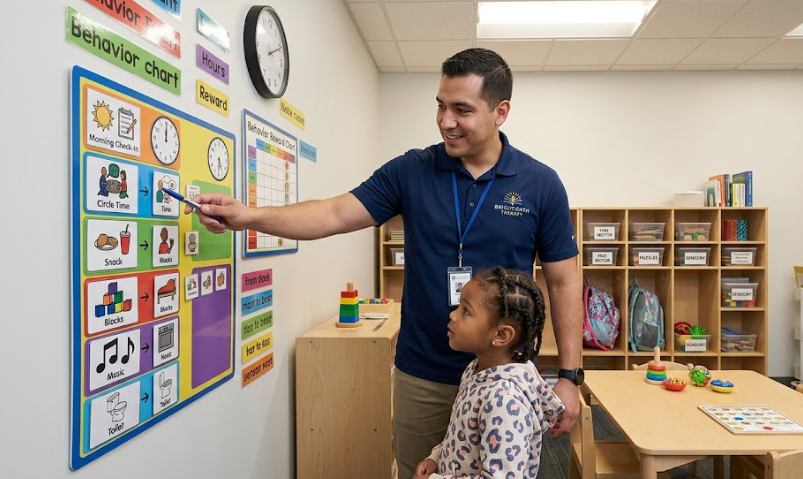
An RBT is not simply a babysitter or a classroom aide. The role is highly structured and protocol-driven. During a session, the RBT implements behavior intervention plans (BIPs) written by a supervising BCBA. This involves running discrete trial training (DTT), natural environment teaching (NET), and skill acquisition programs targeting communication, daily living skills, social interaction, and reduction of challenging behaviors.
A typical session in Oklahoma City might last two to three hours and take place in the client’s home, at a clinic, or at school. The RBT collects data on every target behavior during the session using paper data sheets or tablet-based platforms like CentralReach or Catalyst. That data goes directly to the supervising BCBA, who analyzes trends and adjusts programming accordingly.
The work is demanding. RBTs may spend sessions on the floor building puzzles, practicing requesting skills, or helping a child tolerate haircuts without distress. Physical stamina matters, and so does emotional resilience. Children with autism can present challenging behaviors including self-injury, aggression, or property destruction, and RBTs are trained in safety protocols such as Safety-Care or CPI to manage these moments without harm.
How to Become a Certified RBT in Oklahoma City
The path to becoming a certified rbt Oklahoma City professional is clearly defined by the Behavior Analyst Certification Board (BACB). There are no Oklahoma-specific licensing requirements beyond BACB standards, which makes the process relatively straightforward for motivated candidates.
Here is the step-by-step process:
- Meet eligibility requirements: You must be at least 18 years old and hold a high school diploma or GED.
- Complete the 40-hour training: This training must cover the BACB’s RBT Task List, which includes measurement, skill acquisition, behavior reduction, documentation, and professional conduct.
- Pass a competency assessment: A BCBA or BCaBA must directly observe you performing skills from the task list and sign off on your competency.
- Submit your application: Apply through the BACB website and pay the application fee, currently $50.
- Pass the RBT exam: The exam includes 85 multiple-choice questions. You have 90 minutes to complete it, and the passing score is around 70%.
- Maintain certification annually: RBT certification must be renewed each year, which includes ongoing supervision (at least 5% of your total service hours must be supervised by a BCBA) and a competency assessment renewal.
Several agencies in the Oklahoma City area offer free 40-hour training to new hires as part of their onboarding process. Companies like DreamBigger ABA, REED Learning Centers, and Behavioral Innovations recruit new RBTs and absorb training costs in exchange for a commitment to work with their caseload. This is one of the most accessible entry points into the human services field in the state, with no college degree required.
Understanding what autism looks like from a neurological standpoint can also help aspiring RBTs connect more deeply with the children they serve. Reading about the autism brain vs normal differences in structure and connectivity gives technicians a more grounded perspective on why certain behaviors occur and why ABA strategies are designed the way they are.
RBT Salary and Career Outlook in the OKC Metro
The demand for qualified RBTs in Oklahoma City has grown significantly over the past decade. Oklahoma’s autism prevalence mirrors national trends, and the CDC currently estimates that 1 in 36 children in the United States is diagnosed with autism spectrum disorder. If you are curious about the research behind these numbers, understanding why are autism rates increasing can provide useful context for why the field is expanding so rapidly.
Here is a snapshot of RBT compensation in the Oklahoma City area:
| Experience Level | Estimated Hourly Rate | Annual Salary Range |
| Entry-level (0-6 months) | $17 – $18/hr | $35,000 – $37,500 |
| Mid-level (6 months – 2 years) | $18 – $20/hr | $37,500 – $41,600 |
| Senior / Lead RBT (2+ years) | $20 – $22/hr | $41,600 – $45,760 |
| BCBA-track (pursuing degree) | $21 – $24/hr | $43,680 – $49,920 |
Many employers also offer benefits including health insurance, paid time off, mileage reimbursement for home visits, and tuition assistance for RBTs pursuing a bachelor’s or master’s degree toward BCBA certification. Given that BCBAs in Oklahoma City earn between $70,000 and $90,000 annually, the RBT role functions as a practical and funded pathway into a high-demand clinical career.

What Families in Oklahoma City Should Know Before Hiring an RBT
If your child has recently received an autism diagnosis, navigating the ABA therapy process can feel overwhelming. The RBT is the person who will spend the most direct time with your child, so knowing what to look for in a provider matters enormously.
First, understand that an RBT should never be working without BCBA oversight. The BACB mandates supervision ratios, but not all agencies meet those standards consistently. When interviewing an ABA agency, ask specifically how many cases each supervising BCBA carries and how often they directly observe RBT sessions. A high-quality program should have a BCBA observing and meeting with the RBT at minimum once every 10 service hours.
Second, ask about staff turnover. High turnover in RBT staff is one of the most common complaints among families receiving ABA services. Children with autism often form strong routines and relationships, and frequent staff changes can disrupt progress. Agencies that invest in training, competitive pay, and supportive supervision environments tend to retain their RBTs longer.
Third, clarify where sessions will take place. Some children do better in clinic settings, while others benefit more from in-home or school-based services. Many providers in the OKC metro offer hybrid models that adjust as the child progresses.
It also helps families to understand the diagnostic framework behind ABA eligibility. Most insurance companies and Medicaid programs require a formal diagnosis using dsm 5 criteria for autism before authorizing ABA services. Having that documentation ready before contacting providers will speed up the intake process significantly.

Insurance Coverage for RBT-Delivered ABA Therapy in Oklahoma
Oklahoma law requires most private health insurance plans to cover ABA therapy for individuals with autism spectrum disorder. Under Oklahoma Statute Title 36, Section 6060.6, insurers must provide coverage for diagnosis and treatment of autism, which includes services delivered by qualified RBTs under BCBA supervision.
For families covered by SoonerCare, Oklahoma’s Medicaid program, ABA therapy is a covered benefit for children under 21 with an autism diagnosis. The authorization process involves submitting a functional behavior assessment and a treatment plan created by a BCBA. Once approved, RBT sessions are billed directly to SoonerCare, meaning most families pay nothing out of pocket.
For families with private insurance through plans like BlueCross BlueShield of Oklahoma, HealthChoice, or employer-sponsored plans, copays and deductibles may apply, but annual benefit caps have been eliminated under current state law. Typical out-of-pocket costs after insurance are between $0 and $50 per session, depending on your plan specifics.
One important caveat: not every ABA agency in Oklahoma City accepts every insurance plan. Before committing to a provider, verify that they are in-network with your specific plan. Out-of-network ABA therapy can result in significantly higher costs, sometimes $150 to $300 per session without insurance processing.
Things to Know
- RBT certification is issued by the BACB and must be renewed every 12 months. Missing renewal deadlines means you must reapply from scratch.
- Oklahoma does not currently require a separate state license for RBTs, but this may change as state-level ABA regulations evolve nationally.
- Not all 40-hour training programs are equal. Ensure that yours covers the full BACB RBT Task List, not just a general introduction to ABA concepts.
- RBTs are prohibited by the BACB ethics code from maintaining dual relationships with clients. This means accepting gifts, socializing outside of sessions, or forming personal relationships with client families are all violations.
- Home-based RBT sessions typically require reliable transportation. Many OKC agencies reimburse mileage at the IRS standard rate, which is 67 cents per mile as of 2024.
- Children receiving ABA services often make the fastest progress when parents are trained in the same techniques. Ask your provider whether parent training is included in the treatment plan.
The Bottom Line on RBT Oklahoma City
Whether you are a parent trying to access quality ABA therapy for your child or a motivated professional looking to enter the behavior analysis field, the rbt Oklahoma City landscape offers real opportunity on both sides. The certification process is accessible, the demand is high, and the impact on the lives of children with autism is tangible and measurable.
Your next step depends on where you are starting. If you are a parent, contact two or three local ABA agencies this week, ask about intake timelines, verify insurance coverage, and request information on how their RBTs are supervised. If you are an aspiring RBT, reach out to providers that offer free training during onboarding. Spend a few hours reviewing the BACB’s RBT Task List and get comfortable with the exam format. The certification is within reach, and the career path that follows is one of the most meaningful in healthcare.
Frequently Asked Questions
How long does it take to become an RBT in Oklahoma City?
Most people complete the full certification process within four to six weeks.
The 40-hour training can often be completed in one to two weeks if done full-time, and the BACB typically processes applications within a few days. Scheduling and passing the exam adds another one to two weeks on average, depending on testing center availability.
Do RBTs in Oklahoma City work with adults, or only children?
RBTs can work with clients of any age, though the majority of ABA caseloads in Oklahoma City are children under 12.
Some agencies specialize in adolescent or adult services, particularly for individuals with co-occurring intellectual disabilities. If you are interested in adult populations, ask prospective employers specifically about their caseload demographics before accepting a position.
What is the difference between an RBT and a BCBA?
An RBT implements therapy directly, while a BCBA designs the treatment plan and supervises the RBT.
BCBAs hold at least a master’s degree, have completed supervised experience hours, and have passed a separate, more rigorous certification exam. The RBT role requires only a high school diploma and the 40-hour training, making it an accessible entry point into the field.
Can an RBT work independently without a BCBA supervising them?
No. BACB standards strictly prohibit RBTs from working without the oversight of a credentialed supervisor.
This is both an ethical and practical requirement. RBTs are trained to implement programs, not to design them. If an agency offers to deploy an RBT without BCBA supervision, that is a serious red flag and a violation of professional standards.
How do I find a reputable ABA provider in Oklahoma City?
Start by checking the BACB’s verified provider directory and asking your child’s diagnosing physician for a referral.
You can also contact Oklahoma’s Autism Oklahoma organization for a list of vetted providers in the metro area. Always verify that the supervising clinicians hold current BACB credentials and that the agency is enrolled as a Medicaid or in-network insurance provider before beginning intake.