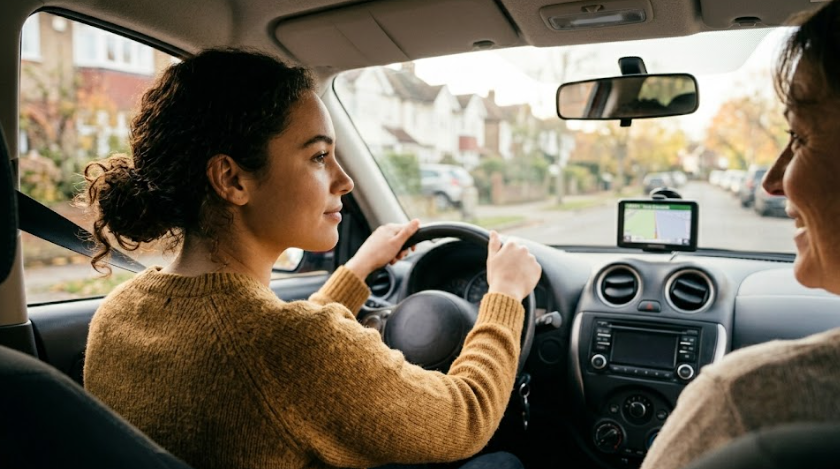
Key Takeaways
- Many autistic people can and do drive safely — no federal law in the United States prohibits driving with an autism diagnosis, and an autism diagnosis alone does not disqualify anyone from obtaining a license
- Driving ability in autism is highly individualized — some autistic people drive with few challenges, others find driving genuinely difficult or choose not to drive, and many find the learning process longer and more demanding than for neurotypical peers
- Research suggests autistic drivers may face challenges with divided attention, sensory overload, and predicting other drivers’ behavior — but also shows advantages in rule-following and lower rates of risky driving behavior
- Independence, relationships, and quality of life for autistic adults are entirely possible across all support levels — the trajectory depends far more on available support and individual strengths than on the autism label itself
- Autistic people show love in distinctive and genuine ways — through loyalty, shared special interests, acts of service, and explicit care — that are just as meaningful as any neurotypical expression
The Direct Answer: Yes — Many Autistic People Drive
Autism does not legally disqualify a person from driving in the United States. There is no federal prohibition, and state-level driving requirements focus on functional capacity — attention, vision, reaction time, and cognitive ability — not diagnostic labels. An autism diagnosis on its own does not appear on any DMV disqualification list.
Many autistic people obtain licenses, drive regularly, and drive safely. Some prefer not to drive even if they technically could — and that preference deserves as much respect as the desire to drive. Some find driving genuinely too demanding for their specific profile of attention, sensory processing, and executive functioning — and finding alternatives is a valid outcome, not a failure.
What is not accurate is any blanket statement in either direction: neither “autistic people can’t drive” nor “autism has no effect on driving” reflects the research. The honest picture is more nuanced, more individualized, and ultimately more useful for autistic people and families trying to make informed decisions.
What Makes Driving Challenging for Some Autistic People
Driving is one of the most cognitively demanding activities most people undertake regularly — it requires sustained attention across multiple input streams simultaneously, rapid processing of unpredictable events, social cognition applied to other drivers’ intentions, and all of this while managing a complex physical machine. Each of these demands intersects with how autism affects the nervous system.
Divided attention is the most consistently identified challenge. Driving requires monitoring the road ahead, mirrors, speed, surrounding vehicles, pedestrians, signs, and navigation — simultaneously and continuously. For autistic individuals, attention tends to be more focused and less automatically distributed across competing streams. The intense attentional depth that serves autistic people well in many domains becomes a liability when every cognitive channel must be equally active.
Social cognition on the road. A significant portion of safe driving involves predicting what other drivers will do — reading their speed, their signal use, their apparent intentions, and making rapid judgments about likely behavior. This is essentially applied social cognition in motion. Autistic individuals, who process social information differently and often more effortfully, may find this component of driving particularly demanding.
Sensory overload. Night driving with oncoming headlights, busy intersections with overlapping visual and auditory stimulation, highway driving with wind and road noise — these environments can be overwhelming for autistic individuals with sensory hypersensitivity. An autistic driver whose sensory system is overloaded has fewer cognitive resources available for the attention and decision-making that safe driving requires. Executive dysfunction and autism covers how cognitive resource depletion affects performance under load — a mechanism that applies directly to high-demand driving environments.
Processing unexpected events. Driving requires rapid responses to unpredictable situations — a child running into the street, a car suddenly braking, a lane closure. Some autistic individuals process unexpected information more slowly or have difficulty rapidly shifting cognitive set when something unexpected disrupts an anticipated sequence. In routine, predictable driving conditions, this may not be apparent; in novel or emergency situations, it can become significant.
Anxiety. Driving-related anxiety is extremely common among autistic people — often more intense and more persistent than for neurotypical learners. The combination of sensory demands, social unpredictability, and the high stakes of any error creates a stress environment that can make the learning process particularly difficult.
What Research Says Autistic Drivers Do Well
The research picture on autism and driving is not uniformly challenging — several findings suggest that autistic drivers have specific areas of strength that deserve equal attention alongside the challenges.
Exceptional rule-following. Multiple studies have found that autistic drivers are more likely to adhere consistently to traffic laws — following speed limits, stopping at stops, signaling turns — than neurotypical drivers. The autistic preference for clear rules, consistency, and predictable systems translates into driving behavior that respects the formal structure of traffic law.
Lower rates of risky driving. Research consistently finds that autistic drivers are less likely to engage in the behaviors that produce the most accidents: speeding, tailgating, distracted driving through phone use, and driving while impaired. The risk-seeking and sensation-seeking impulses that contribute to risky driving in neurotypical drivers are not characteristic of most autistic profiles.
Strong procedural learning. Once an autistic driver has learned a route, a sequence, or a procedure, they often execute it with high consistency. Familiar routes and habitual driving conditions frequently become very manageable — even comfortable — once the initial learning curve is cleared.
Attention to detail. The detail-focused cognitive style characteristic of autism can be an asset in noticing road conditions, reading signs accurately, and monitoring the driving environment carefully.
The summary the research produces: autistic drivers may struggle more during the learning phase and in high-stimulation novel conditions, but once experienced and in familiar conditions, may drive with care and consistency that compares favorably to neurotypical drivers.
The Learning Process: What to Expect
Parents of autistic teenagers approaching driving age — and autistic young adults themselves — should know that the learning timeline is frequently longer than the neurotypical average, and that this is expected and manageable.
Neurotypical teens often learn to drive in 20–40 hours of supervised practice. Many autistic learners need significantly more time — sometimes two to three times as many hours — to reach the same confidence and competency. This is not a sign of incapacity; it is a reflection of the additional cognitive demands driving places on autistic nervous systems and the anxiety management that must be built alongside the mechanical skills.
Several practical accommodations support autistic driving learners:
Extended practice periods. More time is not a failure; it is a reasonable accommodation for a skill that genuinely demands more from an autistic nervous system. Rushing the process produces anxious, undertrained drivers; adequate practice produces confident ones.
Structured, incremental progression. Beginning with extremely low-stimulation environments — empty parking lots, quiet neighborhood streets — and progressing through complexity gradually allows autistic learners to master each level before adding new demands.
Explicit, precise instruction. Many autistic people learn best from clear, specific, literal instructions rather than vague guidance. Driving instructors who can give explicit guidance (“check your left mirror, then center mirror, then right mirror, in that order”) tend to work better with autistic learners than those who expect intuitive grasp.
Working with autism-informed driving instructors. Some driving instruction programs have developed specific expertise in teaching autistic learners. Seeking out these programs, when available, reduces the frustration of instructors who misread autistic processing patterns as inattention or non-compliance.
What Is High-Functioning Autism Like?
“High-functioning autism” is a colloquial term — not a formal DSM-5 designation — that typically refers to autistic individuals with average to above-average intellectual abilities and age-appropriate language development. In formal terms, this most closely corresponds to Level 1 ASD, formerly called Asperger’s syndrome.
For a thorough examination of what this profile involves in daily life, what is mild autism covers both the visible and less visible dimensions of Level 1 ASD. The brief summary:
High-functioning autism looks like a person who can hold an intelligent conversation, perform well academically in structured environments, and appear socially competent in brief encounters — while simultaneously experiencing significant, often invisible challenges. The social exhaustion of sustained interaction, the cognitive cost of ongoing social monitoring, the sensory demands of ordinary environments, and the executive functioning challenges that affect planning and flexibility — these remain real and significant even when intellectual ability is high and language is fluent.
Many people with this profile are not diagnosed until adolescence, adulthood, or never — because their abilities allow enough compensation for the autism features to go unrecognized. Late diagnosis is the norm rather than the exception, particularly for women and girls whose social masking is often more sophisticated and sustained than that of autistic males.

Can Level 2 Autism Live Independently?
Level 2 ASD — requiring “substantial support” in both social communication and restricted/repetitive behaviors — does not preclude independent living, though the pathway to independence typically looks different from the typical developmental trajectory.
The key word in the Level 2 designation is “substantial support” — not “complete dependence” and not “permanent caregiving.” Many Level 2 autistic individuals achieve meaningful independence with the right infrastructure:
Supported independent living. Many Level 2 autistic adults live in their own apartments or homes with structured support — check-ins from support workers, help with certain daily living tasks, skills coaching for areas of difficulty. This is independence with scaffolding, and for many people it represents a genuinely autonomous life.
Employment. Level 2 autistic adults are employed across a range of sectors — particularly in fields that value systematic thinking, detail focus, pattern recognition, and specialized expertise. Supportive employment programs, job coaches, and workplace accommodations significantly expand the employment range for those whose profile requires it.
Skills building through evidence-based intervention. The adaptive behavior skills that support independent living — budgeting, meal preparation, transportation navigation, personal care routines, communication with service providers — can be systematically taught and strengthened. ABA therapy specifically targeting these functional skills during adolescence and early adulthood produces meaningful independence gains.
The honest caveat: Some Level 2 autistic individuals, particularly those with co-occurring intellectual disability or significant adaptive behavior limitations, require higher levels of supported living and may not achieve full independent living in the conventional sense. But independence is not binary — it exists on a spectrum, and every increase in functional autonomy represents meaningful quality-of-life improvement regardless of whether full independence is the ultimate outcome.
How Do Autistic People Show Love?
This question deserves a genuine, warm answer — because autistic people do love deeply, consistently, and often in ways that their partners, family members, and friends may not immediately recognize as love.
Autistic expressions of love often reflect the autistic person’s neurology rather than neurotypical conventions — and they are no less real for being different.
Sharing special interests. When an autistic person invites you into their area of passionate interest — explaining it in detail, showing you what they love about it, teaching you — this is a profound expression of trust and affection. The special interest is often a core part of the autistic person’s identity; being allowed inside it is a significant gesture of closeness.
Infodumping as love. The lengthy, detailed, enthusiastic monologue about a topic the autistic person is passionate about — often called “infodumping” — is frequently an act of love. It means the person trusts you enough to be fully themselves, without the editing and filtering that social performance requires.
Acts of service. Many autistic people express love most naturally through doing concrete things: fixing problems, researching solutions, bringing resources, helping with tasks. If an autistic person is working to solve your problems, they are telling you they care.
Loyalty. Autistic people often form deep, consistent attachments that they maintain with extraordinary fidelity. The person who remembers what you said a year ago, who checks on you when you are struggling, who shows up reliably — is often expressing love through consistency rather than through words.
Physical affection on their own terms. Sensory sensitivities vary enormously across autistic individuals — some are sensory-seeking and highly physically affectionate; others are hypersensitive and find touch overwhelming. Neither pattern reflects the depth of the person’s feelings. Understanding and respecting the individual’s sensory profile is more loving than expecting them to conform to conventional affection patterns.
Rejection sensitive dysphoria and autism covers the intense emotional experience of perceived rejection that many autistic people carry — which is the other side of their capacity for deep love. The same intensity that makes autistic people deeply loving also makes perceived rejection profoundly painful.
Is Dating Someone With Autism Hard?
Relationships between autistic and neurotypical partners — sometimes called “neurodiverse relationships” or “mixed neurotype relationships” — can be deeply fulfilling and also genuinely challenging in specific ways. The honest answer is: it depends, and the degree of difficulty is substantially determined by how much both partners understand and accommodate each other’s neurology.
What neurotypical partners often find challenging:
- Interpreting indirect communication that the autistic partner may not pick up
- Understanding that reduced social performance does not mean reduced affection
- Navigating the autistic partner’s sensory needs, which may affect shared activities, physical affection, and social plans
- Adjusting to the autistic partner’s need for routine and predictability, which may feel inflexible
- Managing conversations that end abruptly when the autistic partner’s social energy is depleted
What autistic partners often find challenging:
- Reading implied emotional states, unstated expectations, and nonverbal communication
- Managing the exhaustion of social demands within the relationship alongside all other social demands
- Processing conflict, which often activates rejection sensitivity at high intensity
- Communicating emotional experience in formats the neurotypical partner expects
What makes neurodiverse relationships work: Explicit, direct communication about needs — rather than expecting the other person to intuit them — is the single most consistent factor in successful neurodiverse relationships. Autistic people are often better at explicit communication than at implicit social signaling; leaning into directness rather than expecting the typical neurotypical communication style to work for both partners serves both people better.
Research on the double empathy problem — developed by autistic researcher Damian Milton — suggests that the communication challenges in neurodiverse relationships are bidirectional: neurotypical partners also struggle to understand autistic communication, and the assumption that the “problem” lies solely with the autistic partner is incorrect. Both people are interpreting a different neurological communication style, and both need to adjust.

Common Misconceptions About Autism and Adult Life
“If you can drive, you can’t really be autistic.” Autistic people across all presentations drive. The presence of an autism diagnosis says nothing definitive about any individual’s ability to drive. Autistic people who drive are not “too high-functioning to be really autistic” — they are autistic people who drive.
“Level 2 autism means someone can’t ever live independently.” Level 2 describes current support needs, not permanent capacity. Many Level 2 autistic people, particularly when they receive appropriate skill-building support during adolescence and early adulthood, achieve meaningful independence as adults. The level designation informs current planning, not lifetime outcome.
“Autistic people don’t feel love the way neurotypical people do.” Autistic people feel love with full depth and intensity — often with an intensity that exceeds what neurotypical norms would express. What is different is the manner of expression, not the capacity or depth of the feeling.
“Dating an autistic person means sacrificing your own needs.” A relationship with any person who is understood, accommodated, and communicated with explicitly requires two-way adjustment. Autistic people in relationships with partners who understand their neurology are not burdens — they are partners with a specific neurological profile that requires explicit communication rather than implicit social negotiation.
“Autistic adults who struggle with driving should just take public transit.” This is a legitimate accommodation strategy in areas with good transit coverage — but it is worth noting that transit dependence significantly limits geographic mobility and access to employment in most American communities. Supporting autistic people in developing driving ability is a meaningful independence investment, not a luxury.

Conclusion
The question of whether autistic people can drive is part of a larger question about what adult life with autism can look like — and the honest, evidence-based answer is expansive rather than limiting.
Many autistic people drive. Many live independently. Many build deep, lasting relationships. The path to each of these outcomes often looks different from the neurotypical path — longer, more explicitly scaffolded, more dependent on appropriate support and accommodation — but the destination is reachable for far more autistic adults than assumptions about autism would suggest.
What determines the outcomes most consistently is not the diagnosis or support level but the quality of early intervention, the availability of ongoing support during transitions, the degree to which environments and systems accommodate rather than exclude, and the self-understanding that allows autistic people to navigate the world on their own terms.
Building those outcomes — through individualized, evidence-based support that starts early and continues as long as needed — is the work that changes trajectories.
Dream Bigger ABA provides individualized ABA therapy for autistic children and their families across Northern Virginia, with a focus on the functional skills, communication, and adaptive behavior that build toward the adult life each child deserves. Connect with our team to explore services in Vienna, VA and Gainesville, VA.
Frequently Asked Questions
Is driving hard for people with autism?
For many autistic people, yes — particularly during the learning phase. Driving demands divided attention across multiple simultaneous input streams, social cognition applied to predicting other drivers’ behavior, tolerance for sensory stimulation in busy environments, and rapid processing of unpredictable events. Each of these intersects with how autism affects the nervous system. Many autistic learners need significantly more practice hours than neurotypical peers — often two to three times as many — to reach equivalent comfort and competency. Anxiety about driving is also very common. However, the research picture is not uniformly challenging: autistic drivers tend to follow traffic laws more consistently, engage in risky driving behaviors less frequently, and once experienced and in familiar conditions, drive with careful attention. Many autistic people drive safely and competently; some find driving too demanding and choose alternatives; and many require a longer, more structured learning process to get there.
What is high-functioning autism like?
High-functioning autism — most closely corresponding to Level 1 ASD in current diagnostic terminology, formerly called Asperger’s syndrome — is characterized by autistic social communication differences and restricted/repetitive behaviors without significant language or intellectual delay. From the outside, it can look like social awkwardness, intense niche interests, and preference for routine. From the inside, it involves the ongoing cognitive and emotional labor of navigating a world that is not built for the autistic nervous system. Social interaction requires conscious monitoring and effortful translation. Sensory environments that neurotypical people barely notice can be genuinely overwhelming. Executive functioning challenges affect planning, task initiation, and flexibility in ways that are invisible to observers but profoundly affect daily functioning. Many high-functioning autistic adults were not diagnosed until adolescence or adulthood — their abilities allowed enough compensation for the autism to go unrecognized, while they carried the full neurological profile throughout.
Can Level 2 autism live independently?
Many Level 2 autistic individuals achieve meaningful independence — in their own living spaces, in employment, in relationships — with appropriate support structures in place. Level 2 designates a current need for “substantial support,” not a permanent requirement for dependence. Supported independent living — having one’s own home while accessing scheduled support for specific areas of difficulty — is a common and successful arrangement for many Level 2 autistic adults. Employment, particularly with supportive programs and accommodations, is achievable across a range of fields. The most important variable is not the DSM-5 level designation but the quality of skill-building intervention during adolescence and early adulthood, the adequacy of the support structure available, and the fit between the individual’s strengths and the demands of their environment. Independence exists on a spectrum, and progress toward greater autonomy is a meaningful goal at every point on that spectrum.
How do autistic people show love?
Autistic people show love genuinely and often intensely — through channels that reflect their neurology rather than neurotypical conventions. Common autistic expressions of love include: sharing special interests (inviting someone into their area of passionate focus is an act of trust and intimacy); infodumping (enthusiastically sharing detailed knowledge is a sign that the person feels comfortable and connected); acts of service (practical problem-solving, researching solutions, doing concrete things to help); profound loyalty and consistency (remembering what you said, showing up reliably, maintaining the relationship through time and difficulty); and physical affection calibrated to their sensory profile. Many autistic people are more comfortable expressing love through action than through words — not because the feeling is lesser, but because the direct experience of caring translates more naturally into doing than into saying. Understanding the specific language of an autistic person’s love — rather than expecting it to look like neurotypical expression — is the most meaningful form of love in return.
Is dating someone with autism hard?
Like any relationship, a neurodiverse partnership requires understanding, communication, and mutual accommodation — and in some ways, more explicit versions of all three. Communication differences are the most common source of friction: autistic partners often prefer direct, explicit communication and may miss implied meanings, while neurotypical partners may rely on social signaling and unspoken expectations that the autistic partner genuinely does not receive. Sensory needs, energy limits after social performance, and the importance of routine and predictability require conversation and adjustment. Research on the “double empathy problem” suggests that the communication challenges run in both directions — neurotypical partners also struggle to interpret autistic communication styles, meaning both people are navigating a genuine translation challenge rather than one partner simply failing to communicate adequately. Neurodiverse relationships that invest in explicit communication, mutual education about each other’s neurology, and genuine respect for different needs produce lasting, deeply connected partnerships.