Key Takeaways
- Autism is not classified as a birth defect — it is a neurodevelopmental disorder, which is a meaningfully different category with different implications for how we understand and support autistic people
- Birth defects involve structural or functional damage to normal development; autism involves a brain that developed differently, not defectively
- Autism originates in prenatal brain development — meaning people are effectively born with it — but the cause is largely genetic, not a structural anomaly
- Autism is highly heritable (estimated 64–91%), can be inherited through either parent, and can also arise from new genetic mutations in a child with no family history
- Two neurotypical parents can absolutely have an autistic child — and this is the most common scenario
The Direct Answer: Autism Is Not a Birth Defect
The term birth defect has a specific medical meaning — and autism does not fit it.
Birth defects, also called congenital anomalies, refer to structural or functional abnormalities present at birth that result from disruptions to normal fetal development. They include conditions like cleft palate, congenital heart disease, spina bifida, and limb differences. They are caused by chromosomal errors, single-gene mutations that disrupt normal biological architecture, or prenatal exposures — alcohol, certain medications, infections like rubella — that damage tissue or organ formation.
The word “defect” is central here. It implies that something went wrong with a process that should have produced a different outcome.
Autism does not fit that model. An autistic brain is not a typical brain that was damaged or structurally disrupted during development. It is a brain that developed along a different neurological trajectory — one that produces characteristic differences in social processing, sensory integration, executive functioning, and pattern recognition. Different, not defective.
Autism is formally classified under the DSM-5 as a neurodevelopmental disorder — a category defined by differences in how the brain develops and organizes itself from early in life, producing lasting patterns of behavior and cognition. That classification sits alongside ADHD, intellectual disability, and specific learning disorders. None of these are classified as birth defects.
The distinction is not merely academic. Framing autism as a defect implies something went wrong that should have been prevented or corrected. Framing it as a neurodevelopmental difference opens a very different conversation — one centered on understanding, accommodation, and building skills rather than fixing damage.
What Makes Something a Birth Defect — and Why Autism Doesn’t Qualify
To understand why autism is not a birth defect, it helps to understand what actually defines that category.
Birth defects fall into two main types:
Structural birth defects involve a body part that is physically malformed — an organ that didn’t form completely, a vessel that developed incorrectly, a limb that is absent or fused. These are visible or detectable on imaging.
Functional birth defects involve a system that developed normally in structure but does not work as expected — metabolic disorders, hearing loss from prenatal infection, or neurological conditions caused by specific prenatal damage. These involve disrupted processes, not just different ones.
Autism does not produce structural brain malformation. Autistic brains are not damaged brains. Research using neuroimaging has found measurable differences in connectivity, cortical thickness, and the development of specific brain regions — but these are differences in how the brain organized itself during development, not evidence of damage or failed formation. The autism brain vs. neurotypical brain shows distinct connectivity patterns — particularly in social processing networks — but the brain is structurally intact.
This is why the medical, psychiatric, and neuroscience communities classify autism as a neurodevelopmental disorder rather than a birth defect, congenital anomaly, or brain injury.
Are You Born With Autism or Is It Caused?
Both — and those are not mutually exclusive.
Autism originates in prenatal brain development. The neurological differences that define autism are not acquired after birth through experience, injury, or environmental exposure in childhood. By the time a child is born, the underlying neurodevelopmental trajectory is already established. In that sense, yes — autistic people are born autistic.
The cause, however, is primarily genetic. The current scientific consensus places genetic factors at the center of autism’s etiology. Twin studies estimate the heritability of autism at between 64% and 91% — meaning genetics explains the vast majority of why one person develops autism and another does not. Hundreds of genes have been associated with ASD, most individually rare, but cumulatively producing the neurological differences that characterize the condition.
Environmental factors during pregnancy — advanced parental age, certain prenatal infections, extreme prematurity, and possibly some chemical exposures — appear to modify risk, but they are not primary causes. They are best understood as factors that may amplify an underlying genetic predisposition, not as independent triggers. This is why understanding why autism rates are increasing requires looking at the full picture of genetic and environmental interaction rather than any single cause.
The framing of “born with it vs. caused by something” is a false choice. Autism is caused — by genetics and their interaction with prenatal neurodevelopment — and that cause is present from before birth. Both things are true simultaneously.
Is Autism Genetic Through the Mother or the Father?
This is a genuinely nuanced area of ongoing research, and the answer is: both parents contribute, but the patterns are asymmetric in interesting ways.
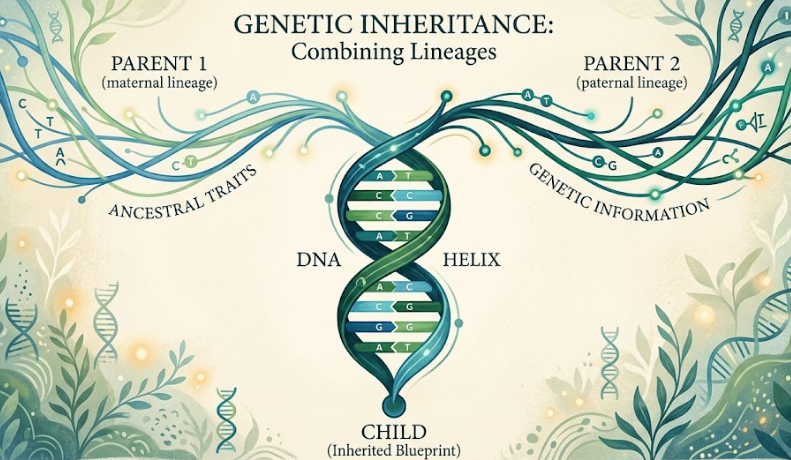
From either parent: Many of the genetic variants associated with autism can be passed down from either the mother or the father. If autism runs in a family, there is an elevated recurrence risk regardless of which parent carries the relevant genetic variants.
The paternal contribution: Some research suggests that certain common genetic variants associated with autism are more likely to be transmitted from fathers than from mothers. The proposed explanation is the female protective effect — a well-documented phenomenon in which females appear to require a higher genetic load to express autism than males do. This means mothers can carry the same genetic variants that would produce autism in a son, without those variants being expressed diagnostically in themselves. The variant is then passed to the child.
De novo mutations: A meaningful proportion of autism cases — estimated at around 10–30% — arise from de novo mutations: genetic changes that are present in the child but not inherited from either parent. They arise spontaneously during the formation of sperm or egg cells, or in early embryonic development. Advanced paternal age is associated with a higher rate of de novo mutations, which partially explains why older fathers are associated with modestly higher autism risk in offspring.
The practical takeaway: There is no clean answer to “is it from the mother or the father?” because both can contribute, the contribution can be invisible in the parent even when clinically significant in the child, and new mutations can bypass inheritance entirely. For families seeking clarity, genetic testing for autism can identify specific variants and provide more precise information about inheritance patterns in individual families.
Can Two Neurotypical Parents Have an Autistic Child?
Yes — and this is in fact the most common scenario.
The assumption that autism would be visible in at least one parent if it is genetic misunderstands how genetics works. Autism is polygenic — it arises from the interaction of many genes, not a single dominant mutation. A parent can carry a collection of genetic variants that, in that parent, do not cross the threshold for an autism diagnosis. When those variants combine — in a particular child, from both parents, alongside de novo mutations or environmental modifying factors — the resulting profile does cross that threshold.
Think of it like height. Two parents of average height can have a child who is notably tall or notably short, because height is determined by the combined effect of many genes whose interactions are not perfectly predictable. Autism works similarly, without the obvious phenotypic visibility that height provides.
This is why parents are frequently shocked by an autism diagnosis. They may have no family history they are aware of, no personal history of diagnosis, and no obvious autistic traits — and still have an autistic child. That outcome is not only possible; it is expected given how autism’s genetics actually work.
It is also worth noting that autism in prior generations was significantly underdiagnosed — particularly in women, in individuals who masked successfully, and in those without significant intellectual disability. A parent who believes there is “no autism in the family” may be looking at a family history in which autism was present but unnamed.
5 Foods Commonly Flagged in Autism Discussions — and What the Evidence Says
This is one of the most searched questions by parents of autistic children, and it deserves an honest answer: there is no FDA-approved autism diet and no dietary intervention with strong enough clinical evidence to be formally recommended by major medical bodies.
That said, several food categories come up consistently in both research and parent communities for reasons worth understanding:
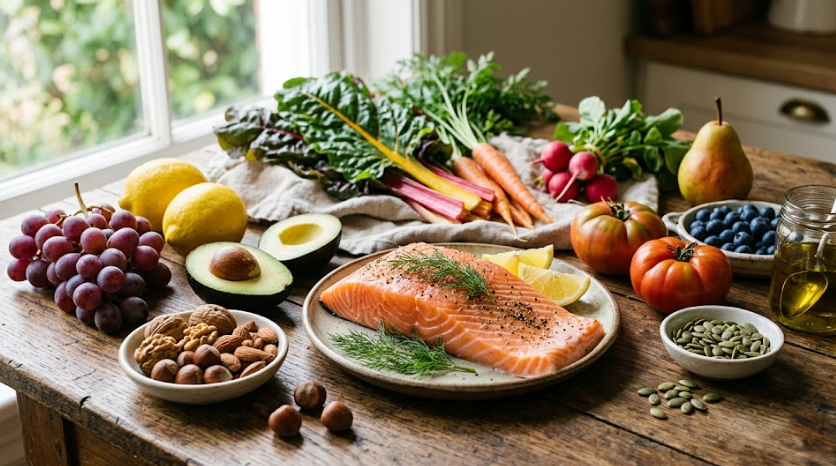
1. High-mercury fish (swordfish, king mackerel, tilefish, shark) Heavy metal exposure — particularly mercury — is a legitimate prenatal neurodevelopmental concern, and some research has examined mercury as a modifier of autism risk. The FDA and EPA advise pregnant women to limit high-mercury fish and choose lower-mercury options like salmon and sardines. This is an established prenatal recommendation, not an autism-specific intervention.
2. Gluten-containing foods (for children with GI sensitivity) The gluten-free, casein-free (GFCF) diet is the most studied dietary intervention in autism. The evidence from randomized controlled trials is inconclusive — some families report significant behavioral improvements; controlled studies have not consistently replicated this. Children with co-occurring gastrointestinal conditions or documented gluten sensitivity may genuinely benefit. For others, the evidence does not support eliminating gluten universally.
3. Casein-containing dairy products (paired with the above) For the same reasons as gluten — some autistic children have GI inflammation or permeability issues that make dairy tolerance difficult. If a child has documented GI problems, a casein-reduced trial under dietitian supervision may be warranted. Without GI involvement, the evidence is limited.
4. Artificial food dyes and synthetic preservatives Some research — primarily in neurotypical children with ADHD — suggests that certain artificial food colorings (particularly Red 40, Yellow 5, and Yellow 6) may exacerbate behavioral dysregulation in sensitive individuals. For autistic children who are already sensitive to sensory and arousal dysregulation, this is a reasonable category to minimize even in the absence of autism-specific clinical trials.
5. Highly processed foods high in refined sugars The gut-brain connection is an active area of autism research. Autistic individuals show higher rates of GI symptoms and gut microbiome differences than the general population. Diets high in processed foods and refined sugars negatively affect gut microbiome diversity, which may affect behavior and mood regulation. Reducing processed food intake is sound general pediatric nutrition guidance that has plausible relevance for autistic children.
The bottom line: Before making significant dietary changes, consult a registered dietitian with pediatric and autism experience. Unnecessary dietary restriction in autistic children — many of whom already have highly limited food repertoires — can worsen nutritional status and mealtime anxiety. The DSM-5 criteria for autism do not include dietary components, but a child’s nutrition absolutely affects their capacity to engage in therapy, regulate behavior, and learn.
Common Misconceptions About Autism’s Origins
“Autism is caused by vaccines.” This claim has been thoroughly and repeatedly debunked across dozens of large-scale studies involving millions of children across multiple countries. The original 1998 paper that proposed this link was retracted due to fraud, and its author lost his medical license. Vaccines do not cause autism.
“Something went wrong during pregnancy.” This framing implies damage or error. Autism is not the result of something going wrong — it is the result of a different neurodevelopmental trajectory, primarily driven by genetics. Blaming prenatal events, behaviors, or exposures is not only scientifically inaccurate for most cases; it places harmful and unwarranted guilt on parents.
“If autism were genetic, it would have been weeded out by evolution.” Autism-associated genes are not simply detrimental. Many are associated with traits — pattern recognition, systematic thinking, focused attention, heightened sensory awareness — that have adaptive value. Evolution does not eliminate complex polygenic traits that confer mixed advantages and disadvantages across environments.
“Autism is getting more common because of something new in the environment.” Autism prevalence estimates have increased significantly over the past three decades — but the majority of this increase is explained by expanded diagnostic criteria, increased awareness, better screening tools, and reduced stigma around diagnosis. True causal environmental factors cannot account for the full magnitude of the observed increase.
“If I had known earlier in pregnancy, I could have prevented it.” There is no known intervention during pregnancy that prevents autism. Genetics is the primary driver. Following general prenatal health guidance — avoiding alcohol and high-mercury fish, managing infections, getting adequate folate — supports fetal brain health broadly, but does not constitute autism prevention.
Conclusion
Autism is not a birth defect. It is not damage. It is not the result of something going wrong during pregnancy, a failure of parental behavior, or a structural malformation of the developing brain. It is a neurodevelopmental difference — one that originates in prenatal genetics, shapes how the brain organizes itself from the earliest stages of development, and produces a distinctive neurological profile that persists across a lifetime.
Understanding this distinction changes everything about how families engage with an autism diagnosis. It moves the conversation from blame and prevention to understanding and support. And it points clearly toward what actually helps: early, evidence-based intervention that meets the autistic child where they are — not an attempt to repair a defect that was never there.
If your child has recently been diagnosed with autism or you have concerns about their development, the most important next step is connecting with clinicians who understand autism as it actually is — not as a medical error to be corrected. Early ABA therapy, grounded in current science and delivered with genuine care, makes a measurable difference in outcomes that matter: communication, independence, and quality of life.
Dream Bigger ABA provides individualized, evidence-based ABA therapy for autistic children and their families across Northern Virginia. Our clinicians bring both clinical expertise and deep respect for every child’s unique profile. Explore services in Vienna, VA and Gainesville, VA, or reach out to our team to learn how we can support your family.
Frequently Asked Questions
Are you born with autism or is it caused?
Both — and those are not contradictory. Autism is caused primarily by genetics, and its neurological foundations are established during prenatal brain development. By the time a child is born, the underlying neurodevelopmental trajectory that produces autism is already in place. So autistic people are effectively born autistic, but the reason they are born autistic is a genetic one — not a birth injury, a structural defect, or a postnatal exposure. Environmental factors during pregnancy may modify risk at the margins, but genetics is the primary driver. Autism is not something a child develops after birth through experience, vaccination, or environmental exposure in childhood.
What billionaire has Asperger’s?
Elon Musk is the most prominent billionaire to have publicly disclosed an Asperger’s syndrome diagnosis. He announced it on Saturday Night Live in May 2021, describing it matter-of-factly as part of who he is. Asperger’s syndrome was a diagnostic subcategory formerly used for autistic individuals with no significant language or intellectual delays — it was folded into the unified autism spectrum disorder (ASD) diagnosis under the DSM-5 in 2013. Other highly successful and publicly known individuals who have disclosed autism or Asperger’s diagnoses include professor and author Temple Grandin, chess grandmaster Susan Polgar, and Nobel Prize-winning economist Vernon Smith — demonstrating that the spectrum of outcomes in autism is extraordinarily wide. Diagnosis does not determine a ceiling.
What are 5 foods to avoid with autism?
There is no universally proven autism elimination diet, and no major medical body endorses a specific list. That said, the five food categories most commonly discussed in the context of autism and neurological health are: (1) High-mercury fish such as swordfish, shark, and king mackerel — particularly relevant during pregnancy for neurodevelopmental reasons; (2) Gluten-containing foods — relevant for autistic children with co-occurring GI conditions or documented gluten sensitivity, though the evidence for universal elimination is inconclusive; (3) Casein-containing dairy — same rationale as gluten, most relevant when GI symptoms are present; (4) Artificial food dyes and synthetic preservatives such as Red 40 and Yellow 5, which some research associates with behavioral dysregulation in neurologically sensitive children; and (5) Highly processed foods and refined sugars, which negatively affect gut microbiome diversity — an area of active autism research. Always work with a registered dietitian before making significant dietary changes, particularly for children with already limited food repertoires.
Is autism genetic through the mother or father?
Autism-associated genetic variants can be inherited from either parent — but the patterns are asymmetric. Research suggests certain variants are more frequently transmitted from fathers, partly because of the female protective effect: females require a higher genetic load to express autism than males do, meaning mothers can carry and transmit autism-associated variants without being diagnosed themselves. Fathers with subclinical autistic traits may pass on variants that produce a diagnosable profile in a son. Additionally, advanced paternal age is associated with a higher rate of de novo (new, non-inherited) mutations in offspring. In practice, genetic contribution is almost always a both-and situation rather than a one-parent answer, and genetic testing can clarify the specific inheritance pattern for individual families.
Can two normal parents have an autistic child?
Yes — this is actually the most common scenario. Autism is polygenic, meaning it arises from the interaction of many genes, not a single dominant mutation. Two parents who do not meet diagnostic criteria for autism can each carry subclinical collections of autism-associated genetic variants that, when combined in a child, produce a profile that does cross the diagnostic threshold. De novo mutations — genetic changes not inherited from either parent — also account for a meaningful proportion of autism cases. Additionally, autism in prior generations was significantly underdiagnosed, particularly in women and in individuals without intellectual disability, meaning parents may have autistic relatives they are unaware of. A family with no known autism history having an autistic child is not anomalous — it is expected given how autism genetics work.