
Finding the best ABA therapy Midwest City OK families trust starts with understanding what makes treatment effective. Applied Behavior Analysis (ABA) is an evidence-based approach that helps children with autism develop essential skills through structured, individualized interventions. In Midwest City, families have access to quality providers who combine clinical expertise with genuine compassion to support each child’s unique journey.
The right ABA therapy doesn’t just address behaviors; it opens doors to communication, independence, and meaningful connection. When you choose a provider that prioritizes your child’s strengths while building new skills, you’re investing in their future success. Let’s explore what makes ABA therapy effective and how families in Midwest City can find the support they need.
What Makes Quality ABA Therapy in Midwest City
Quality ABA therapy combines science-backed methods with personalized care. In Midwest City, the best providers understand that every child with autism has unique needs, strengths, and goals. They create individualized treatment plans based on comprehensive assessments rather than using cookie-cutter approaches.
Effective therapy centers use Board Certified Behavior Analysts (BCBAs) who design programs tailored to each child. These professionals analyze behaviors, identify skill gaps, and develop strategies that work within your family’s daily routine. The therapy should feel natural, not forced, incorporating play-based learning alongside structured teaching methods.
At ABA therapy in Fairfax, VA, families discover that the best programs balance intensity with enjoyment. Children learn while playing, exploring, and interacting in ways that feel engaging rather than clinical.
Key Elements of Effective ABA Programs
The best ABA therapy Midwest City OK offers includes several critical components that distinguish quality care from average services:
| Component | Why It Matters |
| Individualized Assessment | Every child starts with thorough evaluation to identify specific needs, preferences, and learning styles |
| Family Involvement | Parents receive training to reinforce skills at home, creating consistency across all environments |
| Data-Driven Progress | Regular measurement ensures strategies work and allows quick adjustments when needed |
| Positive Reinforcement | Focus on rewarding desired behaviors rather than punishing unwanted ones builds confidence |
| Natural Environment Training | Skills taught in real-world settings transfer better to daily life situations |
These elements work together to create meaningful progress. When providers in Midwest City incorporate all five components, families typically see faster skill acquisition and better long-term outcomes.

Understanding ABA Therapy Services in Midwest City
ABA therapy in Midwest City comes in different formats to meet various family needs. Center-based programs offer structured environments where children learn alongside peers, developing social skills through group activities. These settings provide access to specialized equipment and create opportunities for practicing skills in controlled situations.
Home-based services bring therapy directly to your family’s environment. This approach allows therapists to address specific challenges in the places they occur, like mealtime routines or bedtime transitions. Children often feel more comfortable in familiar surroundings, which can accelerate learning.
Some providers also offer school-based support, helping children apply their skills in educational settings. This ensures consistency across all environments where your child spends time. The best programs combine multiple service types based on your child’s changing needs.
What to Look for in a Midwest City Provider
Choosing the right provider requires careful consideration. Start by verifying that BCBAs lead the clinical team and that Registered Behavior Technicians (RBTs) deliver direct services under proper supervision. Ask about staff training, turnover rates, and how the center maintains quality standards.
Visit potential centers to observe therapy sessions. Watch how staff interact with children. Do they seem patient and enthusiastic? Do children appear engaged and happy? The environment should feel warm and welcoming, not sterile or institutional.
Check insurance coverage and wait times. Many families benefit from programs like ABA therapy in Manassas, VA that accept major insurance plans and minimize delays in starting services. Quick access to treatment can make a significant difference in outcomes.
How ABA Therapy Transforms Lives in Oklahoma Families
Children receiving quality ABA therapy in Oklahoma communities demonstrate remarkable progress. Parents report improvements in communication, from nonverbal children learning to express needs through words or devices, to children with limited speech developing full conversations.
Social skills blossom as children learn to make eye contact, take turns, and understand social cues. These abilities open doors to friendships and community participation that seemed impossible before therapy began. One Midwest City parent shared how their son progressed from playing alone to joining group activities at school within six months of starting ABA.
Behavioral challenges decrease when children gain alternative ways to communicate frustration and better understand expectations. Tantrums diminish as children learn appropriate ways to request breaks or express discomfort. Families experience less stress and more joy in daily interactions.
If you’re exploring whether autism can be cured, it’s important to understand that ABA doesn’t aim to eliminate autism but rather to help children reach their full potential while embracing their neurodiversity.

Real Progress Markers Families Notice
Parents in Midwest City report specific improvements when their children receive consistent, quality ABA therapy:
- Children following multi-step instructions independently
- Reduced repetitive behaviors that interfered with learning
- Improved ability to transition between activities without distress
- Development of self-care skills like dressing and toileting
- Better attention span during academic tasks
- Increased flexibility when routines change unexpectedly
These gains compound over time. Skills learned early create foundations for more complex abilities later. Children who master basic communication often progress to reading, writing, and abstract thinking when given proper support.
The Science Behind Effective ABA Therapy
ABA therapy works because it’s rooted in behavioral science principles validated through decades of research. Studies consistently show that intensive, early intervention leads to the best outcomes. Children who begin therapy before age four often make the most significant gains in cognitive functioning, language development, and adaptive behaviors.
Research indicates that 50 to 75 percent of children receiving intensive ABA for two or more years show substantial improvements. Some studies report even higher success rates when therapy starts early and involves families actively. A landmark study found that children receiving 20 hours weekly of early intervention improved IQ scores by an average of 17 points.
The effectiveness stems from ABA’s systematic approach. Therapists break complex skills into small, teachable steps. They use positive reinforcement to encourage desired behaviors and carefully track data to ensure strategies work. When something isn’t effective, they adjust quickly rather than persisting with ineffective methods.
Understanding what stimming in autism means helps therapists distinguish between behaviors that need intervention and those that serve important self-regulation functions.
Age and Treatment Intensity Matter
The timing and intensity of ABA therapy significantly impact outcomes. Research shows therapy is most effective when started between ages 2 and 6, with optimal results occurring before age four. During these early years, children’s brains show remarkable plasticity, making skill acquisition easier.
Treatment intensity also matters. Programs typically recommend 20 to 40 hours weekly for young children just starting therapy. As children progress and develop more skills, hours may decrease to focus on specific areas needing support. Older children and teens often benefit from 10 to 15 hours weekly targeting independence and real-world skills.
For families wondering about what is Level 1 autism, understanding that ABA therapy adapts to all support levels helps clarify how treatment can benefit children with varying needs.
Accessing ABA Therapy Services in Midwest City
Starting ABA therapy begins with diagnosis. A qualified professional, typically a developmental pediatrician or psychologist, must diagnose autism spectrum disorder before insurance will cover services. Many families complete screening through their pediatrician, who then refers them for comprehensive evaluation.
Once diagnosed, contact ABA providers in Midwest City to discuss your child’s needs. Most centers offer free consultations to explain their approach, answer questions, and determine if they’re a good fit. During this conversation, ask about their experience with children similar to yours and their philosophy on family involvement.
Insurance coverage varies by plan, but Oklahoma requires many insurers to cover ABA therapy for autism. Verify your benefits before starting services. Ask providers which insurance plans they accept and whether they handle billing directly or if you’ll need to file claims yourself.
Families exploring ABA therapy in Harrisonburg, VA discover that understanding insurance requirements early prevents delays and frustration later.
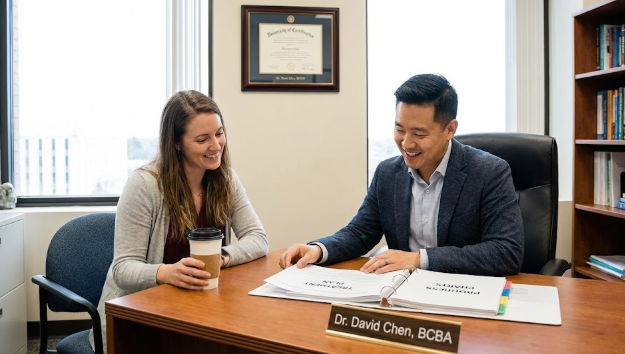
Steps to Begin Treatment
Follow these steps to start ABA therapy in Midwest City:
- Obtain formal diagnosis from qualified professional documenting autism spectrum disorder
- Contact insurance to verify ABA coverage, authorization requirements, and in-network providers
- Research providers by reading reviews, visiting centers, and asking other families for recommendations
- Schedule consultations with top choices to compare approaches and meet potential therapists
- Complete intake assessment with chosen provider to develop baseline data and goals
- Begin therapy while maintaining open communication with the clinical team about progress
Most families start seeing noticeable improvements within three to six months of consistent therapy. However, ABA is typically a multi-year commitment. The best results come from sustained engagement rather than short-term intervention.
Comparing ABA Therapy Options in the Midwest City Area
Several quality ABA providers serve Midwest City and surrounding Oklahoma communities. Each offers slightly different approaches, settings, and specialties. Some focus exclusively on young children just beginning intervention, while others work with teens and adults developing independence skills.
Center-based programs in Midwest City typically operate during business hours with structured schedules. They offer group learning opportunities and access to specialized equipment like sensory rooms and social skills areas. These settings work well for families seeking peer interaction and comprehensive facilities.
Home-based services provide maximum flexibility and convenience. Therapists come to your house, addressing specific challenges in your family’s natural environment. This approach eliminates commute time and allows therapists to work on skills exactly where they’ll be used, like following morning routines or playing appropriately with siblings.
Hybrid models combine center and home services, offering the benefits of both. Children might attend the center three days weekly while receiving home visits twice weekly. This flexibility helps families balance consistency with real-world application.
Finding the Right Fit for Your Family
Selecting the best ABA therapy Midwest City OK families rely on requires balancing multiple factors. Consider your child’s specific needs, your family’s schedule, and your comfort level with different approaches. The most effective therapy happens when families feel supported and children feel safe.
Trust your instincts during center visits. If staff seem rushed or dismissive of your concerns, keep looking. The best providers welcome questions, value your input, and treat your family as collaborative partners rather than passive recipients of services.
Don’t hesitate to ask for references from current families. Speaking with other parents provides honest insights into what daily therapy looks like, how responsive the center is to concerns, and whether children actually enjoy attending. These conversations often reveal information not apparent during tours or consultations.
Remember that the best program for another family might not suit yours. Your child’s personality, learning style, and specific challenges should guide your decision more than reputation or convenience alone.
Wrapping Up: Your Next Steps Toward Quality ABA Therapy
Finding the best ABA therapy Midwest City OK offers for your child starts with education and ends with action. You now understand what makes programs effective, how to evaluate providers, and what realistic outcomes look like. The next step involves reaching out to centers, scheduling consultations, and beginning the assessment process.
Quality ABA therapy transforms lives by building skills, reducing challenging behaviors, and creating independence. Children develop communication abilities, form friendships, and gain confidence to navigate their world more successfully. Families experience reduced stress and increased joy as daily interactions become smoother and more positive.
Start your search today by contacting providers, verifying insurance coverage, and scheduling that first consultation. The sooner your child begins receiving quality support, the sooner you’ll see progress toward meaningful goals. Every child deserves the opportunity to reach their full potential, and effective ABA therapy helps make that possible.
For families in Virginia seeking similar quality services, explore options like ABA therapy in Annandale, VA to find providers who prioritize individualized care and family collaboration. Whether you’re in Oklahoma or elsewhere, the principles of excellent ABA therapy remain consistent: evidence-based methods, qualified staff, family involvement, and genuine commitment to each child’s success.
Common Questions About ABA Therapy in Midwest City
At what age is ABA most effective?
ABA therapy shows greatest effectiveness when started between ages 2 and 6, with optimal results typically occurring before age 4. During these early developmental years, children’s brains demonstrate remarkable neuroplasticity, making skill acquisition significantly easier. Research consistently shows that early intervention leads to better long-term outcomes in communication, social interaction, and adaptive behaviors. However, ABA remains beneficial for older children, teens, and even adults, though the focus shifts toward independence skills and real-world application rather than foundational development.
What is the best state for ABA therapy?
No single state ranks definitively as “best” for ABA therapy, as quality depends more on individual providers than location. However, states with strong insurance mandates, like Virginia, California, and Texas, often provide better access to services. Oklahoma requires many insurance plans to cover ABA therapy for autism, improving accessibility for Midwest City families. The best state for your family ultimately depends on finding qualified providers with experience matching your child’s needs, reasonable wait times, and insurance networks aligned with your coverage.
What is 90% of autism caused by?
Studies estimate that 60 to 90 percent of autism risk comes from genetic factors, not environmental causes. Twin studies consistently show that identical twins share autism diagnoses far more frequently than fraternal twins, demonstrating genetics’ substantial role. However, this doesn’t mean autism is solely genetic. Environmental factors during pregnancy and early development, such as advanced parental age, certain maternal infections, or prenatal exposure to specific medications, contribute to the remaining risk. The interaction between genetic predisposition and environmental influences shapes each child’s unique presentation of autism.
What is the 10 second rule for autism?
The 10-second rule in autism therapy refers to providing children adequate processing time before expecting responses. When asking questions or giving instructions, therapists and parents should wait at least 10 seconds before repeating or prompting. Many children with autism need extra time to process auditory information, formulate responses, or initiate movements. Rushing them creates frustration and missed learning opportunities. This simple strategy reduces anxiety, promotes independence, and allows children to demonstrate their true capabilities rather than appearing less skilled due to insufficient processing time.
Can a mild autistic child become normal?
Children with mild autism, now called Level 1 autism, can develop skills that allow them to function independently, though autism itself is a lifelong neurological difference. The question implies autism is something to overcome, but modern understanding recognizes autism as part of who someone is, not a disease requiring cure. With quality ABA therapy and support, many children develop strong communication skills, form meaningful relationships, and live independently. They may still have autistic traits like sensory sensitivities or social preferences, but these don’t necessarily impair their quality of life. Success means reaching individual potential, not becoming “normal.”