The best ABA therapy in Tysons VA provides individualized, evidence-based treatment that helps children with autism spectrum disorder develop communication, social, and adaptive skills in a supportive environment. Dream Bigger ABA stands out by combining scientific rigor with compassionate care, ensuring every child receives personalized attention tailored to their unique strengths and needs.
Finding quality autism support in Tysons can feel overwhelming for families navigating their options. This guide breaks down what makes ABA therapy effective, how to recognize quality providers, and what you should expect from your child’s treatment journey. Whether you’re just beginning to explore therapy options or looking to switch providers, understanding the core principles and practical details will help you make informed decisions for your family.
What Is ABA Therapy and Why Does It Matter?
Applied Behavior Analysis (ABA) is a scientific approach to understanding behavior and teaching new skills. It focuses on breaking down complex tasks into manageable steps, using positive reinforcement to encourage desired behaviors while reducing challenging ones.
ABA therapy matters because it addresses the core challenges many children with autism face. Communication barriers, difficulty with social interactions, repetitive behaviors, and sensory sensitivities can all improve through structured intervention. The therapy doesn’t try to change who a child is but rather gives them tools to navigate the world more independently.
Research consistently shows ABA therapy produces measurable improvements in language development, social skills, and daily living activities. Children who receive early, intensive intervention often show significant progress in school readiness, adaptive behavior, and quality of life. These gains extend beyond childhood, setting the foundation for greater independence in adolescence and adulthood.
At Dream Bigger ABA, therapists design programs around each child’s specific needs rather than following a one-size-fits-all approach. This individualization ensures therapy remains relevant and effective as your child grows and develops new skills.
What Makes ABA Therapy in Tysons Effective?
Location matters when choosing therapy services. Tysons offers families access to highly trained professionals, modern facilities, and a community that understands neurodiversity. The best ABA therapy Tysons VA combines qualified staff, evidence-based methods, and family involvement to create lasting change.
Effective ABA therapy starts with comprehensive assessment. Therapists evaluate your child’s current abilities, identify specific goals, and create measurable objectives. They track progress through data collection, adjusting strategies based on what works. This scientific approach removes guesswork and ensures every session moves your child forward.
Quality providers maintain low therapist-to-client ratios, allowing for focused attention during sessions. They also prioritize naturalistic teaching, meaning skills are practiced in real-world settings rather than only at a therapy table. Your child might work on requesting items during snack time, practice turn-taking during play, or learn greetings through actual social interactions.

Parent training forms another critical component. Therapists should teach you strategies to reinforce skills at home, extending learning beyond therapy hours. When families participate actively, children generalize skills more quickly and maintain progress over time.
The environment itself contributes to success. Therapy spaces should feel safe, engaging, and appropriately stimulating. Too much sensory input can overwhelm some children, while too little may not hold their attention. The best programs strike this balance thoughtfully.
Key Features of Quality ABA Providers in Tysons
When evaluating ABA therapy options in Tysons, several features distinguish exceptional providers from average ones. Knowing what to look for helps you identify programs that will truly benefit your child.
| Feature | Why It Matters |
| Board Certified Behavior Analysts (BCBAs) | BCBAs hold advanced degrees and rigorous certification, ensuring clinical decisions are based on current research and best practices |
| Individualized Treatment Plans | Cookie-cutter programs miss the mark; effective therapy addresses your child’s specific strengths, challenges, and family priorities |
| Data-Driven Decision Making | Regular progress monitoring and plan adjustments keep therapy effective and prevent wasted time on ineffective strategies |
| Natural Environment Teaching | Skills learned in real-world contexts transfer better to daily life than those practiced only in clinical settings |
| Family Collaboration | Open communication and parent training ensure consistency between therapy sessions and home routines |
| Ethical Standards | Adherence to BACB guidelines and transparent practices protect your child and family from harmful or ineffective interventions |
Strong providers maintain ongoing communication with families. You should receive regular updates on your child’s progress, understand the reasoning behind treatment decisions, and feel comfortable asking questions. If a provider seems secretive or dismissive of your concerns, that’s a red flag.
Credentials matter, but so does personality fit. Your child will spend significant time with their therapist, so comfort and rapport are essential. During initial consultations, observe how staff interact with your child. Do they show patience? Do they adapt their approach when something isn’t working? These interpersonal skills often predict success as much as technical training.
Dream Bigger ABA emphasizes both clinical excellence and genuine connection with families. Therapists view parents as partners, not just observers, creating a collaborative atmosphere where everyone works toward shared goals.
Understanding Treatment Models and Session Structures
ABA therapy in Tysons typically follows one of several models, each with different intensity levels and settings. Understanding these options helps you choose the right fit for your family’s needs and schedule.
Center-Based Therapy takes place in a dedicated facility with specialized equipment and controlled environments. Children attend sessions at the center, often for several hours per day. This model offers consistency, access to various resources, and opportunities for social interaction with peers. It works well for families seeking intensive intervention or those who need care during working hours.
In-Home Therapy brings services directly to your residence. Therapists work with your child in familiar surroundings, making it easier to address real-life challenges like morning routines, mealtime behaviors, or bedtime resistance. This option provides flexibility and allows siblings to participate in some activities, promoting family-wide understanding of strategies.
Hybrid Models combine center and home sessions, offering benefits of both approaches. Your child might attend center sessions for intensive skill-building while receiving home visits to work on specific household routines or family dynamics.
Session frequency and duration vary based on individual needs. Some children benefit from 10-15 hours weekly, while others require more intensive intervention of 25-40 hours. Your BCBA will recommend a schedule based on your child’s age, skill level, and specific goals. Dream Bigger ABA creates flexible schedules that respect family commitments while providing adequate intervention intensity.

How to Choose the Best ABA Therapy Provider in Tysons
Selecting the right provider requires research and careful consideration. Start by creating a list of potential programs in Tysons, then systematically evaluate each one against your priorities and needs.
Begin with credentials verification. Confirm that the program employs Board Certified Behavior Analysts and that therapists hold appropriate certifications. Check reviews and ask for references from families whose children have similar needs to yours. Personal recommendations from pediatricians, special education teachers, or other parents often provide valuable insights.
Schedule consultations with your top choices. During these meetings, ask specific questions about their approach, philosophy, and practical details. Here are essential questions to consider:
- How do you assess children initially and design treatment plans?
- What is your staff-to-child ratio during sessions?
- How often will we receive progress updates?
- What parent training and support do you provide?
- How do you handle challenging behaviors?
- What is your policy on insurance and payment?
- How do you coordinate with schools and other service providers?
Pay attention to how staff respond to your questions. Do they provide clear, thoughtful answers? Do they acknowledge limitations honestly? Transparency and willingness to discuss both successes and challenges indicate professional maturity and ethical practice.
Visit facilities in person when possible. Observe the environment, noting cleanliness, safety measures, and overall atmosphere. Watch therapists interact with children. You want to see patience, enthusiasm, and genuine care, not just mechanical delivery of techniques.
Consider logistics carefully. Location, scheduling flexibility, and insurance acceptance all affect long-term sustainability. The best program in theory won’t help if you can’t maintain consistent attendance due to practical barriers.
Trust your instincts as a parent. If something feels off during your research or visits, explore that concern before committing. You know your child best, and your comfort level matters for successful collaboration.
The Role of Family in ABA Therapy Success
ABA therapy works best when families actively participate in the process. Your involvement extends your child’s learning beyond scheduled sessions, reinforcing skills throughout daily routines and creating consistency across environments.
Parent training should be a core component of any quality program. Therapists teach you the same strategies they use during sessions, so you can prompt, reinforce, and redirect behaviors effectively at home. This training isn’t about turning you into a therapist but rather equipping you with tools to support your child’s development naturally.
Communication between families and providers should flow both ways. Share observations about what works at home, which situations trigger difficulties, and what motivates your child. This information helps therapists refine programs to address real-world needs rather than theoretical goals.
Consistency matters tremendously in skill acquisition. When parents, therapists, teachers, and other caregivers use similar language, prompting methods, and reinforcement systems, children learn faster and generalize skills more effectively. Regular communication among all team members prevents mixed messages and ensures everyone works toward the same objectives.

Siblings also play important roles in many successful programs. Including brothers and sisters in some activities teaches them supportive interaction strategies while giving the child with autism opportunities to practice social skills with familiar peers. Family-wide involvement normalizes therapy rather than isolating it as something separate from daily life.
At Dream Bigger ABA, therapists prioritize family education and collaboration, understanding that sustainable progress requires whole-family participation and support.
Common Questions About Starting ABA Therapy
Beginning ABA therapy raises numerous questions for families. Understanding what to expect helps you prepare mentally, logistically, and emotionally for the journey ahead.
Assessment and Goal Setting: Initial assessments typically take several hours across multiple sessions. Therapists evaluate communication, social interaction, adaptive skills, and problem behaviors through direct observation, standardized tests, and parent interviews. They then develop a treatment plan with specific, measurable goals tailored to your child’s needs and your family’s priorities.
Behavioral Changes: Progress varies significantly among children. Some show rapid improvements in certain areas while struggling with others. You might notice your child requesting needs more clearly, engaging in longer play sequences, or tolerating previously difficult situations. These changes often happen gradually, making regular data review important for recognizing patterns you might otherwise miss.
Understanding autism characteristics helps set realistic expectations. Every child has unique strengths and challenges, so comparing your child’s progress to others isn’t useful. Focus instead on their individual growth trajectory and celebrate gains, however small they may seem initially.
Coordination with Other Services: Many children receiving ABA therapy also participate in speech therapy, occupational therapy, or special education. Quality ABA providers coordinate with these other professionals, sharing data and aligning strategies. This team approach prevents conflicting methods and maximizes efficiency by addressing skills from multiple angles simultaneously.
If you’re wondering whether autism runs in families or have concerns about siblings, discuss these with your BCBA. They can provide information about early signs and recommend monitoring or evaluation if appropriate.
Financial Considerations and Insurance Coverage
ABA therapy represents a significant financial investment, but various funding sources can help manage costs. Understanding your options allows you to access necessary services without overwhelming your family budget.
Most insurance plans now cover ABA therapy for autism spectrum disorder following federal and state mandates. Coverage details vary, including session limits, copayments, and prior authorization requirements. Contact your insurance provider early to understand your specific benefits, required documentation, and approved provider networks.
Many ABA programs employ insurance specialists who handle verification, authorization, and billing. This support relieves families of administrative burden and ensures proper documentation for reimbursement. Ask potential providers about their insurance experience and whether they accept your specific plan.
Out-of-pocket costs vary widely depending on session intensity and duration. Programs might charge per hour or offer package rates. Some providers offer sliding scale fees based on family income. Don’t hesitate to discuss financial concerns openly during consultations; reputable programs want to help families access services and may suggest creative solutions.
| Funding Source | What to Know |
| Private Insurance | Most plans cover medically necessary ABA; verify your specific benefits, deductibles, and provider networks before starting |
| Medicaid/EPSDT | Comprehensive coverage for eligible children, often with minimal copayments and broader provider options |
| Educational System | Schools may provide some ABA services as part of special education, though intensity is typically lower than clinical programs |
| Grants and Assistance Programs | Various organizations offer financial support for autism services; research local and national options |
| Health Savings Accounts | HSA/FSA funds can cover therapy costs, providing tax advantages for families paying out-of-pocket |
Some families combine funding sources, using insurance for center-based therapy while paying privately for additional home sessions. Others negotiate payment plans with providers, spreading costs over time rather than paying large sums upfront.
For families exploring whether insurance like Aetna covers ABA therapy, the answer is typically yes for autism diagnoses, though specific coverage details vary by plan. Always verify benefits directly with your insurance company and the provider to avoid surprises.
Measuring Progress and Adjusting Goals
Effective ABA therapy includes continuous assessment and data-driven decision-making. Understanding how progress is measured helps you recognize improvements and ensures therapy remains targeted to your child’s evolving needs.
Therapists collect data during every session, recording specific behaviors, skill attempts, and success rates. This quantitative information reveals patterns that might not be obvious through casual observation. For example, data might show your child requests items independently 80% of the time now compared to 40% three months ago, demonstrating clear progress even if it doesn’t feel dramatic day-to-day.
Graphs and charts make this data accessible to families. Regular progress reviews, typically monthly or quarterly, allow everyone to see trends, celebrate successes, and identify areas needing additional focus. BCBAs use this information to adjust teaching strategies, modify goals, or introduce new targets as your child masters current objectives.

Goal adjustments happen naturally as children develop. Early goals might focus on basic communication through gestures or single words, while later goals address complex sentence structures or conversational skills. Similarly, initial behavioral goals might target reducing severe tantrums, while later work addresses subtle social nuances like reading peer reactions.
Parents should feel empowered to suggest goal changes based on their observations and priorities. If school staff report specific challenges, share that information so therapy can address those needs. If your child suddenly shows interest in a new activity, therapists can incorporate that motivation into treatment. This collaborative approach keeps goals relevant and meaningful.
Periodic comprehensive reassessments, typically every six to twelve months, evaluate overall development across all domains. These formal assessments provide objective measures of progress and guide major treatment decisions like adjusting session frequency or transitioning toward less intensive support.
What to Expect During Typical ABA Sessions
Understanding what happens during ABA therapy sessions helps prepare both you and your child for the experience. While every program has unique characteristics, certain elements appear consistently in quality interventions.
Sessions begin with brief rapport-building, particularly important for younger children or those new to therapy. Therapists might engage in preferred activities, playing favorite games or incorporating special interests to establish positive associations with session time.
Structured teaching follows, using discrete trial training for some skills. This involves presenting clear instructions, prompting correct responses when needed, and providing immediate reinforcement for success. Tasks are broken into small steps, with difficulty gradually increasing as mastery develops. This systematic approach ensures children experience high rates of success, building confidence alongside skills.
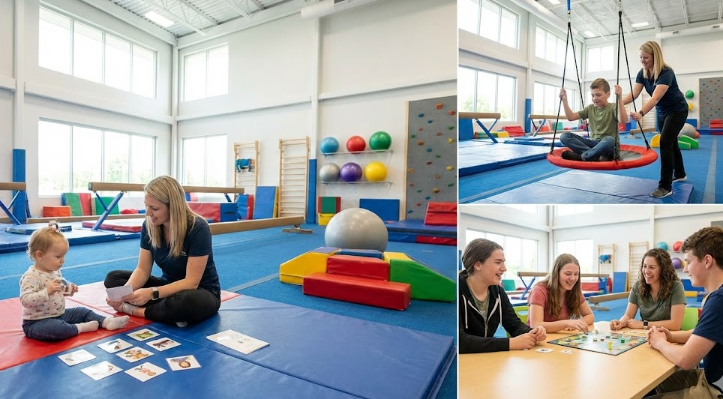
Naturalistic teaching weaves learning into play and daily activities. Rather than sitting at a table for every task, therapists create opportunities for skill practice during snack preparation, pretend play, art projects, or outdoor activities. This variety maintains engagement while promoting generalization to real-world situations.
Breaks occur regularly, especially for young children with limited attention spans. These aren’t wasted time but rather strategic pauses that prevent burnout and maintain motivation. Some programs incorporate movement breaks, sensory activities, or brief free play periods between structured tasks.
Sessions conclude with transition preparation, helping children shift back to other activities or caregivers smoothly. Therapists might review what was accomplished, preview the next session, or engage in a brief preferred activity before saying goodbye.
Throughout sessions, therapists continuously adjust their approach based on the child’s responses. If a particular strategy isn’t working, they try alternatives rather than pushing through ineffective methods. This flexibility within structure characterizes skilled ABA practitioners.
For families curious about what stimming means in autism and how it’s addressed in therapy, BCBAs view repetitive behaviors through a functional lens, determining whether they interfere with learning or serve important self-regulation purposes before deciding on intervention.
Moving Forward: Taking the First Step
Starting ABA therapy represents a significant commitment, but taking that first step opens doors to meaningful progress and improved quality of life for your child and family. The best ABA therapy Tysons VA offers combines scientific excellence with compassionate care, meeting families where they are and guiding them toward their goals.
Begin by reaching out to providers like Dream Bigger ABA for initial consultations. These conversations help you understand specific program details, assess compatibility, and begin building the partnerships essential for successful intervention. Don’t hesitate to ask questions, express concerns, or request clarification on any aspects that seem unclear.
For families still exploring whether autism can be cured, it’s important to understand that autism is a lifelong neurological difference, not an illness requiring cure. Effective therapy helps individuals develop skills and strategies for navigating the world successfully while embracing their unique perspectives and strengths.
The journey through ABA therapy isn’t always linear or easy, but with the right provider, dedicated effort, and family involvement, meaningful progress is absolutely achievable. Your commitment to seeking quality support demonstrates your love and dedication to helping your child thrive.
Key Takeaways: Finding the Best ABA Support in Tysons
Choosing the best ABA therapy Tysons VA requires careful evaluation of provider credentials, treatment philosophy, and practical logistics. Quality programs combine evidence-based methods with individualized planning, family collaboration, and continuous progress monitoring to ensure effective interventions.
Dream Bigger ABA exemplifies these principles, offering comprehensive services that respect each child’s unique needs while promoting meaningful skill development. By focusing on functional abilities, natural learning environments, and family empowerment, effective ABA therapy helps children with autism build independence and confidence.
Starting this journey may feel daunting, but remember that every step forward represents progress for your child and family. With the right support, dedication, and evidence-based intervention, children with autism can develop skills that enhance their quality of life and open doors to greater possibilities.
Frequently Asked Questions
What is the 80/20 rule in ABA?
The 80/20 rule suggests children should experience success on approximately 80% of learning trials, with 20% representing challenges that promote growth. This ratio maintains motivation and confidence while ensuring continued skill development. If success rates drop significantly below 80%, tasks may be too difficult and require adjustment. If children succeed nearly 100% of the time, tasks may be too easy and fail to promote learning. BCBAs use data to maintain this optimal balance throughout treatment.
How much does ABA therapy typically cost?
ABA therapy costs range from $120 to $200+ per hour without insurance, with intensive programs totaling $40,000 to $80,000+ annually. Most families access services through insurance coverage, which significantly reduces out-of-pocket expenses. Copayments vary by plan but are generally much more manageable than full private-pay rates. Some providers offer sliding scale fees or payment plans for families without adequate insurance coverage. Early verification of benefits helps families plan financially for treatment.
What are the downsides of ABA therapy?
Potential downsides include time commitment demands, expense without insurance, and risk of poorly implemented programs that focus too heavily on compliance over meaningful skills. Quality ABA prioritizes functional skills and respects individual differences rather than attempting to suppress natural autistic traits. Some critics worry about emotional impact when therapy emphasizes rigid conformity. Choosing providers who practice neurodiversity-affirming, naturalistic approaches minimizes these concerns while maximizing benefits.
What is the success rate of ABA therapy?
Research indicates 40-50% of children receiving early, intensive ABA show significant improvements across multiple developmental domains. Success rates vary based on intervention intensity, age at start, family involvement, and individual child characteristics. Many children demonstrate measurable gains even when progress doesn’t meet criteria for “optimal outcome.” Effectiveness increases when families participate actively and therapy addresses functionally important skills rather than arbitrary targets.
At what age is ABA most effective?
ABA therapy shows greatest effectiveness when started between ages 2-6, during critical periods of brain development and skill acquisition. However, individuals of all ages can benefit from quality ABA interventions. Adolescents and adults often work on different goals like employment skills, independent living, and social relationships, but the underlying principles remain effective. Early intervention maximizes potential outcomes, but later intervention still produces meaningful improvements in targeted areas.