
Key Takeaways
- Folic acid does not cause autism — the overwhelming weight of evidence runs in the opposite direction, with multiple large studies finding that adequate folic acid supplementation during early pregnancy is associated with reduced autism risk
- One 2018 Johns Hopkins study found an association between very high folate and B12 levels in cord blood and elevated autism risk — but this was a small observational study that does not establish causation and has not been consistently replicated
- Stopping or reducing folic acid supplementation based on autism fear is medically dangerous — folate deficiency during pregnancy is causally linked to neural tube defects including spina bifida
- Several medications — particularly valproic acid — carry genuine, well-established links to increased autism risk in offspring; folic acid is not among them
- Vitamin D deficiency is the most consistently documented nutritional finding in autistic individuals, though whether this reflects a cause, a consequence, or a correlate of autism remains under investigation
The Direct Answer: Folic Acid Does Not Cause Autism
This claim needs to be stated clearly before anything else: folic acid does not cause autism. The scientific evidence — across multiple large, independent, prospective studies conducted in multiple countries — consistently points in the opposite direction. Adequate maternal folic acid supplementation during the periconceptional period and early pregnancy is associated with reduced autism risk in offspring.
The specific concern about folic acid causing autism traces primarily to one 2018 study — and that study’s findings have been significantly overstated and misapplied in popular health media. Understanding what that study actually found, and why it does not overturn the much larger body of evidence supporting folic acid supplementation, gives pregnant women and families the accurate information they need.
What families absolutely should not do is reduce or stop folic acid supplementation during pregnancy based on autism fear. Folate deficiency during early pregnancy is causally linked to neural tube defects — including spina bifida and anencephaly — conditions with severe and well-established consequences. Abandoning evidence-based prenatal supplementation based on a misread correlation study would cause real, documented harm.
What Folic Acid Is and Why It Matters in Pregnancy
Folic acid is the synthetic form of folate — vitamin B9 — used in supplements and fortified foods. Folate is naturally occurring in leafy greens, legumes, and citrus fruits. The human body uses folate for DNA synthesis, DNA methylation, and neural tube development — processes that are critical during the earliest weeks of fetal brain and spinal cord formation.
The neural tube — which becomes the brain and spinal cord — closes within the first 28 days after conception, often before a woman knows she is pregnant. This is why the Centers for Disease Control and Prevention (CDC) and American College of Obstetricians and Gynecologists (ACOG) recommend that all women of childbearing age take 400 micrograms of folic acid daily — not just after a positive pregnancy test, but continuously throughout the reproductive years.
The evidence that folic acid prevents neural tube defects is among the most robust cause-and-effect relationships in preventive medicine. Since the United States mandated folic acid fortification of grain products in 1998, neural tube defect rates dropped by approximately 35%. This is unambiguous, population-level causal evidence.
The question of whether folic acid also affects autism risk operates with less certainty — but what evidence exists points consistently toward protective, not harmful, effects.
The Study That Sparked Confusion: What Raghavan 2018 Actually Found
In 2018, researchers at Johns Hopkins Bloomberg School of Public Health published a study in the journal JAMA Psychiatry examining cord blood samples from newborns in the Boston Birth Cohort. They found that newborns whose cord blood had very high folate levels — more than four times the median — had approximately double the odds of a subsequent autism diagnosis compared to newborns with levels in the normal range. A similar pattern was found for very high vitamin B12 levels.
This study received significant media coverage and generated real concern among pregnant women and healthcare providers. The coverage was often incomplete or misleading in important ways.
What the study does not show:
It does not show that taking a standard prenatal vitamin containing 400–800 micrograms of folic acid causes autism. The cord blood levels in question were far above what standard supplementation produces.
It is an observational study — it shows an association between very high cord blood folate levels and autism diagnoses, not a causal relationship. Many factors other than supplement intake affect cord blood folate levels: dietary patterns, genetic variants affecting folate metabolism (particularly MTHFR variants), and baseline nutritional status.
The study population was relatively small — 1,257 mother-child pairs — and the findings have not been consistently replicated in larger cohort studies.
The researchers themselves cautioned explicitly against concluding that folic acid causes autism or that women should reduce supplementation.
What the study raises as a legitimate question:
Whether very high — significantly above recommended — folate levels during pregnancy might carry any risk that warrants further investigation. This is a reasonable scientific question that warrants more research. It is not a basis for recommending that pregnant women avoid or reduce standard folic acid supplementation.
What the Larger Body of Evidence Shows: Folic Acid Reduces Autism Risk
The 2018 study exists within a much larger body of evidence — and in that context, it is a single outlier finding rather than a reversal of scientific understanding.
The Norwegian Mother and Child Cohort Study (MoBa): One of the largest prenatal cohort studies in the world, following over 85,000 children. Multiple analyses of this dataset have found that maternal folic acid supplementation during the first trimester is associated with approximately 40% reduced odds of autism in offspring compared to mothers who did not supplement.
A 2013 study in JAMA Psychiatry: Examined data from 85,176 children in Norway and found that children born to mothers who took folic acid supplements during the periconceptional period had significantly lower rates of autism.
Israeli Birth Registry studies: Multiple analyses of Israeli data have found that maternal folic acid supplementation during the first two months of pregnancy is associated with reduced autism risk.
A 2021 meta-analysis pooling data from multiple studies confirmed the association between periconceptional folic acid supplementation and reduced autism risk.
The biological plausibility of a protective effect is also well-established: folic acid is essential for the DNA methylation processes that regulate gene expression during fetal brain development — precisely the epigenetic mechanisms that researchers believe play a role in autism’s neurodevelopmental origins.
The convergence of evidence across independent studies, multiple countries, different research methodologies, and a plausible biological mechanism makes the protective association genuinely compelling — far more compelling than the single outlier study suggesting possible harm from extreme excess.

Can Too Much Folic Acid Be Harmful? The Nuanced Answer
The Raghavan 2018 study raises a question that deserves an honest answer rather than dismissal: is there any concern about very high folic acid intake during pregnancy?
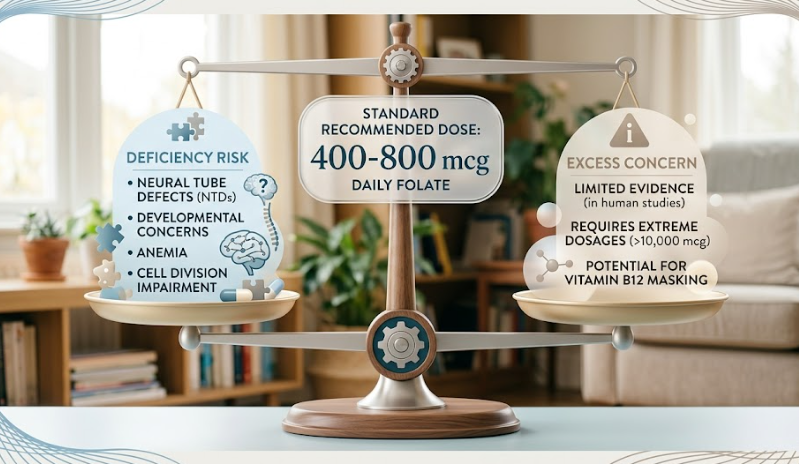
The standard recommendation for folic acid during pregnancy is 400–800 micrograms daily from a supplement, plus whatever is obtained from diet and fortified foods. Most prenatal vitamins contain 400–800 micrograms. This level of supplementation is safe, well-studied, and associated with benefit.
At significantly higher doses — typically through separate high-dose folic acid supplements on top of prenatal vitamins, or very high consumption of multiple fortified foods — blood and cord blood levels can rise substantially above the typical range. Whether extremely high folate levels carry any independent risk remains under investigation and not established.
The practical guidance from this science: take the recommended dose in a prenatal vitamin. Do not take high-dose separate folic acid supplements without medical direction. Do not skip prenatal vitamins based on autism concern. If you have MTHFR variants and have concerns about folic acid metabolism, discuss with your physician whether methylfolate (the active, pre-converted form of folate) might be appropriate — but do not eliminate folate supplementation.
What Medications Actually Do Increase Autism Risk
While folic acid does not increase autism risk, several medications with genuine prenatal risk deserve attention:
Valproic acid (valproate/Depakote): The single prenatal medication with the strongest and most consistent evidence linking it to increased autism risk. Studies estimate that prenatal valproate exposure increases autism risk by approximately 6–10 fold compared to unexposed pregnancies, alongside elevated risk for neural tube defects and other outcomes. Valproate is prescribed for epilepsy and bipolar disorder and is now subject to strict prescribing restrictions for women of childbearing age in many countries. Any woman taking valproate who is or may become pregnant should have an urgent conversation with her prescribing physician about alternatives.
Thalidomide: No longer prescribed during pregnancy; historically associated with severe birth defects and autism in offspring.
Misoprostol: Used as an abortifacient and for other gynecological purposes; some studies have found associations with autism in offspring when used unsuccessfully as an abortion attempt.
Some anticonvulsants: Carbamazepine and phenytoin have weaker evidence for neurodevelopmental risk than valproate; polypharmacy (multiple anticonvulsants simultaneously) appears to carry higher risk than monotherapy.
SSRIs: The evidence here is genuinely contested. Some studies have found modest associations between prenatal SSRI exposure and autism risk; others find no association after controlling for the mother’s underlying depression. This is a classic confounding-by-indication scenario — untreated maternal depression during pregnancy also carries fetal risks. The clinical consensus remains that treating severe maternal depression during pregnancy is appropriate, and that the association with SSRIs does not rise to a level warranting avoidance of treatment.
For an overview of how genetics interacts with these risk-modifying factors, genetic testing for autism covers the most current understanding of autism’s genetic architecture.
Is There a Link Between B12 and Autism?
B12 (cobalamin) metabolism is closely intertwined with folate metabolism — the two nutrients work together in the same biochemical pathways. This is why the Raghavan 2018 study found elevated cord blood levels of both folate and B12 together, not independently.
Prenatal B12 deficiency: Some research has found that maternal vitamin B12 deficiency during pregnancy is associated with increased autism risk in offspring — the opposite concern from excessive supplementation. B12 deficiency, like folate deficiency, can impair DNA methylation and neurodevelopment during critical windows.
Methylcobalamin (methyl-B12) in autism treatment: A small number of clinical studies — preliminary and limited in scale — have examined methylcobalamin injections in autistic children and found some evidence of benefit for social behaviors and language. These findings are intriguing but not yet conclusive enough to constitute standard clinical practice. Research in this area continues.
The B12-MTHFR intersection: Some individuals with MTHFR variants have impaired ability to convert B12 to its active form, methylcobalamin. This intersection of genetic variation with B12 metabolism has led some practitioners to recommend methylcobalamin supplementation for autistic individuals or their parents. The evidence base is developing but not yet definitive.
The overall picture on B12 and autism: deficiency during pregnancy appears to carry risk; very high cord blood levels appeared in one study to be associated with risk; and B12 metabolism intersects with genetics in ways that may be individually relevant. Standard prenatal supplementation provides appropriate B12 levels; extreme supplementation is not established as beneficial.
What Vitamins Are Deficient in Autism?
Nutritional research in autism has identified several vitamins and minerals that appear at lower levels in autistic individuals compared to neurotypical controls. What is less clear in most cases is whether these deficiencies contribute to autism features, result from autism-related selective eating, or reflect correlates without a direct causal relationship.
Vitamin D is the most consistently documented nutritional finding across the autism research literature. Multiple studies from multiple countries have found lower vitamin D levels in autistic children and adults compared to neurotypical controls. Additionally, some prenatal studies have found that lower maternal vitamin D during pregnancy is associated with modest increases in autism risk in offspring. Vitamin D has plausible roles in brain development and immune function that make this association biologically interesting — though the direction of causality and the magnitude of any effect remain under investigation.
Omega-3 fatty acids: Particularly DHA (docosahexaenoic acid), essential for brain cell membrane composition and development. Multiple studies find lower levels in autistic individuals; the degree to which this reflects selective eating (avoiding fish) versus a metabolic difference is not fully established. Omega-3 supplementation studies in autism have shown modest effects on some behavioral outcomes.
Zinc: Several studies document lower zinc levels in autistic children. Zinc is involved in neurotransmitter function, immune regulation, and sensory processing — all areas relevant to autism. Whether low zinc contributes to autism features or results from dietary selectivity is unclear.
Iron: Iron deficiency anemia in early childhood is associated with developmental delays broadly; some autism-related studies find lower iron stores. Iron is essential for myelination and dopaminergic function.
Magnesium: Some studies report lower magnesium levels in autistic individuals; magnesium plays roles in neurotransmitter regulation and stress response.
The most clinically actionable point for families: nutritional evaluation by a registered dietitian familiar with autistic eating patterns is a worthwhile investment for autistic children with highly selective diets. Addressing genuine nutritional deficiencies supports overall health and may affect behavioral and cognitive functioning through non-autism-specific mechanisms. This is different from claiming any vitamin deficiency causes autism.
What Is the Biggest Link to Autism?
Despite the extensive research on prenatal nutrients, environmental exposures, and maternal factors, the biggest established link to autism remains what it has been throughout decades of research: genetics.
Twin and family studies consistently estimate autism heritability at 64–91%. First-degree relatives of autistic individuals have substantially elevated autism rates. Hundreds of genetic variants have been identified in association with autism risk through genome-wide studies. De novo mutations — arising spontaneously without inheritance — contribute to a meaningful proportion of cases.
Environmental factors — including prenatal nutritional status, chemical exposures, parental age, and medications like valproic acid — operate primarily as risk modifiers for individuals who carry the genetic predisposition. They are not primary causes in the absence of underlying genetic vulnerability.
Folic acid supplementation appears to reduce autism risk — most plausibly by supporting the epigenetic processes through which genetic predisposition is expressed during fetal brain development. This makes it an important prenatal factor, not because it determines autism independently of genetics, but because it interacts with the genetic architecture in ways that appear protective.
Understanding why autism rates are increasing in the context of these genetic and environmental factors clarifies why no single nutrient, chemical, or exposure is likely to explain the full autism picture.
Common Misconceptions About Folic Acid and Autism
“The 2018 study proves folic acid causes autism.” The 2018 study found an association between very high cord blood folate levels and autism diagnoses in a relatively small observational sample. Association is not causation. The finding has not been consistently replicated in larger studies. The much larger body of evidence from multiple countries shows the opposite — protective associations from standard supplementation.
“I should switch from folic acid to methylfolate to be safe.” Methylfolate (5-MTHF) is the bioavailable, pre-converted form of folate. For individuals with MTHFR variants who may have difficulty converting folic acid, methylfolate may be a reasonable option to discuss with a physician. For the general population, standard folic acid supplementation is evidence-based and effective. “Switching to methylfolate for autism prevention” is not a recommendation with clinical support for the general pregnant population.
“Natural folate from food is safer than folic acid supplements.” Both natural dietary folate and synthetic folic acid contribute to maternal folate status. The distinction that matters is having adequate levels — not the source. Dietary folate alone is difficult to optimize in early pregnancy, particularly before a woman knows she is pregnant, which is why supplementation is recommended.
“Stopping folic acid will reduce my baby’s autism risk.” The opposite. Folic acid supplementation is associated with reduced autism risk in the larger body of evidence, and folic acid deficiency is associated with serious neural tube defects. Stopping supplementation based on autism concern would eliminate a protective factor and introduce a documented harmful risk.
“Vitamin D supplementation can prevent autism.” The evidence that prenatal vitamin D levels are associated with autism risk is interesting but not definitive enough to support autism-prevention claims for vitamin D supplementation. Adequate vitamin D during pregnancy is important for fetal bone and immune development regardless of autism risk; maintaining adequate levels through sunlight exposure, diet, and supplementation as indicated by a physician is appropriate without overinterpreting the autism-specific evidence.

Conclusion
Folic acid does not cause autism. The scientific record on this question is not ambiguous — the weight of evidence from multiple large, independent, prospective studies points consistently toward folic acid supplementation during early pregnancy being associated with reduced, not increased, autism risk.
The 2018 study that sparked concern found an association between very high cord blood folate levels and autism diagnoses in a small sample. It deserves acknowledgment — because honest science engages with all findings — but it does not overturn the larger body of evidence, does not apply to standard supplementation doses, and has not been consistently replicated.
What actually carries documented links to increased autism risk during pregnancy are genetic factors, advanced parental age, certain environmental chemical exposures like organophosphate pesticides and air pollution, and specific medications — most importantly valproic acid. These deserve the scientific attention and clinical awareness that folic acid, incorrectly, has been receiving.
For any pregnant woman currently taking prenatal vitamins and wondering whether to stop: do not. The established protective effects for neural tube defects and the suggestive protective effects for autism point in the same direction — toward taking your prenatal vitamin, as recommended.
Dream Bigger ABA supports autistic children and their families across Northern Virginia with individualized, evidence-based ABA therapy — built on accurate science and genuine care for each child’s development. Connect with our team to explore services in Vienna, VA and Gainesville, VA.
Frequently Asked Questions
Can too much folic acid in pregnancy cause autism?
The evidence does not support this conclusion. One 2018 observational study found an association between very high folate levels in cord blood — more than four times the median — and slightly elevated autism risk. This was a small study that does not establish causation, has not been consistently replicated in larger cohort studies, and is vastly outweighed by multiple large prospective studies finding that standard folic acid supplementation is associated with reduced autism risk. The levels in question in the 2018 study were far above what standard prenatal vitamins produce. Standard supplementation of 400–800 micrograms daily — as recommended by the CDC, ACOG, and most national health bodies — is evidence-based, safe, and associated with protective effects for both neural tube defects and, based on current evidence, autism. Taking folic acid at extreme doses significantly beyond recommendations without medical supervision is inadvisable for multiple reasons, but standard prenatal supplementation should not be reduced or stopped based on autism concern.
What is the biggest link to autism?
Genetics. Twin studies consistently estimate autism heritability at 64–91%. First-degree relatives of autistic individuals have dramatically elevated autism rates compared to the general population. Hundreds of genetic variants have been identified in association with autism risk through genome-wide association studies and whole exome sequencing. De novo mutations — new genetic changes not inherited from either parent — account for a meaningful proportion of cases. Environmental and nutritional factors — including prenatal folate levels, air pollution exposure, organophosphate pesticide exposure, advanced parental age, and medication exposures like valproic acid — operate primarily as risk modifiers for individuals with underlying genetic predisposition rather than as independent primary causes. No dietary factor, including folic acid, ranks among the biggest established links to autism.
What medications increase the risk of autism?
Valproic acid (valproate/Depakote) carries the strongest and most consistent evidence, with multiple studies estimating a 6–10 fold increase in autism risk from prenatal exposure — alongside elevated risk for neural tube defects and other developmental outcomes. It is now subject to strict prescribing restrictions for women of childbearing age in many countries. Thalidomide (no longer used in pregnancy) and misoprostol (used unsuccessfully as an abortifacient) have documented associations. Some anticonvulsants beyond valproate — carbamazepine, phenytoin — have weaker evidence for neurodevelopmental risk. SSRIs during pregnancy have been the subject of conflicting studies; most epidemiologists believe the modest associations observed reflect confounding by indication (the mother’s underlying depression carries its own fetal risks) rather than a direct drug effect. Any woman taking medications during pregnancy who has concerns about neurodevelopmental risk should discuss with her prescribing physician — not stop medications unilaterally, as abrupt discontinuation of many psychiatric and neurological medications carries its own serious risks.
Is there a link between B12 and autism?
Several links have been studied, running in different directions. Maternal B12 deficiency during pregnancy appears in some research to be associated with increased autism risk in offspring — a deficiency concern parallel to the folate deficiency concern. Very high B12 levels in cord blood appeared alongside very high folate levels in the 2018 Raghavan observational study, with a similar association to autism outcomes — but the same limitations of that study apply. Methylcobalamin (methyl-B12) supplementation in autistic children has been studied in small clinical trials with some findings of benefit for social behaviors; the evidence is preliminary and not yet sufficient for clinical recommendation. MTHFR genetic variants affect both folate and B12 metabolism and may interact with autism risk — some practitioners recommend methylcobalamin for individuals with these variants. The overall picture: B12 is important for prenatal neurodevelopment; deficiency appears to carry risk; the excessive supplementation concern applies mainly to levels far above standard supplementation.
What vitamin is deficient in autism?
Vitamin D is the most consistently documented nutritional finding in autism research — multiple studies across multiple countries find lower vitamin D levels in autistic individuals compared to neurotypical controls, and some prenatal studies associate lower maternal vitamin D with modestly elevated autism risk. Whether vitamin D deficiency contributes to autism features, results from autism-related selective eating and reduced outdoor activity, or reflects a correlated pattern without direct causality remains under investigation. Beyond vitamin D, autistic individuals are more frequently found to have lower levels of omega-3 fatty acids (particularly DHA, essential for brain cell membranes), zinc, iron, and magnesium compared to neurotypical peers. In many autistic children, these deficiencies are most directly explained by highly selective eating patterns that limit dietary variety — a consequence of autism-related sensory and behavioral features rather than a cause of autism itself. For autistic children with restricted diets, nutritional evaluation by a registered dietitian with experience in autism is clinically appropriate.