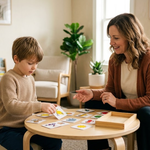
Finding quality Applied Behavior Analysis (ABA) therapy in Austin, TX means looking for licensed, supervised programs that use individualized treatment plans based on your child’s specific needs. Furthermore, the best ABA therapy Austin TX has to offer will combine evidence-based methods with consistent family involvement and measurable progress tracking.
Table of Contents
- Why Best ABA Therapy Austin TX Matters for Children with Autism
- What Makes the Best ABA Therapy Austin TX Provider Stand Out
- How Best ABA Therapy Austin TX Sessions Actually Work
- Costs and Insurance in Texas
- Things to Know
- Frequently Asked Questions
Key Takeaways
- ABA therapy is most effective when started early and delivered with consistent intensity and structure.
- Look for BCBA-supervised programs, not just RBT-led sessions without oversight.
- Texas state law requires most insurance plans to cover ABA therapy for autism diagnoses.
- Parent training is a non-negotiable component of high-quality ABA programs.
- Ask any provider for data samples to see how they track and report progress.
- Clinic-based and in-home options each have trade-offs depending on your child’s needs.
Why Best ABA Therapy Austin TX Matters for Children with Autism
ABA therapy is the most research-supported intervention for children diagnosed with Autism Spectrum Disorder (ASD). It works by breaking down complex skills into smaller, teachable steps. Then therapists reinforce those steps consistently until they become natural behaviors.
For parents in Austin, the stakes are real. A child who receives high-quality, early ABA intervention has a significantly better chance of developing communication skills. Additionally, they can reduce harmful behaviors and gain independence. The research behind ABA spans several decades and has influenced how schools, clinics, and pediatricians across the country approach autism treatment.
Understanding the neuroscience behind autism can also help parents set realistic expectations. Moreover, if you want to understand how the autism brain vs normal brain processing differs, that knowledge shapes how you approach therapy goals and communication strategies at home.
Austin’s growing population means more providers have entered the market, which is good for access. However, this makes careful selection even more critical. Not all ABA programs are created equal, and the difference between a well-supervised clinic and a poorly managed one can significantly affect your child’s outcomes.
What Makes the Best ABA Therapy Austin TX Provider Stand Out
Not every clinic that advertises ABA therapy maintains the same standards. Here is what separates top-tier providers from mediocre ones.
Supervision ratio: Every ABA program should have a Board Certified Behavior Analyst (BCBA) overseeing each case. Registered Behavior Technicians (RBTs) deliver most direct therapy. However, without consistent BCBA supervision, the quality can slip quickly.
Individualized assessment: A quality provider starts with a Functional Behavior Assessment (FBA) before writing a single treatment goal. Generic programs that skip this step are a red flag.
Parent training: The best programs treat parents as active participants, not spectators. Weekly or biweekly parent training sessions allow families to reinforce skills at home, which dramatically improves generalization.
Data collection: ABA is a data-driven science. Your provider should share session data regularly and adjust the treatment plan based on what the numbers show.
Family communication: Regular meetings, progress reports, and open communication channels are standard at quality clinics. For example, if you examine programs like aba therapy manassas park va, you will see that effective family communication is a hallmark of quality ABA services across regions.
Families in Virginia looking for similar standards in different locations may find it helpful to review options like aba therapy purcellville va for comparison of how quality ABA programs operate across regions.
How Best ABA Therapy Austin TX Sessions Actually Work
ABA sessions vary by age, diagnosis severity, and treatment goals. However, most follow a recognizable structure.
In-clinic sessions typically run two to five hours per day, several days a week. Children work one-on-one with an RBT in a structured environment that minimizes distractions. Skills targeted might include requesting items verbally, tolerating transitions, or following two-step instructions.
In-home sessions bring the therapist to your child’s natural environment, which helps with generalization. A child who learns to ask for help at a clinic but cannot do it at the dinner table has not fully acquired the skill. In-home therapy closes that gap.
Naturalistic Teaching is a method increasingly used in quality programs. Rather than running repetitive drills in a chair, the therapist embeds learning opportunities into play and everyday routines. This approach tends to produce more durable skill acquisition.
A typical session structure looks like this:
| Session Component | Purpose | Approximate Duration |
|---|---|---|
| Warm-up / rapport building | Increase motivation and engagement | 5-10 minutes |
| Structured skill instruction | Target specific IEP or treatment goals | 45-90 minutes |
| Naturalistic practice | Generalize skills in less structured settings | 20-30 minutes |
| Data review and notes | Track progress, update programs | 10-15 minutes |
For children who also exhibit sensory sensitivities, it is worth exploring whether those responses overlap with other diagnoses. In addition, understanding is misophonia autism can clarify whether certain sound-related behaviors need to be addressed within the ABA program itself.
Costs and Insurance in Texas
Cost is one of the most common barriers families face when accessing ABA therapy. Full-time ABA can run anywhere from $40,000 to over $100,000 per year before insurance. However, Texas law requires most fully-insured health plans to cover ABA therapy for children diagnosed with ASD.
Key points on Texas insurance coverage:
- Texas Insurance Code Chapter 1355 mandates ABA coverage for autism diagnoses in children.
- Medicaid (STAR Kids and STAR Health) also covers ABA for eligible children in Texas.
- Self-funded employer plans fall under federal ERISA law and may not be subject to Texas state mandates.
- Always request a benefits verification from your provider before starting services.
Some families supplement insurance with the Home and Community-based Services (HCS) waiver program. However, waitlists in Texas can be long. Starting the application early is strongly recommended.
If you are exploring ABA options in other parts of the country for comparison, programs like aba therapy nokesville va can give you a sense of regional variations in service delivery. Additionally, reviewing aba therapy occoquan va providers will show you how different states structure their ABA models.
Things to Know
- Texas mandates ABA coverage for autism, but self-funded employer plans may operate under different federal rules.
- Waitlists for top ABA providers in Austin can be three to six months or longer. Therefore, get on multiple lists simultaneously.
- BCBA credentials can be verified through the BACB (Behavior Analyst Certification Board) public registry.
- ABA is most effective when intensity matches the child’s needs. Part-time ABA for a child who needs full-time services will underperform.
- Switching providers mid-treatment is disruptive. However, it is sometimes necessary. If progress has stalled for more than two to three months without explanation, it is reasonable to seek a second opinion.
Frequently Asked Questions
Q: At what age should ABA therapy start?
Early intervention, ideally before age five, produces the best outcomes for most children with ASD. Research consistently supports starting ABA as early as a diagnosis is confirmed, sometimes as young as 18 months. That said, ABA therapy remains beneficial well into adolescence and adulthood, particularly for skill-building and behavior reduction goals.
Q: How do I know if an Austin ABA provider is reputable?
Check that every case is supervised by a credentialed BCBA and ask to see sample progress reports before enrolling. You can verify BCBA credentials through the BACB’s public registry at no cost. A reputable provider will also welcome your questions and offer a tour of their facility.
Q: How many hours of ABA therapy does my child need per week?
Hours vary by individual need, but many treatment plans range from 10 to 40 hours per week depending on age and diagnosis severity. Your BCBA should recommend an intensity level based on assessment results, not a standard package. Younger children with more significant support needs typically benefit from higher weekly hours.
Q: Can ABA therapy be done at school?
Yes, ABA strategies can be incorporated into school-based IEP services, though clinic-based ABA is usually more intensive. Coordinating with your child’s school team and ABA provider ensures skills learned in one setting transfer to the other. Some BCBAs will participate directly in IEP meetings.
Q: What if my child’s behavior gets worse before it gets better?
An extinction burst, where behavior temporarily increases before decreasing, is a known and expected phase in ABA treatment. Your BCBA should explain this possibility upfront and have a plan to manage it safely. If behaviors are escalating without explanation or a response plan, contact your provider immediately.
The Bottom Line on Best ABA Therapy Austin TX
Choosing the best ABA therapy Austin TX provider is one of the most important decisions you will make for your child’s development. Focus on BCBA supervision, individualized assessment, transparent data reporting, and active parent involvement. These four factors separate programs that produce real results from ones that simply occupy time.
Start your search early, verify credentials, and do not hesitate to ask hard questions during the intake process. A provider who values your child’s progress will welcome your scrutiny and make you feel like a partner, not just a client.