Are people with autism smart? Intelligence in autism varies across the full spectrum of human cognitive ability, just as it does in the general population, but research consistently shows that many autistic individuals demonstrate remarkable strengths in specific cognitive domains including pattern recognition, detail processing, memory, and systematic thinking that often go unrecognized in traditional intelligence frameworks. Autism does not make someone smarter or less intelligent by default. It shapes how intelligence is expressed, organized, and applied in ways that can be genuinely extraordinary when understood and supported correctly.
For families who have just received a diagnosis for their child, questions about intelligence often sit alongside questions about potential, about what their child’s future looks like, and about whether their child’s way of thinking will serve them well in a world built around neurotypical cognitive assumptions. Understanding what research actually shows about autism and intelligence, rather than what stereotypes suggest, gives families a far more accurate and more hopeful starting point.
What Intelligence Actually Means in the Context of Autism
Before exploring whether people with autism are smart, it is worth examining what intelligence means in the context of autism, because the standard frameworks for measuring and describing intelligence were developed primarily on neurotypical populations and do not always capture autistic cognitive profiles accurately.
Traditional IQ testing measures a range of cognitive abilities and produces a composite score intended to represent general intelligence. For autistic individuals, this composite score frequently misrepresents the actual cognitive picture because autistic profiles tend to show significant scatter between different cognitive domains. A child might score at the 95th percentile on a task involving pattern recognition or visual-spatial reasoning while scoring significantly lower on tasks involving processing speed or verbal working memory. The average of those scores produces a number that accurately describes neither the strength nor the challenge.
Researchers studying autism and intelligence have increasingly recognized that the standard composite IQ score is a poor summary of autistic cognitive ability. Studies using assessments that allow individual domain scores to be examined separately consistently find more autistic individuals in the above-average to gifted range on specific domains than the composite score would suggest. This matters practically because it means some autistic children are both misidentified as less capable than they are and denied the academic enrichment that their actual cognitive abilities warrant.
The concept of multiple intelligences, while debated in its specifics, points toward something that aligns with autistic cognitive reality. Spatial intelligence, naturalistic intelligence, musical intelligence, and logical-mathematical intelligence are domains where autistic individuals are disproportionately represented at the high end. These are real cognitive strengths that the single-number IQ framing obscures rather than illuminates.
Things to Know About Autism and Intelligence
Several important things about intelligence in autism get misrepresented in both popular culture and even clinical settings, and getting these right matters for how autistic individuals are understood, supported, and given access to appropriate challenge and opportunity.
Intellectual disability and autism are not the same thing. Intellectual disability occurs in a subset of the autistic population, estimates vary but current research suggests roughly 30 to 40 percent of autistic individuals also have an intellectual disability, which means the majority do not. Treating autism as synonymous with intellectual disability misrepresents the cognitive profile of most autistic people and creates barriers to appropriate support and opportunity for the many autistic individuals whose intellectual ability is average or above.
High verbal ability in autism does not mean all cognitive abilities are equally strong. Some autistic individuals have exceptional verbal skills alongside significant challenges in other areas. Others have significant language difficulties alongside exceptional nonverbal reasoning. The profile is almost always uneven, and assuming that verbal fluency reflects the whole cognitive picture in either direction produces inaccurate and often unhelpful conclusions.
Giftedness and autism overlap more than most people realize. Research has found autistic traits at elevated rates in gifted populations, and gifted traits at elevated rates in autistic populations. The twice-exceptional category, describing individuals who are both gifted and have a learning difference or disability, includes a significant proportion of autistic individuals whose intellectual strengths have not been recognized because their autism-related challenges were more visible and received more attention.
Masking can hide intelligence. Autistic children who are working hard to appear neurotypical, managing sensory overwhelm, and navigating social demands simultaneously have fewer cognitive resources available for demonstrating their intellectual ability in testing and classroom situations. A child who appears to be performing at an average level may be genuinely performing at a high level in a situation where their cognitive resources were not fully available for the task.
Connecting with clinical support that understands the full complexity of autistic cognitive profiles helps families advocate effectively for their child’s educational needs. ABA therapy in Harrisonburg, VA works with families to understand each child’s specific cognitive and developmental profile and build support plans that address both challenges and genuine strengths.

Cognitive Strengths That Appear Frequently in Autism
Research on autistic cognition has identified a consistent set of strengths that appear at elevated rates in autistic populations compared to neurotypical groups. These are not universal across all autistic individuals, and individual profiles vary enormously, but they represent genuine patterns that are worth understanding as assets rather than footnotes to a deficit-focused diagnostic conversation.
Detail-focused processing is one of the most replicated findings in autistic cognition research. Autistic individuals tend to notice and remember fine-grained details in visual, auditory, and conceptual information that neurotypical observers process more globally. This detail focus produces genuine advantages in fields requiring careful observation, quality assurance, error detection, and the kind of systematic checking that catches what broad-brush processing misses.
Pattern recognition emerges from the same detail-focused processing architecture and extends it into the ability to identify regularities, sequences, and structural relationships within complex information. This capacity underlies mathematical reasoning, musical ability, linguistic pattern analysis, and the kind of systematic problem-solving that drives innovation in technical fields.
Systemizing, the drive to analyze and construct systems and rule-based frameworks for understanding the world, has been proposed by researchers including Simon Baron-Cohen as a central cognitive feature of autism. Autistic individuals frequently demonstrate an exceptional drive to understand how systems work, to identify the rules that govern a domain, and to apply those rules consistently. This systemizing tendency underlies the deep expertise that autistic hyperfixations produce and the career success that many autistic adults achieve in structured, rule-governed fields.
Memory for specific information, particularly in domains of strong interest, is frequently exceptional in autistic individuals. The combination of intense interest, detailed processing, and extensive engagement with a topic over time produces a depth of specific knowledge that can genuinely exceed what most domain experts carry. This specialized memory is a real cognitive asset that formal intelligence testing rarely captures because standardized tests assess breadth of knowledge across domains rather than depth within specific ones.
Honest and precise thinking is another cognitive quality that frequently characterizes autistic reasoning. Many autistic individuals demonstrate a strong drive toward accuracy and a discomfort with imprecision, ambiguity, and statements that are not clearly supported by evidence. This intellectual honesty, while it sometimes creates social friction, is a genuine cognitive and ethical asset in contexts where clear, accurate reasoning matters more than social diplomacy.
| Cognitive Strength | How It Typically Shows Up | Where It Often Becomes a Genuine Asset |
| Detail-focused processing | Noticing fine-grained information others miss | Quality control, editing, research, design, science |
| Pattern recognition | Identifying regularities in complex information | Mathematics, music, linguistics, programming, data analysis |
| Systemizing | Building and applying rule-based frameworks | Engineering, technology, law, structured academic fields |
| Deep specialized memory | Encyclopedic knowledge within interest areas | Research, specialized expertise, innovation in specific domains |
| Honest precise thinking | Drive toward accuracy and evidence-based reasoning | Science, law, analysis, contexts valuing intellectual integrity |
| Visual-spatial reasoning | Processing and manipulating spatial information | Architecture, design, visual arts, engineering, surgery |
The Savant Question and What It Actually Means
The question of whether people with autism are smart frequently gets entangled with the savant phenomenon, and it is worth addressing this directly because public understanding of autistic savant abilities is significantly distorted by media representation.
Savant syndrome refers to the presence of a remarkable and specific area of exceptional ability alongside developmental differences. It occurs in approximately one to two percent of the general autistic population, not in all or even most autistic individuals. The representation of autism in popular media, where autistic characters frequently have dramatic savant abilities, creates a cultural expectation that is not representative of most autistic people’s actual cognitive profiles.
This matters in both directions. The savant stereotype creates unrealistic expectations that many autistic individuals feel implicitly pressured to meet, and it can make the genuine but less dramatic cognitive strengths of non-savant autistic individuals feel invisible or insufficient. At the same time, the documented existence of savant abilities does demonstrate that the autistic brain architecture can support cognitive performance in specific domains that is genuinely exceptional by any standard.
What the savant phenomenon tells us more broadly is that the autistic brain organizes and allocates cognitive resources differently from the neurotypical brain, and that this different organization can produce extraordinary outcomes in specific domains. The cognitive architecture that enables savant memory in one person enables exceptional pattern recognition in another and extraordinary detail processing in another, and these are differences in expression of the same underlying neurological organization rather than unrelated phenomena.
Our post on theory of mind in autism explores one specific cognitive difference that is central to the autism profile and helps families understand how particular kinds of thinking work differently in autism in ways that affect both challenges and strengths.
Famous and High-Achieving Autistic Individuals
The question of whether people with autism are smart is answered in part by the historical and contemporary record of autistic individuals who have made significant contributions across virtually every field of human endeavor.
Elon Musk, who publicly disclosed his Asperger’s syndrome diagnosis in 2021, has built multiple companies that have genuinely advanced electric vehicles and commercial space travel. His description of his own thinking style, including extreme pattern recognition, systematic problem decomposition, and willingness to ignore conventional assumptions, aligns closely with the autistic cognitive profile that research describes.
Temple Grandin, perhaps the most widely known autistic public figure, holds a PhD in animal science and has transformed livestock handling practices through her exceptional visual-spatial reasoning and ability to perceive the world from a non-human perspective. Her work is an example of how specifically autistic ways of processing the world can produce insights that neurotypical thinking misses.
Historical figures including Alan Turing, whose foundational work in computer science and artificial intelligence changed the modern world, and Albert Einstein, whose theoretical breakthroughs reshaped physics, are frequently discussed as likely autistic based on detailed biographical accounts. While retrospective diagnosis is inherently uncertain, the cognitive profiles described for both align closely with what autism research characterizes as the autistic thinking style.
These examples are not presented to suggest that autism guarantees exceptional achievement. The majority of autistic individuals are not historical geniuses, just as the majority of neurotypical individuals are not. They are presented because they illustrate concretely how autistic cognitive differences can express themselves at the highest levels of human intellectual achievement when they are operating in domains that match the profile well.
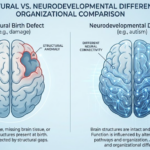
Reading about the autism brain vs normal brain provides the neurological context that explains why autistic cognitive profiles look the way they do and why the strengths and challenges that characterize them are connected features of the same underlying architecture rather than unrelated accidents.

What Living with Autism Actually Feels Like
Understanding whether people with autism are smart connects naturally to a broader understanding of what daily life with autism is actually like, because intelligence does not exist outside of lived experience and the relationship between cognitive ability and daily functioning in autism is complex in specific ways worth understanding.
For many autistic individuals, the experience of daily life involves a persistent gap between what they are capable of thinking and understanding and what they are able to demonstrate and express in the formats the neurotypical world expects. An autistic person who is genuinely thinking at a sophisticated level may struggle to demonstrate that thinking in a timed written exam, a real-time group discussion, or a job interview that depends on reading conversational cues and performing social fluency simultaneously with demonstrating knowledge.
This gap between internal cognitive capacity and external performance in neurotypical contexts is one of the most frustrating and consequential features of autistic experience. It produces situations where autistic individuals are underestimated, under-challenged, and denied access to opportunities that would match their actual ability because the assessment processes gatekeeper those opportunities were not designed to surface autistic cognitive strengths.
Sensory processing demands consume cognitive resources in ways that further complicate the picture. An autistic person navigating a high-sensory environment while simultaneously trying to perform cognitively is not performing at their full cognitive capacity, and assessments conducted in such environments underestimate that capacity in ways that have real consequences for educational placement and opportunity.
The emotional and social cognitive demands of navigating a neurotypical world also impose continuous background costs. Masking, social translation, sensory management, and executive function compensation all draw on the same cognitive resource pool that intelligence requires, and the tax these demands impose on available capacity is invisible in ways that compound the underestimation problem.
Our post on what is mild autism provides useful context on how autistic individuals who appear to function relatively well externally are often working significantly harder than their surface presentation suggests, which directly affects how their cognitive capacity is perceived and utilized.
Supporting Autistic Intelligence in Practical Ways
Recognizing that the answer to whether people with autism are smart is yes, across a range of profiles and in ways that standard frameworks sometimes miss, leads directly to the question of how to support autistic intelligence so it can actually show up in the world in useful and fulfilling ways.
Educational environments that allow autistic learners to demonstrate knowledge through multiple modalities rather than exclusively through timed verbal or written performance give autistic students better opportunities to show what they actually know. Oral examination alternatives, extended time accommodations, untimed assessments, and project-based demonstrations of learning all create channels through which autistic intelligence can express itself more accurately.
Curriculum that builds on deep interest areas rather than requiring uniform breadth of engagement produces more authentic learning and more genuine intellectual development for autistic students. A student who is allowed to pursue a mathematical interest in depth alongside required curriculum often develops more genuine mathematical capability than one who is required to engage shallowly with a wide range of topics at a standardized pace.
Reducing sensory and social demands during assessment gives a more accurate picture of cognitive capacity. Testing in quiet, low-distraction environments with familiar examiner relationships and no time pressure produces assessment results that reflect intellectual ability more accurately than the standard group testing conditions most autistic students navigate.
Career guidance that connects to genuine strengths rather than defaulting to generic recommendations helps autistic individuals find professional contexts where their specific cognitive profile is an asset rather than a source of friction. Many of the fields where autistic cognitive strengths are most valuable, including technology, science, research, creative work, and specialized expertise domains, are also fields with growing awareness of the value of autistic thinking styles.
ABA therapy in Woodbridge, VA works with families and children to identify and build on genuine cognitive strengths alongside addressing the specific challenges that autism creates in daily functioning and learning environments.
| Support Strategy | What It Accomplishes | Who Benefits Most |
| Multiple assessment modalities | Allows intelligence to show through strongest channel | Autistic learners with verbal or writing-related processing differences |
| Interest-based curriculum depth | Produces genuine expertise and authentic engagement | Autistic students with strong hyperfixation-driven learning |
| Low-sensory assessment conditions | Removes competing cognitive load during evaluation | Autistic learners with significant sensory processing differences |
| Executive function scaffolding | Removes organizational barriers to demonstrating knowledge | Autistic learners with strong intelligence but weak task initiation |
| Strength-aligned career guidance | Matches professional context to cognitive profile | Autistic adolescents and adults planning vocational paths |
For families navigating educational advocacy alongside therapy, ABA therapy in Leesburg, VA supports both the clinical and advocacy dimensions of ensuring autistic children have access to educational experiences that match their actual cognitive potential.
Final Thoughts on Whether People with Autism Are Smart
Are people with autism smart? The honest and research-supported answer is that autistic individuals are distributed across the full range of human intelligence, with a significant proportion demonstrating average to above-average cognitive ability, and with consistent patterns of specific cognitive strengths that standard intelligence frameworks do not always capture accurately.
The more important question for families, educators, and autistic individuals themselves is not whether autism and intelligence coexist but how autistic intelligence can be recognized, supported, and given the space to express itself in ways that are authentic to how the autistic mind actually works. That question has practical answers that make a real difference in educational outcomes, career trajectories, and the daily experience of autistic individuals who deserve to have their genuine cognitive abilities recognized and cultivated rather than obscured by deficit-focused frameworks.
Your autistic child’s intelligence is real. It may express itself in ways that look different from what traditional school settings are designed to reward. It may coexist with challenges that make demonstrating it harder in some contexts than others. But it is present, it deserves to be seen, and the right support makes it possible for it to shine.
Frequently Asked Questions About Whether People with Autism Are Smart
What not to say to a child with autism?
Avoid phrases like you do not look autistic, you must be the smart kind, everyone is a little autistic, and you will grow out of it, as these minimize the child’s actual experience and reflect fundamental misunderstandings about what autism is. Similarly, comparing an autistic child unfavorably to neurotypical peers, demanding eye contact as a condition of being taken seriously, or framing all autistic behavior as a choice or behavior problem are all approaches that cause harm rather than help. What works instead is curious, accepting engagement that follows the child’s lead and takes their communication and experience seriously on their own terms.
How do you befriend an autistic person?
The most effective starting point is being direct, genuine, and patient rather than relying on the subtle social cues and implicit communication that neurotypical friendship often operates through. Being explicit about your interest in spending time together, following their lead on topics of conversation, not taking low eye contact or unusual conversational rhythms as indicators of disinterest, and respecting their sensory and social boundaries around noise, touch, and duration of interaction all make friendship more accessible. Many autistic individuals form deep and loyal friendships once the early navigational friction of neurotypical social expectation is reduced.
What is it like living with autism?
Living with autism involves navigating a world that is largely designed around neurotypical processing while experiencing sensory input, social communication, and emotional regulation in a fundamentally different way. For many autistic individuals it means working significantly harder than peers to accomplish things that appear effortless for others, managing sensory environments that can be genuinely overwhelming, and experiencing deep connection and passion in specific areas alongside genuine difficulty in others. Many autistic adults describe their experience as one of difference rather than deficit, marked by a rich internal world, intense interests, and meaningful relationships that look somewhat different from neurotypical versions of the same things.
Can you grow out of high-functioning autism?
Autism is a lifelong neurological difference and does not go away, though the way it expresses itself changes considerably across development with appropriate support. Many autistic individuals develop strategies and skills over time that allow them to navigate daily life with greater ease and independence than in childhood, and some eventually no longer meet the full diagnostic criteria when formally reassessed, a phenomenon researchers call optimal outcomes. This does not mean they were never autistic or that the autism is gone. It means their functional skills and coping strategies have developed to a level where the diagnostic threshold is no longer met, while the underlying neurological profile remains.
What is 90% of autism caused by?
Research indicates that genetic factors account for approximately 80 to 90 percent of autism risk based on large-scale twin and family studies. This reflects the finding that variation in who develops autism is driven predominantly by inherited and spontaneous genetic differences rather than environmental factors alone. Hundreds of genes have been implicated across different individuals and families, with some carrying inherited variants and others showing de novo mutations with no family history. The remaining risk involves prenatal environmental factors that typically interact with underlying genetic susceptibility rather than operating as independent causes.