
Key Takeaways
- NIPT does not test for autism — no prenatal test currently available can detect, predict, or diagnose autism spectrum disorder
- Autism is a polygenic condition driven by hundreds of interacting genetic variants, none of which are captured by current NIPT technology
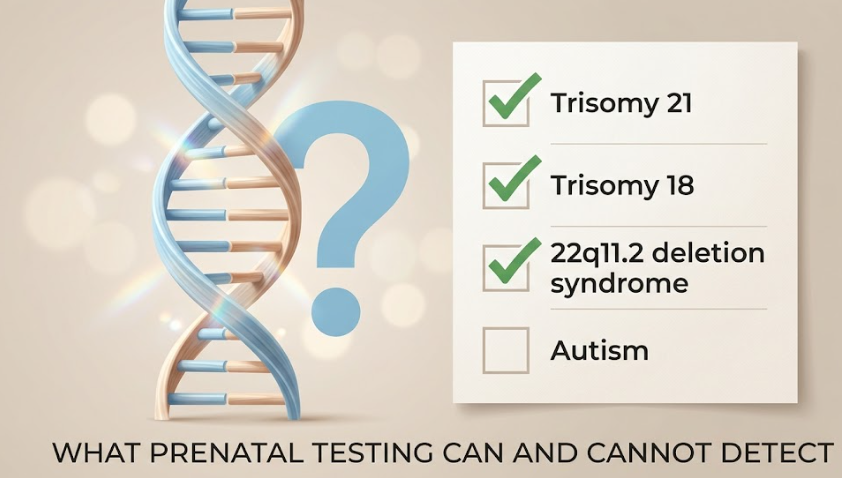
- NIPT screens for specific chromosomal abnormalities — Down syndrome, Trisomy 18, Trisomy 13, sex chromosome conditions, and on expanded panels, certain microdeletions — not neurodevelopmental outcomes
- Some conditions that NIPT screens for (like 22q11.2 deletion) are associated with elevated autism risk — but detecting those conditions is not the same as detecting autism
- If autism runs in your family, postnatal genetic evaluation after a clinical autism diagnosis — not prenatal NIPT — is the appropriate pathway for understanding genetic factors
The Direct Answer: No — NIPT Does Not and Cannot Test for Autism
If you are pregnant and searching this question — perhaps because autism runs in your family, because a previous child was diagnosed, or because you are anxious about your baby’s development — the direct answer is this: no prenatal test currently available, including NIPT, can detect, predict, or diagnose autism spectrum disorder.
This is not a limitation of NIPT specifically. It is a reflection of what autism is at a biological level. Autism is not caused by a single chromosomal abnormality or a single identifiable gene variant that current technology can reliably screen for. It is driven by the interaction of hundreds of genetic variants — most individually small in effect — combined with prenatal environmental and epigenetic factors that no blood test can fully capture in a meaningful predictive way.
The technology to identify chromosomal conditions like Down syndrome from a vial of maternal blood is genuinely remarkable. Autism, for reasons rooted in its biological complexity, is a fundamentally different kind of target — and it is not one that NIPT, or any current prenatal test, can hit.
What NIPT Actually Is and What It Tests For
NIPT (Non-Invasive Prenatal Testing) — also called cell-free DNA (cfDNA) screening or prenatal cell-free DNA screening — is a maternal blood test available from approximately ten weeks of pregnancy onward. It works by analyzing fragments of fetal DNA that circulate in the mother’s bloodstream during pregnancy, examining those fragments for evidence of specific chromosomal abnormalities.
Standard NIPT panels screen for:
- Trisomy 21 (Down syndrome) — an extra copy of chromosome 21, the most common chromosomal cause of intellectual disability
- Trisomy 18 (Edwards syndrome) — an extra copy of chromosome 18, typically associated with severe medical complications
- Trisomy 13 (Patau syndrome) — an extra copy of chromosome 13, similarly associated with serious medical complications
- Sex chromosome abnormalities — including Turner syndrome (45,X), Klinefelter syndrome (47,XXY), Triple X (47,XXX), and XYY syndrome
Expanded NIPT panels may also screen for:
Certain chromosomal microdeletions — small missing segments of chromosomes — including 22q11.2 deletion (DiGeorge syndrome), 1p36 deletion, Angelman syndrome, Prader-Willi syndrome, and Cri-du-chat syndrome. Screening for microdeletions is not universally offered and carries lower sensitivity and specificity than screening for whole chromosome aneuploidy.
What NIPT is not:
NIPT is a screening test, not a diagnostic test. A positive result indicates elevated risk and requires confirmation through a diagnostic procedure — amniocentesis or chorionic villus sampling (CVS) — which directly samples fetal genetic material. A negative NIPT result does not guarantee that no chromosomal condition is present; it indicates that the tested conditions were not detected at the sensitivity level of the assay.
Autism spectrum disorder appears on none of these panels. Not on standard panels. Not on expanded panels. Not on any NIPT platform currently commercially available anywhere in the world.
Why NIPT Cannot Detect Autism
Understanding why NIPT cannot test for autism requires understanding what autism is at the genetic level — and how differently it is structured compared to the conditions NIPT does detect.
The conditions NIPT detects are chromosomal in nature. Down syndrome results from an identifiable, detectable extra copy of an entire chromosome — a change so large that it is visible under a microscope and produces a clear signal in NIPT’s analysis of cell-free fetal DNA. These are structural chromosomal events with clear genetic signatures.
Autism is polygenic. It does not arise from a single chromosomal event or a single gene mutation in the vast majority of cases. Research has identified hundreds of genetic variants associated with autism risk — each contributing a small, individually modest effect. No single variant explains more than a tiny fraction of autism cases. The interaction among many variants, modulated by prenatal environmental and epigenetic factors, produces the neurodevelopmental outcome. There is no single signal for NIPT to look for.
Even the genetic variants most strongly associated with autism are incompletely penetrant. This means that many people who carry autism-associated genetic variants do not develop autism — and many autistic people do not carry the specific variants studied. A prenatal test that identified autism-associated variants would produce large numbers of false positives (carriers who would not develop autism) and false negatives (autistic individuals without those specific variants), making it clinically unreliable as a screening tool.
Autism cannot be diagnosed without behavioral observation. Even after birth, autism is diagnosed through behavioral assessment — direct observation of social communication, repetitive behaviors, and sensory responses — not through any biological test. The DSM-5 criteria for autism are entirely behavioral and developmental in nature. A prenatal genetic test cannot produce a behavioral assessment of a fetus.
What NIPT CAN Reveal That Is Autism-Relevant
While NIPT cannot detect autism, some conditions it does screen for carry elevated rates of autism as a co-occurring feature. This is an important nuance for families with autism history who are navigating prenatal testing.
22q11.2 deletion syndrome (DiGeorge syndrome): Detectable on expanded NIPT panels, this microdeletion is associated with autism in approximately 25–50% of affected individuals — one of the highest single-variant autism risk factors known. Finding a 22q11.2 deletion prenatally does not mean the child will have autism, but it does mean the child will need careful developmental monitoring and early evaluation for autism-related features after birth.
Sex chromosome conditions:
- Klinefelter syndrome (XXY): Associated with social communication differences and autism-related traits at elevated rates compared to the general population
- XYY syndrome: Associated with elevated autism rates compared to 46,XY males
- Triple X syndrome (XXX): Associated with elevated rates of language delays and social communication differences
Trisomy 21 (Down syndrome): Autism co-occurs with Down syndrome in approximately 5–15% of cases — meaningfully elevated above the general population rate, though the majority of individuals with Down syndrome do not have autism.
Finding any of these conditions on NIPT does not predict autism specifically — but it does signal that the child’s developmental trajectory will benefit from close monitoring, early developmental screening, and readiness to pursue autism evaluation if behavioral signs emerge. For families in this situation, connecting early with a developmental pediatrician and establishing a clear developmental monitoring plan is the most practical response to a positive NIPT result involving these conditions.
What the Future of Prenatal Autism Screening Might Look Like
Research into the genetic architecture of autism is advancing rapidly, and questions about whether any prenatal screening for autism risk might eventually be possible are legitimate ones.
Two developments are worth tracking:
Polygenic risk scores for autism — algorithms that combine the small effects of many genetic variants into a single risk estimate — are an active area of research. Early versions of autism polygenic risk scores have been developed using data from genome-wide association studies. Currently, these scores explain a relatively small proportion of the variance in autism diagnosis — not enough to be clinically useful as a screening tool, particularly given the implications of prenatal risk prediction for a condition that does not require a cure.
Whole genome sequencing in prenatal contexts is becoming more feasible as costs fall. Some research programs are exploring prenatal sequencing to identify de novo variants associated with neurodevelopmental conditions. Whether this leads to clinical prenatal autism screening, and what ethical frameworks would govern its use, are active questions in both genetics research and bioethics.
What is clear is that no such test is clinically validated or commercially available today — and that the ethical implications of prenatal autism screening are complex and contested within the autism community, where many autistic individuals and advocates oppose the framing of autism as a condition to be prevented.
What to Do If Autism Runs in Your Family and You Are Pregnant
If you have an autistic child, an autistic sibling, or a family history of autism and are pregnant, here is a practical framework based on current clinical evidence:
Step 1: Understand that no prenatal test can tell you whether this baby will be autistic. Standard prenatal testing — including NIPT, anatomy scans, and all other currently available modalities — cannot detect autism. If this is a concern you carry into your pregnancy, your focus should be on postnatal monitoring and early evaluation readiness rather than prenatal screening for autism specifically.
Step 2: Pursue NIPT for what it can actually tell you. NIPT provides valuable information about chromosomal conditions that affect health and development. If your NIPT includes expanded microdeletion screening, conditions like 22q11.2 deletion — which carry elevated autism co-occurrence — may be identifiable. This information is worth having for birth planning and early developmental monitoring purposes.
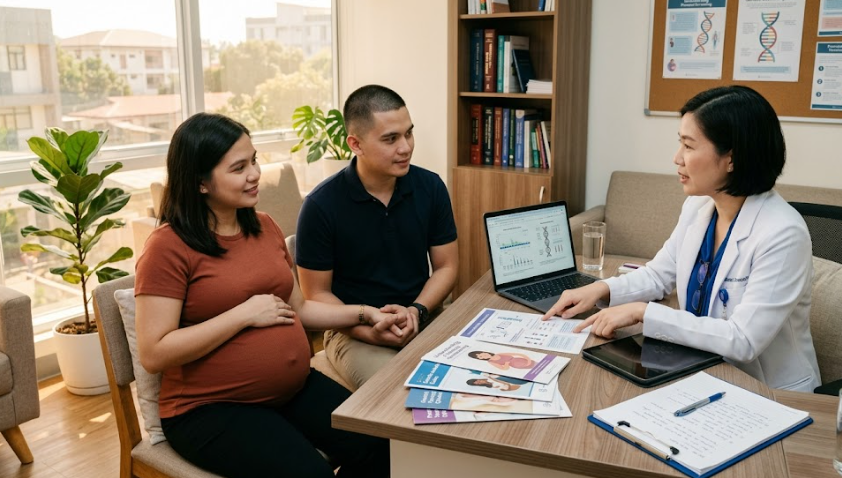
Step 3: Consider genetic counseling before and after NIPT. A genetic counselor can review your family history, explain what NIPT can and cannot screen for, interpret results accurately in the context of your family, and help you understand what recurrence risk data means for your specific situation. For families with a child who has received an autism diagnosis, genetic testing for autism provides an overview of the postnatal genetic evaluation pathway — including chromosomal microarray and whole exome sequencing — that can identify specific genetic variants and inform recurrence risk counseling.
Step 4: Plan for early developmental monitoring after birth. If autism runs in your family, the most evidence-based approach is establishing a relationship with a developmental pediatrician who can conduct systematic developmental monitoring from early infancy — tracking joint attention, language emergence, social engagement, and sensory responses at every visit. Early identification, not prenatal prediction, is the pathway that produces better outcomes.
Step 5: Connect with resources before you need them. Knowing now where to turn for early intervention services, how to access autism evaluation when signs emerge, and what the diagnostic process involves puts your family in a significantly stronger position than learning these systems under pressure after a diagnosis. Early intervention produces the most meaningful outcomes — and early-informed families access it faster.
Common Misconceptions About NIPT and Autism
“A normal NIPT means my baby won’t have autism.” NIPT does not screen for autism — a normal result means the screened chromosomal conditions were not detected. It provides no information about autism risk. The majority of autistic children are born following completely unremarkable prenatal testing.
“If my NIPT showed a chromosomal condition, my baby will definitely have autism.” Some chromosomal conditions are associated with elevated autism rates — but the relationship is probabilistic, not deterministic. A 22q11.2 deletion is associated with autism in approximately 25–50% of cases, meaning the majority of children with this deletion do not have autism. A finding on NIPT warrants close developmental monitoring, not a predetermined autism trajectory.
“There must be a prenatal test for autism by now.” No validated prenatal autism test exists anywhere in the world as of this writing. Autism’s polygenic genetic architecture and the absence of a single detectable biological marker make prenatal detection fundamentally different from — and more complex than — screening for chromosomal conditions.
“I could have found out prenatally if I had done more testing.” No amount of prenatal testing — NIPT, amniocentesis, CVS, ultrasound — would have detected autism, because none of those tests screen for autism. This is a factually important correction for parents who carry guilt about their prenatal testing choices.
“Autism rates are rising because prenatal testing isn’t catching it early enough.” Autism is not a condition that prenatal testing is currently able to screen for, and its rising prevalence is explained primarily by diagnostic expansion, increased awareness, and improved surveillance — not by any failure of prenatal detection. The concept of prenatal autism screening is a research frontier, not a missed clinical opportunity.
Conclusion
NIPT does not test for autism — and no prenatal test currently available anywhere in the world can detect, predict, or diagnose autism spectrum disorder. Autism’s polygenic genetic architecture, its dependence on the interaction of hundreds of variants and prenatal developmental factors, and its fundamentally behavioral definition make it a categorically different kind of target than the chromosomal conditions NIPT was designed to detect.
For expectant parents with autism in their family history, the most evidence-based path forward is not searching for a prenatal test that does not exist — it is preparing for the postnatal monitoring and early evaluation that produces the most meaningful outcomes. Knowing what developmental signs to watch for, having a relationship with a developmental pediatrician ready to monitor carefully, and understanding how to access early intervention quickly when signs emerge: these are the investments that actually change trajectories.
Autism identified early and supported well produces outcomes that autism identified late and supported inadequately cannot match. That is where the focus belongs — not on a prenatal prediction that current science cannot deliver.
Dream Bigger ABA provides individualized ABA therapy for autistic children and their families across Northern Virginia — from the earliest intervention years through school age and beyond. If you have concerns about your child’s development, our team is ready to help you navigate the next step. Explore services in Vienna, VA and Gainesville, VA.
Frequently Asked Questions
Can you see autism on a NIPT test?
No — autism cannot be detected on a NIPT test. NIPT analyzes cell-free fetal DNA in the mother’s blood to screen for specific chromosomal abnormalities — primarily Down syndrome, Trisomy 18, Trisomy 13, sex chromosome conditions, and on expanded panels, certain microdeletions. Autism spectrum disorder is not caused by a single chromosomal event or a single detectable genetic variant. It is polygenic, driven by the interaction of hundreds of genetic variants, none of which are captured by current NIPT technology. No prenatal test — NIPT, amniocentesis, chorionic villus sampling, or anatomy scan — can detect, predict, or diagnose autism. Autism is identified postnatally through behavioral observation and developmental evaluation, not through any biological test before or after birth.
What is the 6-second rule for autism?
The 6-second rule is a practical communication guideline widely used by therapists, educators, and parents of autistic individuals. It means waiting at least six full seconds after giving a direction, asking a question, or delivering a prompt before repeating the request, adding more language, or assuming the person did not understand. Many autistic individuals have differences in auditory processing speed — spoken language takes longer to fully receive, decode, and translate into a planned response than neurotypical expectation allows. When caregivers or teachers speak, then immediately repeat themselves or layer additional instructions within two or three seconds, they add new auditory input on top of language still being processed, which commonly produces confusion, shutdown, or apparent non-compliance rather than the response they were looking for. Implementing consistent wait time — counting silently to six — is one of the most simple, cost-free, and effective communication accommodations available, and is reported by families and educators to produce meaningful improvements in response rates with autistic individuals across age groups.
What billionaire has Asperger’s?
Elon Musk is the most publicly known billionaire to have self-disclosed an Asperger’s syndrome diagnosis, doing so on Saturday Night Live in May 2021. Asperger’s syndrome was the diagnostic label used for autistic individuals without significant language or intellectual delays — it was unified under the broader autism spectrum disorder (ASD) diagnosis in the DSM-5 in 2013. Musk’s disclosure was notable for its matter-of-fact framing, presenting his neurology as a characteristic of who he is rather than a limitation to apologize for. Other prominent publicly identified autistic individuals — not all billionaires — include Temple Grandin (professor, author, livestock innovator), Greta Thunberg (climate activist), and, retrospectively and speculatively, multiple historical scientific and creative figures. The point these examples collectively support is consistent: autism and exceptional professional accomplishment are entirely compatible, and neurodiversity produces significant contributions across fields when individuals receive appropriate support and find environments suited to their neurological strengths.
What are the top 3 signs of autism?
The three most clinically reliable signs of autism — the ones that most consistently distinguish autism from other developmental profiles and that are central to the diagnostic criteria — are: (1) Persistent social communication differences, including reduced joint attention (not pointing to share interest, not following another’s gaze), difficulty with the natural reciprocity of conversation, limited use of nonverbal communication in social exchange, and challenges forming and maintaining developmentally appropriate relationships; (2) Restricted and repetitive behaviors, including repetitive motor movements such as hand-flapping, rocking, or finger movements, intense insistence on sameness and significant distress when routines are disrupted, and highly focused interests of unusual intensity or narrow scope; and (3) Sensory processing differences, including hyper or hyposensitivity to sounds, textures, lights, tastes, or smells that meaningfully affects daily functioning and comfort across environments. All three domains must be present across multiple settings, not limited to one context, to support an autism diagnosis under DSM-5 criteria.
What is the biggest red flag for autism?
The single most clinically predictive early red flag for autism is the consistent absence of joint attention — specifically, a child who does not point to share interest in objects or events with others, does not look where a caregiver is pointing, and does not alternate gaze between a person and an object to communicate shared experience. Joint attention is a foundational social communication milestone that emerges in the first year of life and underlies the development of language, shared play, and social learning. Its consistent absence by 12–14 months is the most reliable early behavioral marker of autism identified in the developmental research literature. Additional major red flags that warrant immediate developmental evaluation — not a wait-and-see approach — include no babbling by 12 months, no single meaningful words by 16 months, no spontaneous two-word phrases by 24 months, consistent failure to respond to their own name despite normal hearing, and loss of previously acquired language or social skills at any age. That last sign — developmental regression — is addressed in depth at skill regression in autism and should never be attributed to a developmental phase.