Does autism qualify for SSI? Yes, autism spectrum disorder can qualify individuals for Supplemental Security Income (SSI) benefits through the Social Security Administration. Children and adults with autism may be eligible if their condition significantly limits daily functioning and they meet specific medical and financial requirements.
Navigating SSI benefits can feel overwhelming for families affected by autism. Understanding eligibility criteria, application processes, and documentation requirements helps you secure the financial support your family deserves. Whether you’re applying for a child or yourself, knowing what to expect makes the journey smoother.
What Is SSI and How Does It Work?
Supplemental Security Income (SSI) is a federal program that provides monthly cash payments to people with disabilities who have limited income and resources. Unlike Social Security Disability Insurance (SSDI), SSI doesn’t require work history. The program exists to help cover basic needs like food, clothing, and shelter.
The Social Security Administration (SSA) manages SSI benefits and determines eligibility based on two main factors: medical qualification and financial need. For children, the disability must cause marked and severe functional limitations. For adults, the condition must prevent substantial gainful activity.
At Dream Bigger ABA, we understand how critical these benefits are for families managing autism. Financial support through SSI can help cover therapy costs, specialized education, and daily care needs that insurance might not fully address.
Does Autism Automatically Qualify You for SSI?
Autism spectrum disorder appears in the SSA’s Listing of Impairments, specifically under Section 112.10 for children and Section 12.10 for adults. However, having an autism diagnosis alone doesn’t guarantee approval. The SSA evaluates how severely the condition affects your ability to function.
The evaluation considers several factors:
- Communication abilities and social interaction skills
- Restricted, repetitive patterns of behavior
- Ability to complete age-appropriate tasks independently
- Cognitive functioning and adaptive behaviors
- Response to changes in routine or environment
Your medical records must clearly document these limitations. The SSA looks for evidence that autism creates serious obstacles in daily life, not just a clinical diagnosis on paper.
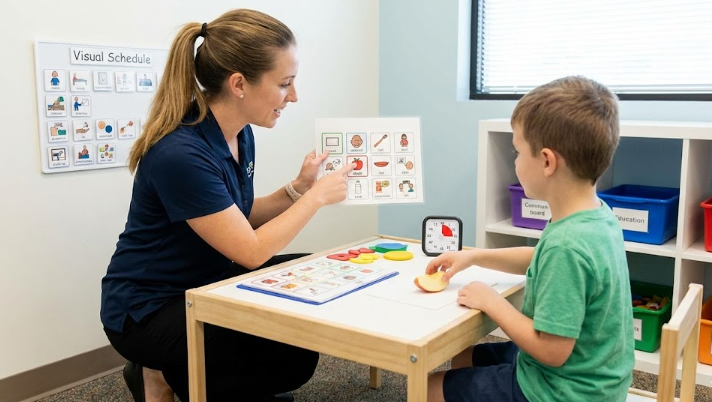
SSI Eligibility Requirements for Children with Autism
Children under 18 must meet specific criteria outlined in the SSA’s Childhood Disability Evaluation process. The condition must result in marked limitations in at least two domains of functioning or extreme limitation in one domain.
The six domains of functioning include:
Domain What SSA Evaluate
Acquiring and Using Information Learning new skills, following instructions, solving problems
Attending and Completing Tasks Focus, concentration, task completion, working independently
Interacting and Relating Social relationships, cooperation, handling conflicts
Moving About and Manipulating Physical coordination, motor skills, self-care abilities
Caring for Yourself Personal hygiene, eating, dressing, safety awareness
Health and Physical Well-Being Physical health effects of condition, frequency of symptoms
Documentation from teachers, therapists, and medical providers strengthens your application. Specific examples of how autism affects daily activities carry more weight than general statements. If your child receives ABA therapy in Manassas, VA, therapy progress notes can provide valuable evidence.
SSI Eligibility Requirements for Adults with Autism
Adults applying for SSI must prove their autism prevents them from engaging in substantial gainful activity (SGA). The SSA defines SGA as earning more than a specific monthly amount, which adjusts annually.
For adults, the evaluation focuses on:
- Ability to understand, remember, and apply information
- Capacity to interact with others appropriately
- Concentration, persistence, and pace in completing tasks
- Ability to adapt to changes and manage oneself
Many adults with autism experience challenges that weren’t fully recognized in childhood. Late diagnosis is common, and adults can still apply even if they weren’t diagnosed as children. Medical evidence documenting current limitations matters most.
Work history also plays a role. If you’ve attempted employment but couldn’t maintain work due to autism-related challenges, this information supports your claim. Document any job accommodations you’ve needed or terminations related to your condition.
Financial Requirements for SSI Benefits
Beyond medical eligibility, SSI has strict income and resource limits. For 2025, individuals cannot have more than $2,000 in countable resources, and couples cannot exceed $3,000. Parents’ income affects children’s eligibility through a process called “deeming.”
Countable income includes:
- Wages from employment
- Social Security benefits
- Unemployment compensation
- Cash gifts or support from others
Not all income counts. The SSA excludes the first $20 of most income, the first $65 of earned income, and half of earnings above $65. Food stamps, housing assistance, and most need-based benefits don’t count as income.
Resources include bank accounts, stocks, bonds, and property beyond your primary residence. Personal belongings, household goods, and one vehicle typically don’t count. Understanding these rules helps you prepare financially before applying.
IMAGE SUGGESTION: A close-up of hands filling out official Social Security Administration forms with a calculator and organized financial documents spread across a desk
How to Apply for SSI Benefits with Autism
The application process requires careful preparation and thorough documentation. You can apply online through the SSA website, by phone at 1-800-772-1213, or in person at your local Social Security office. Starting the process early matters because reviews take time.
Steps to strengthen your application:
- Gather comprehensive medical records. Collect diagnostic evaluations, therapy progress notes, psychiatric assessments, and school records showing functional limitations.
- Document daily challenges. Keep a journal describing specific difficulties with communication, social situations, routine changes, sensory issues, and self-care tasks.
- Request detailed provider statements. Ask doctors and therapists to describe exact limitations and how autism affects specific life activities.
- Complete forms thoroughly. The SSA provides function reports where you detail daily activities. Be specific and honest about struggles.
- Include school documentation. Individualized Education Programs (IEPs), Section 504 plans, and teacher observations provide valuable evidence.
Working with professionals familiar with SSI applications increases success rates. ABA therapy providers can often supply detailed progress notes that demonstrate functional limitations and ongoing support needs.
Common Reasons SSI Applications Get Denied
Many autism-related SSI applications face initial denial. Understanding common pitfalls helps you avoid them or prepare stronger appeals.
Denial Reason How to Prevent It
Insufficient medical evidence Submit comprehensive records from multiple providers showing consistent limitations
Income or resources exceed Review financial limits carefully limits before applying; consider timing
Lack of specific functional Provide detailed examples of examples daily struggles, not general statements
Missing developmental history Include early intervention records, school evaluations, therapy documentation
Condition appears “controlled” Explain that management requires ongoing support and supervision
The SSA sometimes denies claims because documentation doesn’t clearly connect autism symptoms to functional limitations. Saying “my child has autism” isn’t enough. You must show exactly how autism prevents age-appropriate functioning in specific domains.
If denied, don’t give up. The appeals process has multiple levels, and many denials get overturned on reconsideration or at hearings. Gathering additional evidence and clarifying limitations often leads to approval on appeal.
What Happens After SSI Approval
Once approved, SSI payments begin as early as the month after you applied or the month you became eligible. Payment amounts vary based on living arrangements and other income. For 2025, the maximum federal SSI payment is $967 monthly for individuals.
Benefits continue as long as the disability persists and financial eligibility remains. The SSA conducts periodic reviews called Continuing Disability Reviews (CDRs) to verify ongoing eligibility. Review frequency depends on the likelihood of medical improvement.
For children, the SSA conducts an age-18 redetermination using adult disability standards. This doesn’t automatically end benefits, but the evaluation process differs. Preparing for this review early helps ensure continued coverage.
SSI recipients often automatically qualify for Medicaid, which covers medical services including therapy. This coverage can be more valuable than the monthly payment itself. Many families rely on Medicaid to access ABA therapy services and other autism-related treatments.
IMAGE SUGGESTION: A happy family celebrating together, with parents embracing their child with autism in a living room setting that shows toys and therapy materials in the background
Additional Support Beyond SSI
SSI provides important financial assistance, but families often need additional resources. Combining benefits and services creates comprehensive support for individuals with autism.
Consider exploring:
- Medicaid Waivers: Home and community-based services that supplement standard Medicaid coverage
- State disability programs: Many states offer additional financial assistance or services
- Educational support: Special education services through schools at no cost to families
- Vocational rehabilitation: Job training and employment support for adults
- Housing assistance: Section 8 vouchers or public housing for low-income families
Community organizations and autism advocacy groups often provide resources beyond government programs. Support groups connect families facing similar challenges, sharing practical advice and emotional support.
Understanding whether autism runs in families or exploring autism diagnostic processes helps you advocate effectively. Knowledge empowers families to access every available resource.
Wrapping Up: Your Path to SSI Benefits for Autism
Does autism qualify for SSI? Absolutely, when the condition creates significant functional limitations and financial need exists. The application process demands patience, thorough documentation, and clear communication about daily challenges. While denials happen frequently, persistence often leads to approval.
Every family’s situation differs, but understanding SSI requirements positions you for success. Gather comprehensive medical evidence, document specific functional limitations, and don’t hesitate to appeal denials. Financial support through SSI can transform your family’s ability to access critical services and therapies.
At Dream Bigger ABA, we believe every child with autism deserves access to quality care and support. Whether navigating SSI applications or seeking evidence-based therapy, we’re here to help families build brighter futures. Exploring resources like understanding autism levels or learning when autism was first discovered empowers you to advocate effectively for your loved one.
Remember that securing benefits is just one piece of supporting someone with autism. Combining financial assistance with quality therapy, education, and community resources creates the foundation for growth, independence, and success. Your persistence in seeking support demonstrates the commitment that helps individuals with autism thrive.
FAQs About Autism and SSI Benefits
How hard is it to get disability for autism?
Getting SSI for autism requires meeting both medical and financial criteria, which can be challenging but achievable with proper documentation. The approval process depends on clearly demonstrating how autism creates severe functional limitations. Initial applications face denial rates around 60-70%, but many succeed on appeal. Strong medical evidence, detailed functional descriptions, and persistence significantly improve your chances. Working with healthcare providers who understand SSI requirements helps build compelling applications.
How much is a SSI check for autism?
SSI payment amounts for autism depend on living arrangements and other income, with the 2025 maximum federal benefit at $967 monthly for individuals. Children living with parents may receive reduced amounts due to parental income deeming. States can supplement federal SSI with additional payments, increasing the total. The actual amount you receive varies based on your specific financial situation. Benefits adjust annually for cost-of-living increases.
Why was my child denied SSI benefits?
Denials typically occur when medical evidence doesn’t sufficiently demonstrate severe functional limitations or when family income exceeds eligibility thresholds. The SSA may find that autism symptoms don’t cause marked limitations in required domains. Incomplete applications, missing medical records, or lack of specific functional examples also lead to denials. Many families successfully overturn denials on appeal by providing additional documentation. Understanding the specific reason for denial guides your next steps.
What disqualifies a child from SSI?
Children become ineligible when family income or resources exceed SSI limits, or when medical evidence shows autism doesn’t cause severe functional limitations. Substantial parental income counts against the child’s application through deeming rules. If treatment effectively manages symptoms without ongoing support needs, the SSA may determine the child doesn’t meet disability standards. Changes in living arrangements or financial circumstances can also affect eligibility. Regular reviews reassess continued qualification.
What help can I get for my autistic child?
Beyond SSI, families can access Medicaid, special education services, state disability programs, therapy coverage, and community support resources. Early intervention programs serve children under three. School districts provide special education at no cost through IEPs or 504 plans. Many states offer autism-specific waivers for home and community-based services. Private insurance increasingly covers ABA therapy and autism treatments. Nonprofit organizations provide family support, advocacy, and educational resources.