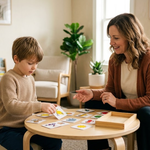
Signs of autism in 9 month old babies can include reduced eye contact, lack of babbling or social smiles, and limited responses to their name. While these signs don’t confirm autism, recognizing early differences in development helps families seek support sooner, which can make a meaningful impact on a child’s growth.
Every baby develops at their own pace, but understanding what’s typical versus what might signal a concern empowers parents to take action. Early detection opens doors to therapies and interventions that help children build communication, social, and adaptive skills from the very start.
Let’s explore what signs to watch for, why early recognition matters, and how families can move forward with confidence and support.
Understanding Autism Spectrum Disorder in Infants
Autism spectrum disorder (ASD) affects how children communicate, interact, and process the world around them. It exists on a spectrum, meaning every child with autism shows different strengths and challenges. Some infants may show subtle differences in social engagement or sensory responses as early as 9 months old.
At this age, typical developmental milestones include babbling, responding to their name, showing interest in faces, and engaging in back-and-forth social games like peek-a-boo. When these behaviors are absent or limited, it may indicate differences in neurological development.
Autism doesn’t mean a child can’t learn or grow. With early intervention through programs like ABA therapy in Alexandria, VA, children develop essential skills that support independence and connection. The earlier families recognize potential signs, the sooner they can access resources that make a real difference.
Key Developmental Milestones for 9-Month-Olds
Before identifying concerns, it helps to understand what typical development looks like at 9 months. Most babies at this stage display specific social, communication, and motor skills.
| Developmental Area | What to Expect at 9 Months |
| Social Interaction | Makes eye contact, smiles at familiar faces, enjoys interactive games |
| Communication | Babbles using different sounds, responds to their name, imitates sounds |
| Motor Skills | Sits without support, crawls or scoots, reaches for objects |
| Sensory Responses | Reacts to loud noises, explores toys with hands and mouth, tracks moving objects |
| Emotional Expression | Shows joy, fear, or frustration through facial expressions and sounds |
When babies don’t meet several of these milestones, parents should discuss observations with their pediatrician. Missing one milestone doesn’t automatically indicate autism, but patterns of delayed or atypical development deserve closer attention.
Early Warning Signs of Autism in 9-Month-Old Babies
Recognizing signs of autism in 9 month old infants involves watching for differences in social engagement, communication, and behavior. These signs may appear subtle at first but often become more noticeable as babies grow.
Social and Emotional Red Flags
Babies with autism may show limited interest in social interactions. They might avoid eye contact, even during feeding or play. While typical 9-month-olds light up when they see familiar faces, babies on the spectrum may seem indifferent or look away frequently.
They might not respond to their name when called, even after multiple attempts. Social smiling, which usually develops around 2 to 3 months and becomes more frequent by 9 months, may be absent or rare. Games like peek-a-boo or pat-a-cake might not capture their attention the way they do for other babies.
Some infants show little interest in being held or cuddled, preferring to be left alone. Others may not reach out their arms to be picked up or show excitement when a parent enters the room.

Communication and Language Delays
By 9 months, most babies babble using a variety of sounds like “ba-ba” or “ma-ma.” They experiment with tone and rhythm, often imitating the speech patterns they hear. Babies showing signs of autism in 9 month old development may be unusually quiet or produce very limited sounds.
They might not point at objects to show interest or try to share attention with caregivers. Joint attention, which involves looking between an object and a person to share an experience, may be absent. This skill forms the foundation for later language development.
Some babies don’t respond to simple verbal cues or gestures. For example, they might not look when a parent points at something interesting or says their name.
Repetitive Behaviors and Sensory Sensitivities
Repetitive movements can emerge early in development. Some 9-month-olds repeatedly rock back and forth, flap their hands, or stare at spinning objects for extended periods. While all babies explore repetitive actions occasionally, children with autism often fixate on these behaviors more intensely.
Sensory responses may also differ. Some babies become extremely upset by certain textures, sounds, or lights. Others might not react to loud noises or seem unaware of pain. They may mouth objects more frequently than peers or focus intently on specific visual patterns.
Understanding these sensory differences helps families create supportive environments. If you notice these patterns, reaching out to professionals at ABA therapy in Centreville, VA can provide guidance on next steps.
Why Early Detection Matters
Identifying signs of autism in 9 month old babies allows families to access early intervention services that improve outcomes. Research consistently shows that starting therapy before age 3 produces the most significant gains in communication, social skills, and adaptive behavior.
Early intervention doesn’t change who a child is but rather helps them develop tools to navigate their world more effectively. Therapies like applied behavior analysis (ABA) teach communication strategies, social engagement skills, and ways to manage sensory sensitivities.
Families also benefit from early detection. Knowing what they’re navigating allows parents to connect with support networks, learn effective strategies, and advocate for their child’s needs. Rather than waiting and worrying, they can take action that builds a foundation for growth.
The brain shows remarkable plasticity during infancy and toddlerhood, meaning it’s especially responsive to learning and development during these years. Taking advantage of this window creates opportunities that might be harder to achieve later.
Things to Know About Autism Screening at 9 Months
When to Talk to Your Pediatrician
Trust your instincts as a parent. If something feels different about your baby’s development, schedule a conversation with your pediatrician. Most doctors perform developmental screenings at regular well-child visits, including at 9 months.
Specific concerns that warrant discussion include:
- Consistent lack of eye contact or social smiling
- No babbling or vocal experimentation
- Limited response to name or familiar voices
- Absence of gestures like pointing or waving
- Unusual reactions to sensory input
- Loss of previously acquired skills
Understanding the Screening Process
Pediatricians use standardized screening tools to assess developmental milestones. The Modified Checklist for Autism in Toddlers (M-CHAT) is commonly used around 18 months, but earlier concerns prompt immediate evaluation.
Screening isn’t the same as diagnosis. If screening indicates potential concerns, doctors refer families to specialists like developmental pediatricians or child psychologists for comprehensive assessment. This process includes:
- Detailed developmental history
- Direct observation of the child
- Parent interviews and questionnaires
- Evaluation of communication and social skills
- Assessment of sensory and behavioral patterns
For more information about the diagnostic process, read about whether a neurologist can diagnose autism.

What Causes Autism in Infants?
Autism results from complex interactions between genetic and environmental factors. No single cause explains all cases, and research continues to uncover new insights about brain development and autism.
| Factor Type | What Research Shows |
| Genetics | Multiple genes contribute to autism risk; runs in families; certain genetic conditions increase likelihood |
| Brain Development | Differences in how brain regions communicate and process information appear early in development |
| Prenatal Factors | Advanced parental age, certain pregnancy complications, and maternal health conditions may play minor roles |
| Environmental Influences | No proven environmental cause; vaccines do not cause autism (thoroughly debunked) |
Understanding causes helps reduce stigma and fear. Autism isn’t caused by parenting choices, and nothing parents did or didn’t do created their child’s autism. If you’re wondering about vaccine concerns, read our article on whether vaccines can cause autism.
Supporting Your 9-Month-Old’s Development
Whether or not your baby shows signs of autism in 9 month old development, you can support their growth through everyday interactions and responsive caregiving.
Creating an Engaging Environment
Set up spaces that encourage exploration and interaction. Place toys at your baby’s level to promote reaching, crawling, and investigating. Use colorful objects that make sounds or have different textures to stimulate sensory engagement.
Talk to your baby throughout the day, even during routine activities like diaper changes or meals. Describe what you’re doing, name objects, and respond to their vocalizations. This constant language exposure supports communication development.
Play interactive games that build social connection. Sing songs with hand motions, play peek-a-boo, and practice turn-taking games. These activities teach babies about social reciprocity and shared attention.
When to Seek Professional Support
If developmental concerns persist beyond a few weeks or you notice multiple red flags, reach out to early intervention services. Many communities offer free developmental evaluations for children under 3.
Programs like ABA therapy in Fairfax, VA provide structured support that addresses communication delays, social skill development, and behavioral challenges. Early intervention specialists work with families to create individualized plans that fit each child’s unique needs.
Don’t wait for a formal diagnosis to access support. Many services are available based on developmental delays alone, and early action always benefits children regardless of whether they eventually receive an autism diagnosis.

Moving Forward with Hope and Action
Recognizing signs of autism in 9 month old babies marks the beginning of a journey, not the end. Early detection empowers families to access resources, build support networks, and help their children develop essential skills during critical developmental windows.
Autism doesn’t define a child’s potential or limit their future. With appropriate support, children on the spectrum learn to communicate, form relationships, and pursue their interests in meaningful ways. Every child deserves the chance to thrive in environments that understand and celebrate their unique way of experiencing the world.
If you notice developmental differences in your baby, take action. Talk to your pediatrician, trust your observations, and explore early intervention options. Professional guidance makes the path forward clearer and less overwhelming.
At Dream Bigger ABA, we partner with families to provide evidence-based support that addresses each child’s specific needs. Whether through structured therapy or family coaching, we believe every child can grow, learn, and reach their fullest potential.
For related information about autism across different life stages, explore these helpful guides:
Frequently Asked Questions
What is the biggest red flag for autism?
The most significant early red flag is limited or absent response to their name by 9 to 12 months. Babies who consistently don’t look up, turn toward their parent, or show any recognition when their name is called may have differences in social attention and awareness. This sign often appears alongside reduced eye contact and lack of social smiling, forming a pattern that warrants evaluation.
What is stimming in a 9 month old?
Stimming refers to repetitive self-soothing or sensory-seeking behaviors like hand flapping, rocking, or staring at spinning objects. At 9 months, occasional repetitive movements are normal as babies explore their bodies. However, intense, prolonged, or unusual stimming that interferes with play and social interaction may indicate sensory processing differences associated with autism. To learn more about related behaviors, read about hyperfixation as a symptom of autism.
How to spot autism in a baby?
Watch for patterns of limited social engagement, communication delays, and unusual sensory responses. Key signs include minimal eye contact, absence of babbling, not responding to name, lack of social smiling, and intense focus on repetitive movements. No single sign confirms autism, but combinations of these behaviors occurring together warrant professional evaluation. Trust your instincts and document specific concerns to share with your pediatrician.
What is the 10 second rule for autism?
The 10-second rule suggests waiting 10 seconds after asking a child a question or giving an instruction before repeating or helping. This strategy gives children with autism, who may process information more slowly, adequate time to respond without pressure. It reduces anxiety and allows for more successful communication exchanges. This approach works for children of all ages and supports their development of independent responses.
What is 90% of autism caused by?
This statement oversimplifies autism’s complex origins. Autism results from multiple genetic and environmental factors working together. While genetics play a significant role (with heritability estimates around 80%), no single cause accounts for 90% of cases. Brain development differences, genetic variations, and certain prenatal factors all contribute. Understanding autism as a multifaceted condition helps families focus on support rather than searching for one explanation.