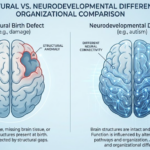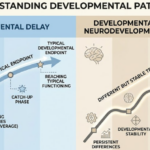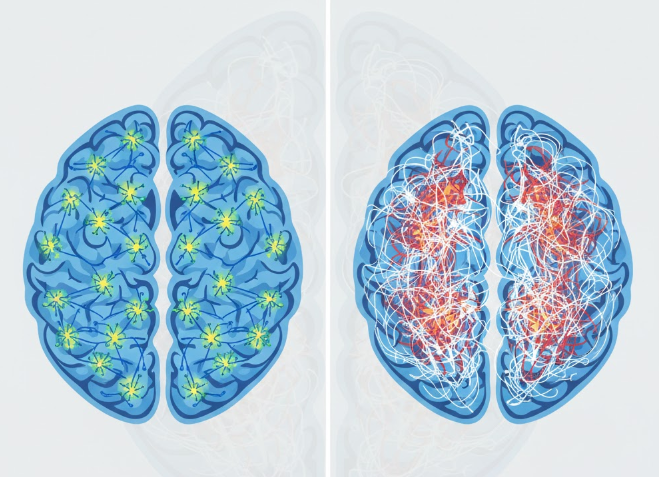
Autism and schizophrenia are separate neurological conditions that affect how people think, communicate, and interact with the world. While both involve differences in brain development and function, they emerge at different life stages, have distinct symptoms, and require different approaches to support and treatment.
Understanding the relationship between these conditions helps families recognize early signs, seek appropriate care, and support their loved ones effectively. Let’s explore what makes each condition unique, where they might overlap, and why accurate diagnosis matters.
What Is Autism Spectrum Disorder?
Autism spectrum disorder (ASD) is a developmental condition present from early childhood. It affects how people communicate, process sensory information, and form social connections. Children with autism may show repetitive behaviors, have intense interests in specific topics, and experience challenges with changes in routine.
The spectrum nature means every person with autism presents differently. Some individuals need significant support with daily tasks, while others live independently and excel in academic or professional settings. Early signs typically appear before age three, though some children receive diagnoses later when social demands increase.
A tDream Bigger ABA, we recognize that autism represents a different way of experiencing the world, not a disease requiring a cure. Our focus centers on building communication skills, managing sensory needs, and supporting families through evidence-based ABA therapy.
What Is Schizophrenia?
Schizophrenia is a psychiatric condition that usually emerges in late adolescence or early adulthood, typically between ages 16 and 30. It affects how someone perceives reality, organizes thoughts, and experiences emotions. People with schizophrenia may have hallucinations (seeing or hearing things that aren’t there), delusions (strong beliefs not based in reality), or disorganized thinking.
Unlike autism, schizophrenia represents a break from previous functioning. Someone without symptoms may suddenly develop psychotic episodes, making it fundamentally different from autism’s lifelong developmental pattern. Treatment often involves antipsychotic medications combined with therapy and social support.
The condition doesn’t mean someone has a “split personality,” despite common misconceptions. Instead, it reflects disruptions in how the brain processes information and distinguishes internal thoughts from external reality.
Key Differences Between Autism and Schizophrenia
While both conditions involve neurological differences, they manifest in distinct ways:
| Characteristic | Autism Spectrum Disorder | Schizophrenia |
| Age of Onset | Early childhood (before age 3) | Late adolescence/early adulthood (16-30) |
| Developmental Pattern | Present from birth, lifelong condition | Develops after period of typical functioning |
| Primary Features | Social communication differences, sensory sensitivities, repetitive behaviors | Hallucinations, delusions, disorganized thinking |
| Reality Perception | Clear understanding of reality | Difficulty distinguishing reality from internal experiences |
| Social Challenges | Difficulty reading social cues, preference for routine | Withdrawal due to symptoms, paranoia, or negative symptoms |
| Treatment Focus | Behavioral therapy, skill development, sensory support | Antipsychotic medication, therapy, crisis management |
The Overlap: Can Someone Have Both Conditions?
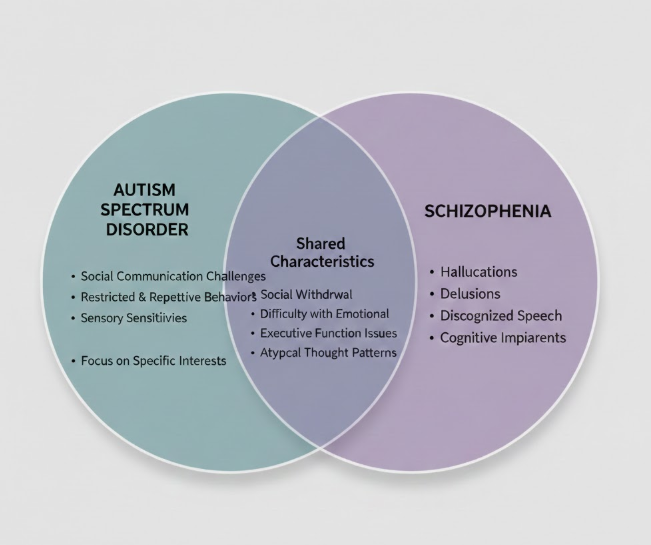
Research shows that autism and schizophrenia can co-occur, though this remains relatively uncommon. Studies suggest people with autism face a slightly higher risk of developing schizophrenia compared to the general population, with estimates ranging from 2-8% versus the general population rate of about 1%.
This overlap complicates diagnosis because some autism traits can resemble schizophrenia symptoms. For instance, a child with autism might engage in intense imaginary play that looks concerning to observers unfamiliar with autism. Similarly, social withdrawal in autism might be mistaken for the negative symptoms of schizophrenia.
Distinguishing between the two requires careful assessment by experienced professionals who understand both conditions. Misdiagnosis can lead to inappropriate treatment, making accurate evaluation critical for effective support.
Genetic and Biological Connections
Recent genetic research reveals shared biological pathways between autism and schizophrenia. Both conditions involve differences in brain development, neurotransmitter function, and synaptic connections. Some genes linked to autism risk also appear in schizophrenia studies, suggesting common genetic vulnerabilities.
However, these shared genetic factors don’t mean the conditions are the same. Instead, they point to overlapping biological mechanisms that can lead to different outcomes depending on when and how they affect brain development. Autism involves early developmental changes, while schizophrenia reflects later disruptions in brain maturation.
Environmental factors also play roles in both conditions. Prenatal complications, infections during pregnancy, and other early life stressors may increase risk for both autism and schizophrenia, though through different mechanisms and at different developmental stages.
Things to Know About Autism and Schizophrenia
Understanding the relationship between these conditions helps families make informed decisions about assessment and treatment:
Social withdrawal looks different in each condition. Children with autism may prefer solitary activities because social interaction feels overwhelming or confusing. In schizophrenia, withdrawal typically stems from paranoia, auditory hallucinations, or loss of motivation that develops suddenly rather than being a lifelong pattern.
Psychotic symptoms in autism require careful evaluation. Some individuals with autism may experience psychosis, but this doesn’t automatically mean they have schizophrenia. Psychotic symptoms can emerge from severe anxiety, trauma, or co-occurring conditions that need different treatment approaches.
Early intervention matters for both conditions. For autism, early behavioral therapy significantly improves outcomes. If schizophrenia symptoms emerge, prompt treatment with medication and therapy reduces severity and helps maintain functioning. Families should seek professional evaluation when they notice concerning changes in behavior or perception.
Medication considerations differ significantly. While antipsychotic medications form the foundation of schizophrenia treatment, they’re used more cautiously in autism. Some children with autism receive these medications for severe aggression or self-injury, but the approach focuses more on behavioral strategies and addressing underlying causes of distress.
If you’re navigating these complex diagnostic questions, Dream Bigger ABA provides comprehensive assessments that help distinguish between autism characteristics and other mental health concerns.
Recognizing Psychosis in People With Autism
Psychosis refers to experiences where someone loses touch with reality, including hallucinations and delusions. When psychotic symptoms appear in someone with autism, professionals must carefully determine whether this represents co-occurring schizophrenia, a reaction to extreme stress, or manifestations of autism itself being misinterpreted.
Some autism characteristics can be mistaken for psychosis:
- Intense imaginary play or creation of detailed fantasy worlds
- Unusual sensory experiences reported in ways that sound like hallucinations
- Rigid beliefs or intense interests that might seem delusional to others
- Echolalia (repeating phrases) that could be confused with disorganized speech
True psychotic symptoms in autism show clear changes from baseline functioning, include genuine hallucinations where the person believes unreal things are actually happening, and typically respond to antipsychotic medication when schizophrenia is truly present.
Risk Factors and Prevention Considerations
While neither autism nor schizophrenia can be prevented entirely, understanding risk factors helps families seek early assessment and support:
| Risk Factor | Connection to Autism | Connection to Schizophrenia |
| Family History | Increases likelihood, especially with siblings with autism | Strong genetic component, higher risk with affected relatives |
| Prenatal Factors | Maternal infections, certain medications, advanced parental age | Maternal stress, infections, nutritional deficiencies |
| Birth Complications | Oxygen deprivation, premature birth | Birth complications that affect brain development |
| Environmental Exposure | Some studies suggest associations with air pollution | Urban environments, childhood trauma, substance use |
Research into causes continues evolving. What we know firmly is that neither condition results from parenting styles, vaccines (despite persistent myths), or lack of willpower. Both reflect complex interactions between genetic predisposition and environmental factors affecting brain development.
For families concerned about regressive autism or other developmental concerns, early screening provides peace of mind and access to appropriate support when needed.

Treatment Approaches: What Works for Each Condition
Effective support requires understanding what each condition needs:
For Autism:
- Applied behavior analysis (ABA) therapy builds communication and social skills
- Speech and occupational therapy address specific challenges
- Sensory integration strategies manage sensory sensitivities
- Educational accommodations support learning differences
- Family training empowers parents to support development
For Schizophrenia:
- Antipsychotic medications reduce hallucinations and delusions
- Cognitive behavioral therapy helps manage symptoms and thoughts
- Family therapy educates loved ones about the condition
- Social skills training rebuilds functioning affected by illness
- Case management coordinates care and community resources
When both conditions co-occur, treatment becomes more complex. A multidisciplinary team must coordinate care, carefully monitoring how treatments for one condition affect the other. Antipsychotic medications require careful dosing in individuals with autism, who may experience side effects differently or have difficulty communicating about medication effects.
Supporting Someone With Both Conditions
Families supporting someone with both autism and schizophrenia face unique challenges. Routines that help manage autism may be disrupted by psychotic episodes. Communication differences from autism can make it harder to recognize when schizophrenia symptoms emerge or worsen.
Creating a stable, predictable environment benefits both conditions. Clear schedules, visual supports, and consistent expectations help someone with autism feel secure while also providing structure that supports mental health stability. Regular communication with healthcare providers ensures any changes in symptoms or functioning get addressed promptly.
Support groups connecting families facing similar situations offer practical strategies and emotional validation. Organizations serving both the autism and mental health communities can provide resources specific to navigating co-occurring conditions.
Exploring ABA therapy in Manassas, VA or similar evidence-based programs helps address autism-related needs while coordinating with psychiatric care for schizophrenia management.
The Importance of Accurate Diagnosis
Distinguishing between autism and schizophrenia requires comprehensive evaluation by professionals experienced with both conditions. Neuropsychological testing, detailed developmental history, and observation across multiple settings help clarify the diagnostic picture.
Misdiagnosis carries significant consequences. Treating autism as schizophrenia may lead to unnecessary medication with serious side effects. Conversely, missing schizophrenia in someone with autism delays critical treatment for a condition that can become progressively more difficult to manage without intervention.
Family input proves invaluable during assessment. Parents and caregivers notice subtle changes in functioning that might signal emerging psychiatric concerns distinct from longstanding autism characteristics. Keeping detailed records of behaviors, sleep patterns, and social interactions helps clinicians identify significant changes.

Looking Toward the Future: Research and Hope
Scientific understanding of both autism and schizophrenia continues advancing rapidly. Neuroimaging studies reveal how brain networks develop differently in each condition. Genetic research identifies specific variations that increase risk, potentially leading to more targeted interventions.
Emerging treatments show promise. For autism, researchers explore medications targeting core social communication challenges. For schizophrenia, new antipsychotics with fewer side effects and innovative therapies like cognitive remediation help people maintain better functioning.
Most importantly, society’s understanding of neurodiversity expands. People with autism and those with schizophrenia increasingly advocate for themselves, sharing their experiences and challenging stigma. This cultural shift supports better inclusion, accommodation, and respect for different ways of experiencing the world.
Families looking for current, evidence-based information about theory of mind in autism or other aspects of autism development can find reliable resources that reflect the latest research and most compassionate approaches to support.
Final Reflections on Autism and Schizophrenia
Autism and schizophrenia represent distinct neurological conditions that occasionally intersect but require different understanding and support approaches. While both involve differences in how the brain processes information, they emerge at different life stages, present with different symptoms, and respond to different interventions.
Families navigating these complex diagnostic questions benefit from working with professionals who understand both conditions deeply. Accurate assessment leads to appropriate support, whether that means early intervention for autism, psychiatric treatment for schizophrenia, or coordinated care when both conditions co-occur.
At Dream Bigger ABA, we believe every person deserves understanding, respect, and support tailored to their unique needs. Whether your family is exploring autism evaluation, seeking behavioral therapy, or coordinating care for complex co-occurring conditions, we’re here to help. Understanding the differences between autism and schizophrenia empowers families to advocate effectively and access the right resources at the right time.
Frequently Asked Questions
Is there a connection between schizophrenia and autism?
Yes, research shows a connection, though the conditions remain distinct. Studies indicate people with autism have a slightly higher risk of developing schizophrenia (2-8%) compared to the general population (about 1%). Both conditions share some genetic factors and involve differences in brain development, but they emerge at different life stages and require different treatments. Autism appears in early childhood, while schizophrenia typically develops in late adolescence or early adulthood. Having autism doesn’t mean someone will develop schizophrenia, but awareness of the connection helps families seek evaluation if concerning symptoms emerge.
What is psychosis in autism?
Psychosis in autism refers to episodes where someone experiences hallucinations or delusions that represent a clear change from their usual functioning. This differs from autism characteristics that might superficially resemble psychosis, like intense imaginary play or unusual sensory experiences. True psychotic symptoms involve believing things are real when they’re not, hearing voices that aren’t there, or developing paranoid beliefs. When psychosis occurs in someone with autism, careful evaluation determines whether it indicates co-occurring schizophrenia, extreme stress responses, or another mental health condition requiring specific treatment approaches.
What is 90% of autism caused by?
No single factor causes 90% of autism cases. This statistic doesn’t accurately represent current scientific understanding. Autism results from complex interactions between multiple genetic variations (likely hundreds of genes contribute small amounts of risk) and environmental factors during prenatal development and early childhood. Research indicates genetics contribute 60-90% of autism risk overall, but this involves many different genetic variants rather than one cause. Environmental factors like advanced parental age, prenatal complications, or maternal infections during pregnancy may also influence risk. The causes remain actively researched, and no single explanation accounts for most cases.
Which parent carries the autism trait?
Autism genetic risk can come from either parent or arise as new mutations. Research shows that both mothers and fathers contribute genetic variations associated with autism risk. Some studies suggest fathers may pass down more autism-related genetic changes, particularly with advanced paternal age, while other research identifies maternal genetic contributions. In many cases, both parents carry genetic variants that individually have small effects but together increase autism likelihood. Additionally, spontaneous genetic changes occurring during conception can lead to autism without being inherited from either parent. Family history on both sides matters when assessing genetic risk.
Who was case #1 of autism?
Donald Triplett, born in 1933, was the first person formally diagnosed with autism. Dr. Leo Kanner documented Donald’s case in his landmark 1943 paper describing 11 children with similar unusual behaviors and communication patterns. Donald lived in Forest, Mississippi, and displayed the characteristics Kanner identified as “early infantile autism.” He lived a relatively full life, maintained community connections, and passed away in 2023 at age 89. His case helped define autism as a distinct condition, though we now understand autism existed long before its formal medical recognition. Historical figures like Sir Isaac Newton may have been autistic, though retrospective diagnosis remains speculative.