A board certified behavior analyst Lawton families can trust is a licensed professional trained to design, supervise, and evaluate applied behavior analysis (ABA) therapy programs for individuals with autism and related developmental conditions. If your child has recently received an autism diagnosis or you suspect behavioral challenges that need structured intervention, finding a qualified BCBA in Lawton, Oklahoma is one of the most important steps you can take.
Key Takeaways
- A BCBA must hold a master’s degree, pass a national exam, and complete supervised fieldwork hours before practicing.
- ABA therapy is the most evidence-based treatment approach for autism spectrum disorder, recognized by major U.S. health organizations.
- Lawton, Oklahoma families should verify a provider’s credentials through the Behavior Analyst Certification Board (BACB) national registry before committing.
- Insurance coverage for ABA therapy in Oklahoma is mandated under state law, but coverage details vary by plan.
- Early intervention, typically before age five, produces the strongest long-term outcomes for children with autism.
- A good BCBA will assess your child’s individual needs and build a custom treatment plan, not a one-size-fits-all program.
What a BCBA Actually Does (and Why the Credential Matters)
Not everyone who offers behavioral therapy holds the same qualifications. A board certified behavior analyst (BCBA) has completed a minimum of a master’s degree in behavior analysis or a related field, logged between 1,000 and 2,000 supervised fieldwork hours, and passed the BACB national certification exam. This is a federally recognized credential, and it carries significant weight when insurance companies, school districts, and medical providers evaluate a treatment team.
In Lawton, as in the rest of Oklahoma, BCBAs work in clinic settings, school environments, and private homes. Their core responsibilities include:
- Conducting functional behavior assessments (FBAs) to identify the root causes of challenging behaviors
- Writing individualized treatment plans based on measurable goals
- Training and supervising Registered Behavior Technicians (RBTs) who deliver direct therapy
- Collecting and reviewing data weekly to adjust programming
- Collaborating with parents, teachers, and other specialists
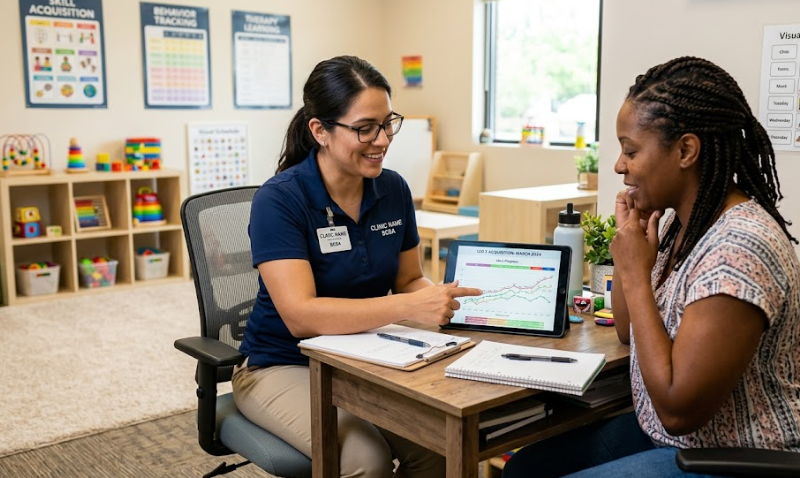
The distinction between a BCBA and a Behavior Technician matters enormously. RBTs carry out sessions, but a BCBA is responsible for every clinical decision. When you are evaluating providers in the Lawton area, always ask who supervises the therapy team and how often the BCBA directly observes sessions.
How ABA Therapy Works in Practice for Lawton Families
ABA therapy is not a single technique. It is a framework built on the science of learning and behavior, and a skilled BCBA uses dozens of evidence-based strategies within that framework. Common approaches include Discrete Trial Training (DTT), Natural Environment Teaching (NET), Pivotal Response Treatment (PRT), and token economy systems.
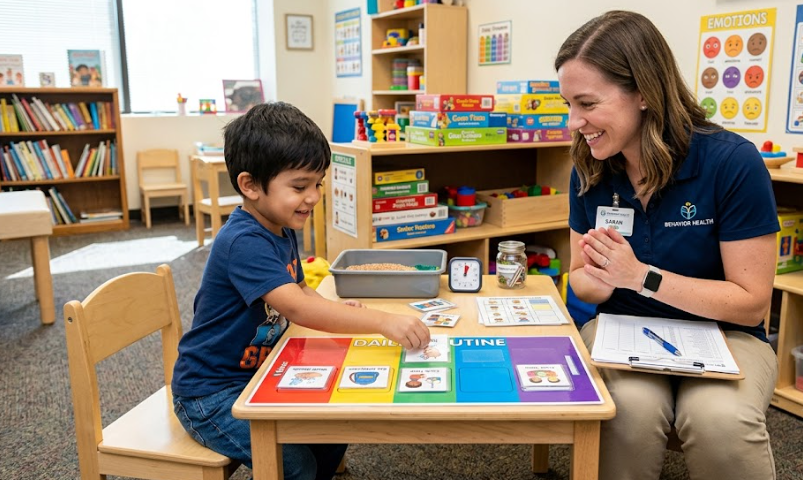
Before any therapy begins, your child’s BCBA will conduct a comprehensive intake assessment. This typically includes parent interviews, direct observation of the child, and standardized assessments like the ABLLS-R or VB-MAPP. The results inform a Behavior Intervention Plan (BIP) with specific, measurable goals.
For children who have experienced setbacks during transitions or stressful periods, understanding skill regression in autism is a critical piece of context for your BCBA. Regression is not a sign that therapy has failed. It is a clinical signal that the treatment plan needs adjustment, and a competent BCBA will track these patterns through consistent data collection.
Therapy intensity varies based on the child’s needs. Many children receive between 10 and 40 hours of therapy per week, a range supported by research from the U.S. Surgeon General and the American Academy of Pediatrics. In Lawton, providers typically offer both center-based and in-home services, so families have flexibility depending on work schedules and transportation.
What the Intake Process Looks Like
The first few weeks with a new BCBA generally follow this sequence:
- Initial consultation and insurance verification
- Comprehensive evaluation and parent interview
- Development of the individualized treatment plan
- Review and sign-off meeting with the family
- Start of therapy sessions with assigned RBTs
- Monthly or bi-monthly BCBA supervision and parent training sessions
Parents are not passive observers in this process. Parent training is a core component of high-quality ABA, and your BCBA should be equipping you with strategies to reinforce skills at home between sessions.
Specific Challenges a BCBA in Lawton Can Address
ABA therapy covers a wide range of behavioral and developmental goals. Families often enter the process focused on one issue, such as tantrums or language delays, and later realize how many interconnected areas a strong BCBA can support.
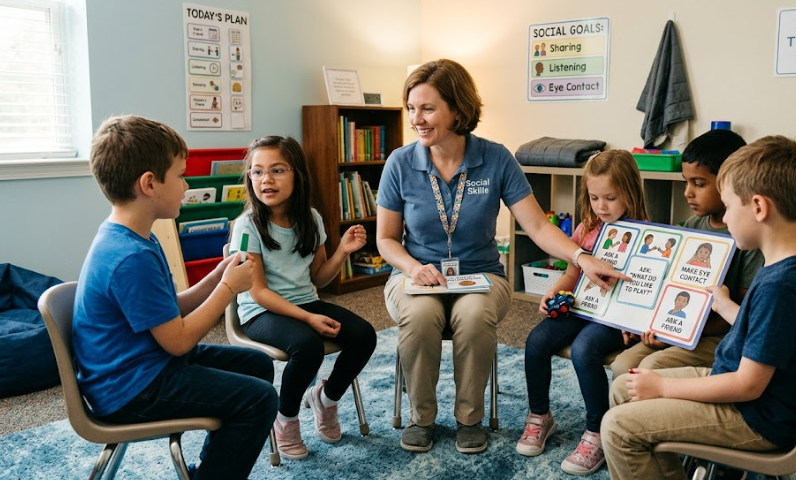
One area that is often underestimated is social skills training for autism. Many children with autism understand the desire to connect with peers but lack the specific behavioral tools to do so consistently. A BCBA can build structured social skills programs using group therapy, role-play, and community outings to practice real-world interaction in a supported setting.
Another common area of focus is executive dysfunction and autism. Many individuals on the spectrum struggle with planning, task initiation, flexible thinking, and emotional regulation. These are not personality traits; they are behavioral patterns with measurable roots, and they respond well to targeted ABA strategies like visual schedules, prompting hierarchies, and reinforcement systems.
A BCBA can also work in coordination with your child’s school team. In Oklahoma, BCBAs often collaborate with Individualized Education Program (IEP) teams to ensure that behavioral goals at school are consistent with what is being practiced in therapy. This coordination is especially relevant in Lawton, where families navigating both private therapy and public school services need a provider who understands both systems.
How to Verify and Choose a BCBA in Lawton, Oklahoma
The first step in vetting any provider is visiting the BACB’s public certificate registry at bacb.com. You can search by name or location and confirm that a provider’s certification is active and in good standing. Oklahoma does not require a separate state license for BCBAs beyond the national BACB credential, but you should still verify that any provider billing your insurance has the appropriate NPI number and is credentialed with your specific plan.
| Criteria | What to Look For | Red Flag |
| Credentials | Active BCBA certification on BACB registry | Cannot confirm certification status |
| Supervision model | BCBA directly observes sessions at least monthly | Only RBTs deliver all contact hours |
| Data practices | Weekly data reviewed and shared with family | No formal data collection system |
| Parent involvement | Regular parent training sessions included | Parents excluded from planning process |
| Insurance billing | In-network with major Oklahoma plans | Requires all out-of-pocket payment |
| Treatment philosophy | Goals built around your child’s individual needs | Rigid program with no customization |
Oklahoma’s autism insurance mandate requires most state-regulated insurance plans to cover ABA therapy. However, self-funded employer plans regulated under ERISA are not subject to state law, so always confirm directly with your insurance provider. Most Lawton families using Medicaid (SoonerCare) will find ABA therapy covered, though authorization requirements and session limits apply.
When you call a provider for the first time, ask these specific questions:
- What is your BCBA-to-client ratio?
- How often will the supervising BCBA observe my child’s sessions directly?
- How do you involve parents in treatment planning?
- What assessments do you use at intake and to measure progress?
The Role of Diagnostic and Genetic Information in ABA Planning
A BCBA does not diagnose autism. That step happens before ABA therapy begins, typically through a psychologist, developmental pediatrician, or neurologist. However, understanding your child’s full diagnostic picture can help your BCBA design a more targeted program.
Some families are exploring genetic testing for autism as part of their diagnostic process. While genetic testing does not change a child’s ABA treatment directly, it can reveal co-occurring conditions, metabolic factors, or neurological profiles that inform how a BCBA approaches specific behaviors. For example, a child with a known genetic syndrome associated with sensory hypersensitivity may need a modified environment or pacing strategy from the start.
Your BCBA should always be receptive to medical and diagnostic information from your child’s full care team. The most effective ABA programs in Lawton operate within a collaborative, multidisciplinary framework where behavioral goals are aligned with medical management, speech therapy, occupational therapy, and educational planning.
Things to Know
- Oklahoma requires most insurance plans to cover ABA therapy, but always call your insurance provider directly to confirm your specific plan’s terms and annual limits.
- The BACB registry is free to search and verifies whether a BCBA’s certification is current and in good standing.
- “Autism therapy” is a broad term. Only ABA supervised by a credentialed BCBA is recognized as evidence-based treatment by the American Academy of Pediatrics and the U.S. Surgeon General.
- Waitlists for qualified BCBAs in smaller Oklahoma cities like Lawton can run from 4 to 12 weeks. Starting the search early matters.
- Some providers offer telehealth-based BCBA consultation for parent training and supervision, which can bridge gaps while you wait for in-person services.
- Not every behavior challenge requires 40 hours a week of therapy. A good BCBA will recommend intensity based on assessment data, not a preset package.
The Bottom Line on Board Certified Behavior Analyst Lawton
Choosing the right board certified behavior analyst Lawton families can rely on is not just a logistical task. It is one of the most impactful clinical decisions you will make for your child’s development. The credential, the supervision model, the family involvement practices, and the data-driven approach all combine to determine whether your child’s therapy will produce real, lasting change or simply fill up calendar hours.
Start by verifying credentials through the BACB registry, confirming your insurance coverage, and asking every provider the specific questions outlined in this article. If you are currently on a waitlist, use that time to read up on how ABA works, build your own understanding of your child’s behavioral patterns, and connect with local autism family networks in Lawton. The more informed you are when therapy begins, the better your partnership with your BCBA will be.
Frequently Asked Questions
How do I find a board certified behavior analyst Lawton families can access with SoonerCare?
Oklahoma SoonerCare covers ABA therapy for children with an autism diagnosis, and you can search for BCBA providers through the SoonerCare provider directory at oklahoma.gov. You will need a primary care physician referral and an autism diagnosis from a licensed diagnostician before SoonerCare will authorize services. Once authorized, your BCBA will submit a treatment plan for approval, which can take a few weeks.
At what age should my child start ABA therapy?
Research consistently shows that ABA therapy started before age five produces the strongest long-term outcomes, though therapy is beneficial at any age. Early intervention targets foundational skills like communication, attention, and play during the period when the brain is most adaptable. That said, older children and even teenagers can make significant gains with well-designed ABA programs.
How long does ABA therapy typically last?
Most children receive ABA therapy for two to four years, though the exact duration depends on the child’s goals and rate of progress. Your BCBA should set regular review points, typically every six months, to assess whether goals have been met and whether the intensity of therapy should increase or decrease based on data.
Can a BCBA work with my child’s school team in Lawton?
Yes, a BCBA can collaborate with your child’s IEP team and provide consultation to teachers and school staff. Many Lawton families find that connecting their private BCBA with school staff creates more consistent behavioral expectations across settings, which speeds up skill generalization and reduces confusion for the child.
What is the difference between a BCBA and a BCaBA?
A BCaBA (Board Certified Assistant Behavior Analyst) holds a bachelor’s-level credential and must work under the supervision of a BCBA at all times. BCaBAs cannot independently design or oversee treatment programs. All clinical decisions must be approved and monitored by a fully credentialed BCBA, which is why it is important to confirm the supervisory structure of any therapy team you are considering.