Finding the right support for a child with autism or other behavioral challenges can feel overwhelming. A board certified behavior analyst Norman families can trust will design individualized, evidence-based treatment plans that address your child’s specific needs, from communication skills to daily living routines.
Key Takeaways
- A BCBA holds a graduate-level credential and must pass a rigorous national exam before practicing.
- ABA therapy is the gold standard for autism treatment and is backed by decades of peer-reviewed research.
- Norman, Oklahoma has a growing network of BCBA-led clinics, school-based providers, and in-home therapy options.
- Insurance coverage for ABA in Oklahoma is legally mandated for most plans, reducing out-of-pocket costs for families.
- The right BCBA will involve you in goal-setting, data collection, and progress reviews every step of the way.
- Starting with a comprehensive assessment, including screening for co-occurring challenges like executive dysfunction, produces the best outcomes.
What a BCBA Actually Does (and Why the Credential Matters)
The title “behavior analyst” is used loosely by many providers, but a Board Certified Behavior Analyst (BCBA) is a licensed professional who has met strict educational and ethical standards set by the Behavior Analyst Certification Board (BACB). To earn the credential, a candidate must hold at least a master’s degree in behavior analysis or a related field, complete 2,000 hours of supervised fieldwork, and pass the BACB national examination. Recertification is required every two years and includes continuing education requirements.
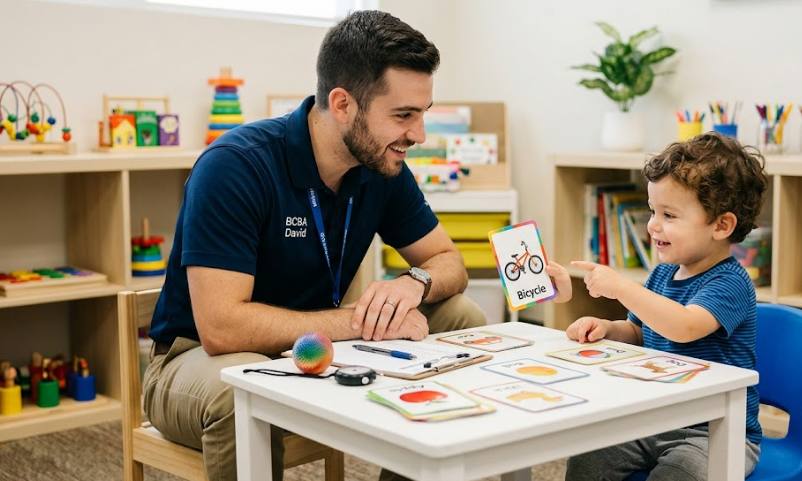
In practical terms, a BCBA does not simply run sessions with children. They conduct functional behavior assessments, interpret data, write individualized treatment programs, supervise Registered Behavior Technicians (RBTs) who deliver direct therapy, and collaborate with schools, pediatricians, and families. They are the clinical decision-maker behind every ABA program.
Why does this matter to Norman families specifically? Oklahoma has seen a significant increase in demand for autism services over the past decade. The Centers for Disease Control and Prevention (CDC) reports that approximately 1 in 36 children in the United States is diagnosed with autism spectrum disorder (ASD). As awareness grows, so does the number of providers offering behavior support services, and not all of them carry the BCBA credential. Verifying a provider’s credential through the BACB’s public registry takes less than two minutes and protects your child from receiving substandard care.
How ABA Therapy Works in a Norman Setting
Applied Behavior Analysis (ABA) is a scientific approach to understanding how behavior is influenced by the environment. BCBAs use principles derived from decades of research to increase helpful behaviors (like communication and self-care) and reduce harmful or limiting behaviors (like self-injury or aggression). Every technique is data-driven: therapists record session data in real time, and the supervising BCBA analyzes that data to adjust the program.
In Norman, ABA therapy is delivered in several formats:
- Clinic-based therapy: The child attends sessions at a dedicated ABA clinic, typically for 10-40 hours per week depending on the treatment plan. Clinic settings allow for structured skill-building and social opportunities with peers.
- In-home therapy: An RBT comes to the family’s home, which allows skills to be taught in the natural environment where generalization is easier.
- School-based services: Some BCBAs contract with Norman Public Schools or other local districts to provide consultation and support within the classroom.
- Telehealth parent coaching: Especially useful for families in surrounding areas, this model trains caregivers to implement strategies during everyday routines.
The BACB’s ethics code requires BCBAs to use the least restrictive, most naturalistic interventions possible. This means modern ABA looks very different from older, more rigid models. Sessions today often involve play-based learning, child-led activities, and heavy emphasis on family involvement.
Understanding your child’s diagnostic profile is a key first step. Many children receiving ABA services also experience co-occurring conditions. For example, parents of children who struggle with planning, organization, and task initiation may want to read about executive dysfunction and autism, as these challenges directly shape the goals a BCBA will prioritize in treatment.
The Assessment Process: What to Expect Before Therapy Begins
Before any ABA program starts, a BCBA conducts a thorough initial assessment. Skipping or rushing this step is a red flag. A quality assessment typically includes:
- A review of prior evaluations, school records, and medical history.
- Direct observation of the child in multiple settings.
- Standardized skill assessments such as the VB-MAPP, ABLLS-R, or ADOS-2.
- Parent and caregiver interviews to capture the child’s strengths, preferences, and challenging behaviors in context.
- A functional behavior assessment (FBA) if problem behaviors are a primary concern.
This process usually takes one to three weeks and results in a written Behavior Intervention Plan or Individualized Treatment Plan. The BCBA should walk you through the plan in detail, explain the rationale behind every goal, and invite your feedback before therapy begins.
For families navigating a recent diagnosis, it also helps to understand the formal diagnostic criteria. The dsm 5 criteria for autism outlines the specific social communication and restricted/repetitive behavior patterns that qualify a child for an ASD diagnosis, and BCBAs use this framework to ensure treatment goals are clinically appropriate.
Insurance, Costs, and Oklahoma State Law
One of the most common concerns families raise is cost. The good news for Oklahoma residents is that state law requires most insurance plans to cover ABA therapy. Oklahoma’s autism insurance reform legislation mandates coverage for children with ASD under most commercial insurance plans. This coverage typically includes:
| Coverage Type | What It Includes | Typical Limits |
| Commercial insurance (ACA-compliant) | BCBA assessments, RBT direct therapy, parent training | Varies by plan; no annual dollar caps under ACA |
| SoonerCare (Oklahoma Medicaid) | ABA therapy with proper diagnosis and prior authorization | Coverage for children under 21 |
| Employer-sponsored plans | Often mirrors ACA requirements, check your summary plan description | Confirm ABA is not carved out |
| Tricare (military families) | ABA covered for dependents with autism diagnosis | Hours may be limited by authorization |
Before your first appointment, call your insurance company and ask specifically whether ABA therapy is covered, whether the provider must be in-network, and what documentation is required for prior authorization. Most reputable Norman ABA providers have billing specialists who can walk you through this process.
Out-of-pocket costs, when they apply, typically range from $120 to $200 per hour for BCBA direct services and $50 to $120 per hour for RBT-delivered therapy. For families who qualify, Oklahoma’s Developmental Disabilities Services (DDS) can also help fund services.
Red Flags and Green Flags When Choosing a Provider
Not every ABA provider in the Norman area offers the same quality of care. Knowing what to look for protects your family from wasted time and, more importantly, from ineffective or even harmful treatment.
Green flags to look for:
- The supervising BCBA holds an active BACB credential (verify at bacb.com).
- The provider conducts a full assessment before starting therapy.
- You receive a written treatment plan with measurable goals.
- The BCBA meets with your family regularly, at least monthly, to review data and progress.
- The therapy approach includes naturalistic teaching and caregiver training, not just discrete trials in a sterile room.
- Staff turnover is low, which indicates a healthy workplace culture and consistent care for your child.
Red flags to watch for:
- A provider who recommends a set number of therapy hours before completing any assessment.
- No clear process for measuring progress or adjusting the program.
- Pressure to sign a long-term contract before you have reviewed the treatment plan.
- Supervisory BCBAs who are rarely on-site or unavailable to answer your questions.
- Claims that ABA can “cure” autism, which is not aligned with current ethical standards.

Co-Occurring Conditions BCBAs Address in Norman
Autism rarely presents in isolation. Many children receiving ABA therapy in Norman also experience anxiety, ADHD, sensory processing differences, or other challenges that directly affect behavior. A skilled board certified behavior analyst Norman residents rely on will account for these co-occurring factors when building a treatment plan, rather than applying a one-size-fits-all curriculum.
One condition that often goes unrecognized in autistic individuals is rejection sensitive dysphoria (RSD), an intense emotional response to real or perceived rejection, criticism, or failure. This can manifest as meltdowns, school refusal, or avoidance of social situations. Understanding rejection sensitive dysphoria and autism can help parents and BCBAs design interventions that address emotional regulation rather than just surface-level behavior.
BCBAs may also collaborate with speech-language pathologists (SLPs) for communication goals, occupational therapists (OTs) for sensory and fine motor work, and psychologists for diagnostic support. In Norman, several multidisciplinary clinics offer coordinated care under one roof, which simplifies scheduling and improves communication across providers.
Things to Know
- BCBA vs. BCaBA: A BCaBA (Board Certified Assistant Behavior Analyst) holds a bachelor’s-level credential and must practice under BCBA supervision. They are not equivalent.
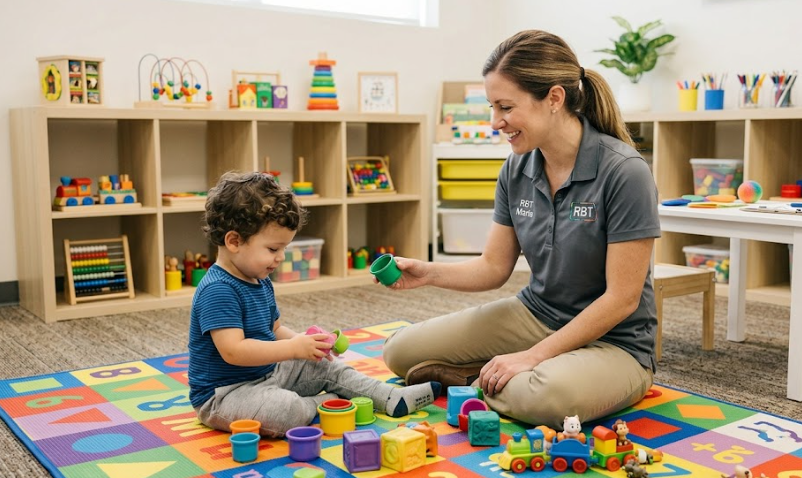
- RBTs are not BCBAs: Your child will likely spend most therapy hours with an RBT, not the BCBA. Ask how many hours per week the BCBA will directly observe and supervise your child’s sessions.
- More hours are not always better: The appropriate therapy dose depends on the child’s age, skill level, and goals. Quality supervision matters more than raw hour counts.
- Progress should be measurable: If you have been in a program for three months and no data graphs have been shared with you, ask for them.
- Parent training is part of the program: Oklahoma insurance mandates typically include parent training as a covered service. Use it. Your participation accelerates your child’s progress significantly.
- Waitlists are common: Quality ABA providers in Norman often have waitlists of three to six months. Start your search and submit applications early.
The Bottom Line on Board Certified Behavior Analyst Norman
Choosing a board certified behavior analyst Norman families can rely on is one of the most important decisions you will make for your child’s development. The credential itself signals rigorous training and ethical accountability, but your job does not stop at verifying the BCBA’s license. Ask questions, attend sessions, review data, and expect a collaborative relationship where your input shapes the treatment.
Start by confirming your insurance benefits, getting your child on one or two waitlists with reputable Norman providers, and gathering any prior evaluations or school records you already have. The sooner you begin that process, the sooner your child can access the support they deserve.
Frequently Asked Questions
How do I verify that a provider in Norman is actually a BCBA?
You can verify any BCBA’s credential for free on the BACB’s official website at bacb.com by searching their name or certificate number.
The public registry shows whether the credential is active, when it expires, and whether any disciplinary actions have been taken. Never rely solely on a provider’s website or business card to confirm credentials.
What age is best to start ABA therapy?
Research consistently shows that early intervention, typically between ages 2 and 5, produces the strongest long-term outcomes for children with autism.
That said, ABA therapy can be effective across the lifespan. Older children, teenagers, and even adults can benefit from behavior analytic support, particularly for life skills, vocational training, and managing challenging behaviors.
How long will my child need ABA therapy?
There is no universal timeline. Duration depends on the child’s goals, severity of needs, and rate of progress.
Some children reach their goals and transition out of intensive services within one to two years. Others continue with reduced hours for ongoing support. The BCBA should set clear benchmarks so you always know what success looks like and when a reduction in services is appropriate.
Can a BCBA work with my child’s school in Norman?
Yes, many BCBAs in Norman provide school consultation services, attending IEP meetings, training teachers, and observing classrooms to support generalization of skills.
This collaboration is especially valuable when challenging behaviors are occurring in both home and school settings. You can request that your BCBA communicate directly with your child’s special education team.
Does my child need a formal autism diagnosis to receive ABA therapy?
Most insurance plans require a formal ASD diagnosis for ABA to be covered, though some BCBAs do work with children who have other diagnoses like ADHD or developmental delays.
A developmental pediatrician, licensed psychologist, or neurologist typically completes the diagnostic evaluation. If you are still in the diagnostic process, you can begin contacting ABA providers early so you are ready to start once the diagnosis is confirmed.