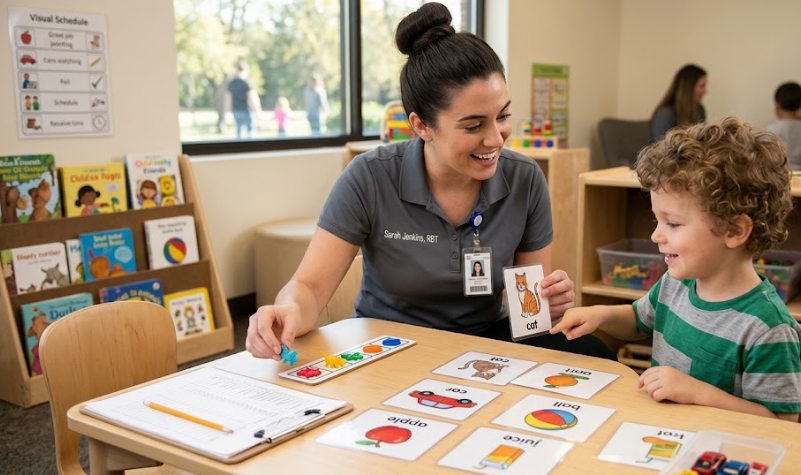
If you’ve recently heard the name “RBT Vixey” in an ABA therapy context, you’re likely trying to understand what a Registered Behavior Technician actually does and how this role supports children with autism. An RBT is a paraprofessional who delivers applied behavior analysis (ABA) therapy directly to clients, typically under the close supervision of a Board Certified Behavior Analyst (BCBA).
Key Takeaways
- An RBT (Registered Behavior Technician) is a front-line ABA provider who works directly with clients under BCBA supervision.
- RBT Vixey content across social media platforms highlights real-world therapy interactions, helping families see what sessions actually look like.
- ABA therapy targets a wide range of skills including communication, self-regulation, daily living routines, and reducing challenging behaviors.
- Families considering ABA should understand that session goals are individualized and built from formal assessments like the dsm 5 criteria for autism.
- RBTs are trained to implement behavior intervention plans consistently, which is critical to client progress.
- Knowing what your child’s RBT is working on helps you reinforce those same skills at home, dramatically improving outcomes.
Who Is RBT Vixey and Why Does the Name Matter?
The term “RBT Vixey” has surfaced frequently on platforms like TikTok, YouTube, and Instagram, where content creators in the ABA field share their day-to-day experiences as Registered Behavior Technicians. Vixey, in this context, refers to a specific creator or practitioner who has built a following by documenting her work, professional growth, and interactions within the ABA therapy space.
This kind of content matters because it pulls back the curtain on a field that many families only encounter during a crisis, when their child has just received an autism diagnosis and they’re scrambling for answers. Watching an actual RBT walk through session strategies, explain why certain prompting techniques are used, or describe how they handle meltdowns gives parents a more grounded, realistic expectation of what therapy looks like.
It also matters from a recruitment standpoint. The demand for qualified RBTs in the United States has grown significantly alongside rising autism diagnosis rates. According to the CDC, approximately 1 in 36 children in the U.S. is diagnosed with autism spectrum disorder. Watching relatable, real-world content from practitioners like RBT Vixey has drawn thousands of people into the field who might not have considered it otherwise.
What an RBT Actually Does Day to Day
An RBT’s job is fundamentally about consistency and precision. Each session is guided by a behavior intervention plan (BIP) designed by a supervising BCBA. The RBT implements that plan, collects data on every target behavior or skill, and communicates observations back to the BCBA. That feedback loop is what drives clinical decisions about what to continue, adjust, or phase out.
A typical session might include:
- Discrete trial training (DTT): Structured teaching of specific skills in short, repeated trials with clear prompts and reinforcement.
- Natural environment teaching (NET): Embedding learning into play or everyday routines so skills generalize beyond the therapy table.
- Behavior reduction targets: Systematically addressing behaviors that interfere with learning or safety, such as self-injury, aggression, or elopement.
- Daily living skills: Working on tasks like tooth brushing, shoe tying, or meal prep, depending on the client’s age and goals.
- Communication targets: Building functional communication through speech, picture exchange systems, or speech-generating devices.
One area that often surprises families is how much behavior an RBT is trained to identify and understand. For example, if a child repeatedly chews on their clothing, that’s not dismissed as a quirk, and understanding whether is chewing clothes a sign of autism is essential to building an appropriate intervention. An RBT is trained to take data on the frequency and context of such behaviors so the BCBA can analyze the function and respond accordingly.
The Training and Certification Behind the Role
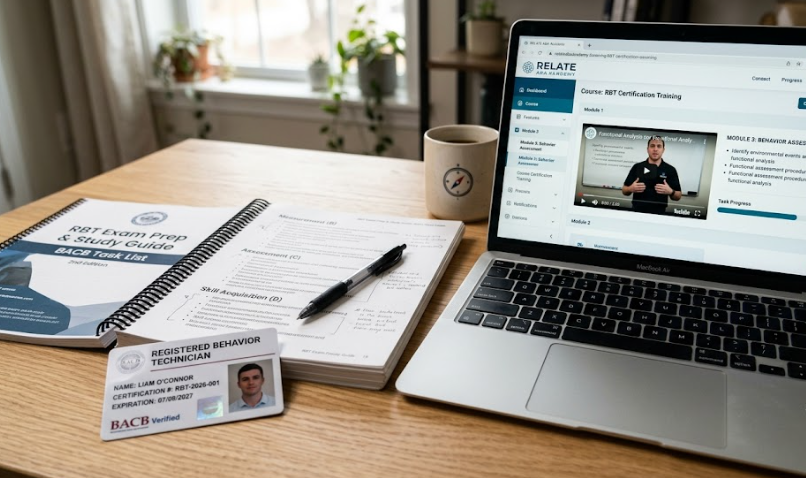
Becoming an RBT is not a casual process. The Behavior Analyst Certification Board (BACB) sets strict national requirements. To earn the RBT credential, a candidate must:
- Be at least 18 years old.
- Hold a high school diploma or equivalent.
- Complete a 40-hour training program aligned with the RBT Task List.
- Pass a background check.
- Complete an initial competency assessment conducted by a qualified supervisor.
- Pass the RBT examination administered by the BACB.
- Maintain the credential through annual renewal, ongoing supervision, and a competency reassessment.
That 40-hour training covers a substantial amount of ground, including measurement, skill acquisition, behavior reduction, documentation, and professional conduct. The RBT Task List, now in its second edition, is the governing document for what RBTs are expected to know and do.
Ongoing supervision is also a non-negotiable requirement. RBTs must receive a minimum of 5% supervision of their total monthly service hours, with at least one observation per month. This structure ensures quality control and protects clients, many of whom are highly vulnerable individuals who cannot always self-advocate.
What Families Should Understand About ABA Goals
ABA therapy goals are not one-size-fits-all. Before any therapy begins, a comprehensive assessment is conducted to identify the client’s current skill levels across multiple domains. These assessments are directly informed by the diagnostic criteria used to establish an autism diagnosis, and reviewing the diagnostic standards can provide important context for understanding how dsm 5 criteria for autism connects to your child’s therapy goals and the deficits and differences that ABA therapy is designed to address.
Goals are written to be measurable and time-bound. A goal isn’t “improve communication.” It’s something like: “Given a preferred item held by the therapist, the client will request the item using a two-word phrase in 8 out of 10 trials across three consecutive sessions.” That specificity is what makes ABA both powerful and sometimes misunderstood. The precision can feel clinical, but it’s what allows practitioners to track progress objectively and demonstrate that therapy is working.
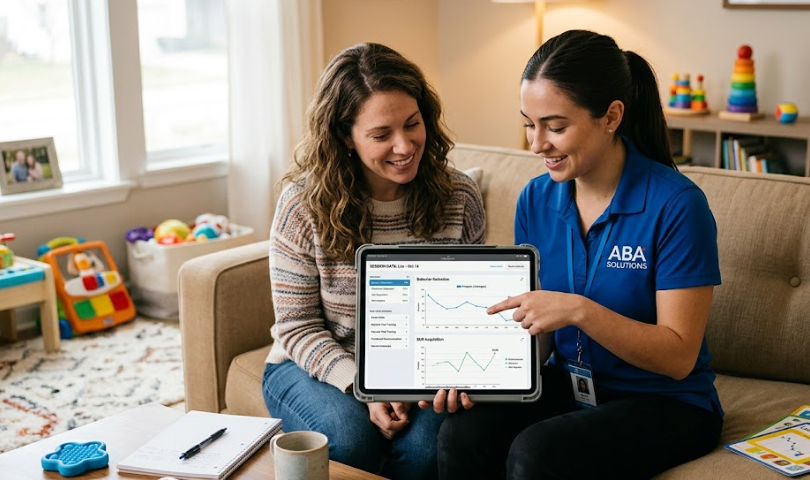
Families also play a critical role. Parents who understand what their child’s RBT is working on and why are far better positioned to reinforce those same behaviors at home. A skill that only shows up in the therapy room isn’t a generalized skill. Generalization across people, settings, and materials is the real measure of success.
| Therapy Goal Area | Example Target | Common Measurement Method |
| Communication | Request items using 2-word phrases | Frequency per session |
| Social skills | Take turns in a simple board game | Percentage of opportunities |
| Self-regulation | Use a calming strategy when frustrated | Rate of behavior per hour |
| Daily living | Wash hands independently | Task analysis (steps correct) |
| Challenging behavior | Reduce hitting during transitions | Frequency count |
Emotional and Behavioral Complexity in ABA Clients
Working with autistic individuals means working with the full complexity of how autism presents. Two areas that RBTs frequently encounter in practice are emotional regulation difficulties and executive functioning challenges.
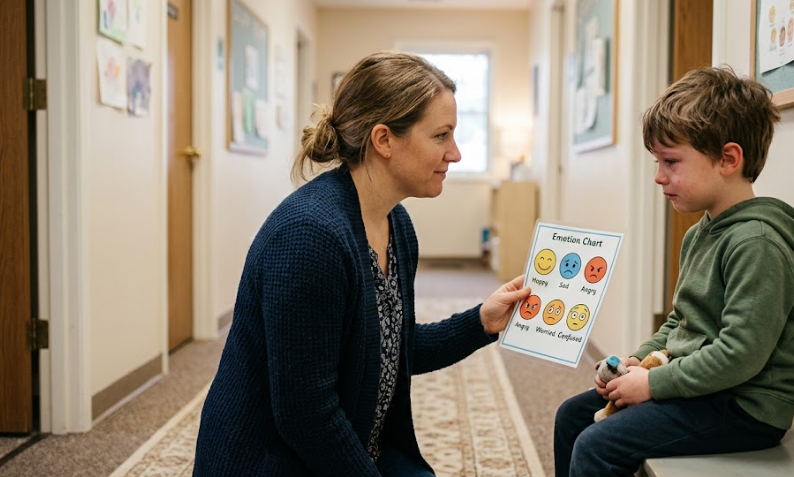
Some clients, particularly older children and adolescents, experience intense emotional reactions to perceived criticism or rejection, and learning about rejection sensitive dysphoria and autism helps RBTs and families recognize when what looks like a disproportionate reaction to correction or failure is actually a deeply felt, neurologically rooted experience. Knowing this changes how an RBT delivers feedback, structures demands, and responds when a session goes sideways.
Similarly, understanding executive dysfunction and autism is critical for designing sessions that set clients up for success rather than repeated frustration. Executive dysfunction affects planning, task initiation, cognitive flexibility, and working memory. An RBT who understands this won’t assume that a child “won’t” start a task. They’ll recognize the child likely “can’t” without the right supports, and they’ll build scaffolding accordingly.
This is where experienced RBTs, like those who share content through channels like RBT Vixey, provide real value. The lived, session-by-session experience of navigating these nuances can’t be fully captured in a textbook. Watching how a seasoned practitioner responds to a client’s emotional crisis, prompts a reluctant task initiator, or pivots a plan mid-session builds a kind of practical competency that certification training alone doesn’t always create.
Things to Know
- RBTs are paraprofessionals, not BCBAs. They implement plans designed by a BCBA and are not authorized to independently design or modify behavior programs.
- Supervision hours are tracked. The BACB requires documentation of all supervision, and if your provider isn’t doing this, that’s a red flag worth raising.
- ABA is not only for young children. RBTs work with clients across the lifespan, including teenagers and adults, depending on the agency or setting.
- Insurance coverage varies significantly. Most U.S. states have autism insurance mandates, but coverage limits, age caps, and annual hour caps differ by state and plan. Verify your benefits before assuming full coverage.
- Progress isn’t always linear. Behavior often gets temporarily worse before it gets better when an intervention first starts. This is a well-documented phenomenon in ABA called an extinction burst.
- Content creators in ABA should not share identifiable client information. Ethical practitioners who post therapy-related content must never reveal details that could identify a minor client, regardless of platform.
The Bottom Line on RBT Vixey
The interest in RBT Vixey and similar content creators reflects something real: families affected by autism are hungry for transparent, practical information about the therapy their children receive, and professionals entering the field want to see what the job actually looks like before they commit. That kind of authentic documentation has real value when it’s done ethically and accurately.
If you’re a parent, the most important takeaway is to stay engaged with your child’s therapy team. Ask your RBT what goals they worked on each session. Ask your BCBA why those goals were chosen and what data looks like over time. The more you understand, the better you can support your child’s progress beyond the therapy room.
If you’re considering a career as an RBT, start by reviewing the BACB’s official RBT Handbook, locating a reputable ABA agency in your area that offers training pathways, and completing your 40-hour training through an accredited program. The field needs dedicated, well-trained practitioners, and the demand is not slowing down.
Frequently Asked Questions
What does an RBT do differently than a BCBA?
An RBT implements therapy plans, while a BCBA designs them, supervises the RBT, and makes all clinical decisions.
The BCBA holds the higher certification and is responsible for assessments, goal writing, and program modifications. The RBT delivers direct services to the client and collects data that the BCBA uses to guide those decisions. Think of it as the difference between a surgical assistant and the surgeon.
How many hours of ABA therapy does a child typically receive each week?
The number of hours varies by individual need, but early intensive behavioral intervention often involves 20 to 40 hours per week for young children with significant support needs.
Some children with fewer support needs may receive 10 to 15 hours per week. The BCBA’s assessment and the family’s capacity both factor into the recommended intensity. Hours are reviewed regularly and adjusted based on progress.
Is ABA therapy only for autism?
ABA is most commonly associated with autism treatment, but the principles apply across many diagnoses and populations.
RBTs may work with individuals who have ADHD, intellectual disabilities, traumatic brain injuries, or developmental delays unrelated to autism. However, the vast majority of ABA services in the U.S. are delivered to autistic individuals, and most insurance coverage is structured around an autism diagnosis.
How do I know if my child’s RBT is doing a good job?
Look for consistent session notes, visible data collection during sessions, active communication from the supervising BCBA, and measurable progress on your child’s goals over time.
A good RBT arrives prepared, follows the behavior plan with fidelity, and engages your child meaningfully rather than just going through the motions. You should also be receiving regular updates from the BCBA, not just the RBT alone, about how your child’s program is performing.
How much does an RBT typically earn in the United States?
RBT salaries in the U.S. range widely, but the national average sits between $18 and $25 per hour depending on location, agency, and experience.
In higher cost-of-living states like California and New York, rates can exceed $28 per hour. Many agencies also offer benefits, paid training, and pathways toward BCBA certification for RBTs who want to advance their careers.